
Tomato planting is wrapping up, and some early-planted fields are approaching canopy closure. Mid-to late-May has been on the warm side of normal, and the estimates for upcoming thrips generations have been moved slightly forward.
| Generation | Predicted date |
| Gen 3 peak adults | 5/24 |
| Gen 4 egg hatch | 6/1 |
| Gen 4 peak adults | 6/20 |
| Gen 5 peak adults | 7/12 |
| Current generation | Gen 3 adults |
Spray timing
If you are seeing active spread of TSWV, especially in fields that are in full bloom, now is a good time to spray.
Field observations
We’re starting to see some higher numbers of thrips in the Yolo County tomato and pepper fields we’re monitoring, especially in two fields on the south side of Cache Creek west of I-5. Numbers have remained fairly low (on average about 100 -150 thrips per card, collected over the course of 3 weeks) on the other Yolo fields we are monitoring, and the Solano County field. We are also starting to see some spread of TSWV in the early planted fields, especially in peppers. However, incidence remains low.
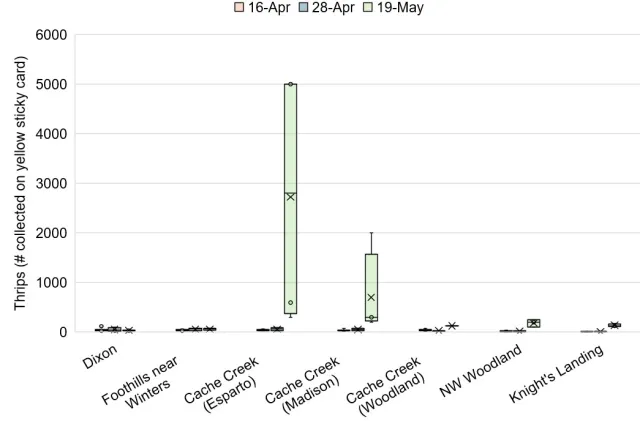
Figure 1. Number of thrips collected on yellow sticky cards from 4/7 through 5/19 in historic TSWV hotspots around Yolo and Solano counties. Cards from the 3rd sampling date were in the field for 3 weeks, while cards from the other two dates were in the field for two weeks.
A virus in the weeds
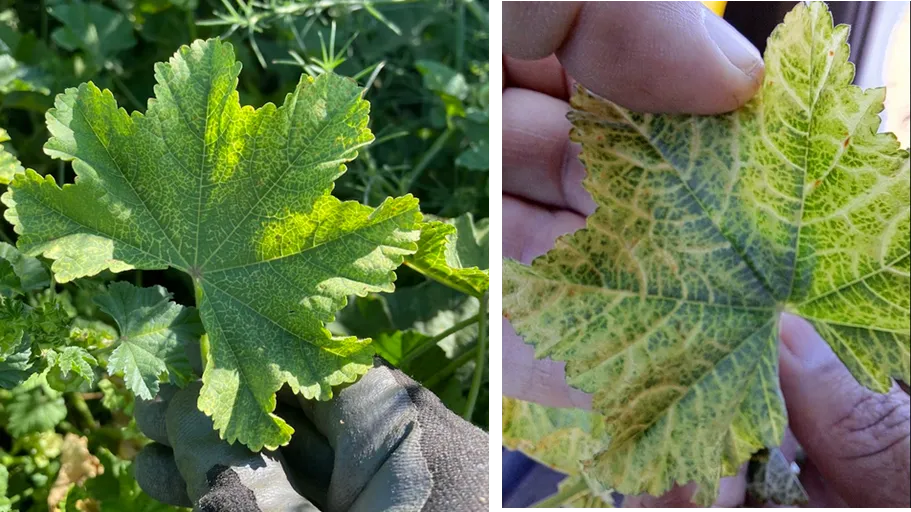
On the edges of several of the monitoring fields, cheeseweed (a.k.a. malva, little mallow) showed clear symptoms of a viral disease.
Analysis showed this to be a disease caused by malva vein clearing virus. Its host range is restricted to the Malvaceae family, so should not be a threat to tomato or pepper.
As always, if you see TSWV symptoms spreading rapidly in a field or would like to confirm an identification, please contact Patricia Lazicki (palazicki@ucanr.edu; cell (530) 219-5198