
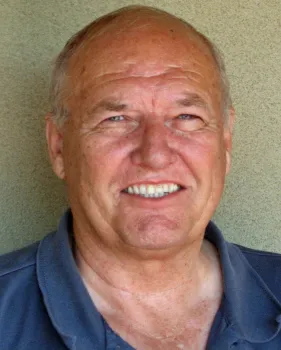
Michael V. McKenry, emeritus UC Cooperative Extension nematologist, died on March 11, 2026. He was 80.
McKenry, a nematologist in the UC Riverside Department of Nematology, was based at the UC Kearney Agricultural Research and Extension Center in Parlier and retired in 2012 after serving with UC ANR for 40 years.
Born in Selma, a community next door to Parlier, McKenry grew up on a family farm producing fruits and vegetables for local fruit stands.
McKenry started his investigations of nematodes during his senior project at California Polytechnic State University, San Luis Obispo, where he earned his bachelor’s degree in soil science with a biochemistry minor in 1966.
“Very few farmers knew much about nematodes at the time,” McKenry said in his retirement story.
During his career, he thoroughly documented the importance of these soil-dwelling organisms that cause substantial plant damage and yield losses.
After graduation from college, McKenry taught vocational agriculture in Yucaipa, a small town east of San Bernardino. During this time, he was offered the opportunity to study nematodes at the University of California, Riverside. With the direction of Ivan Thomason, McKenry studied the efficacy of soil fumigants on nematodes. He graduated with his Ph.D. in 1972. After a short time studying in Europe, he was offered the position as extension nematologist in the Department of Nematology at UCR and was stationed at Kearney REC until he retired in 2012.
“When I was hired at UC Riverside in 1972, Mike was finishing his graduate studies,” said Howard Ferris, UC Davis distinguished professor emeritus of nematology. “He was one of the first people I met in the department. As I was still trying to become acquainted with agriculture and nematology issues in California, I was grateful that Mike introduced me to grape production and, after he was appointed at Kearney, we initiated a joint project on his family’s vineyard in Selma. That set the course of my research for several years.”
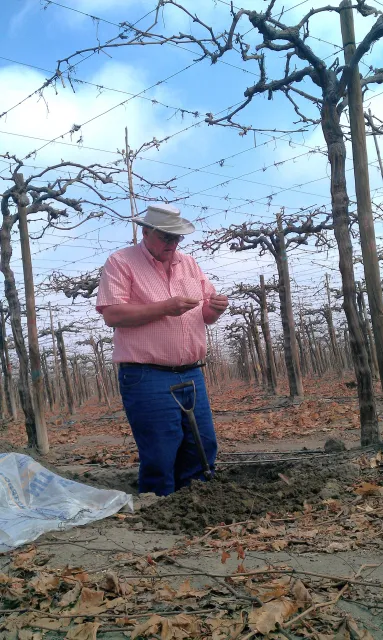
McKenry’s achievements were recognized by awards from the Society of Nematologists, the Hilgardia Award from the California Association of Farm Advisors and Specialists, and others.
“During his 40-year career, Mike tirelessly worked at minimizing the negative impacts of plant-parasitic nematodes that decreased yields of high-value crops,” said Andreas Westphal, UC Riverside professor of Cooperative Extension in the Department of Nematology, based at Kearney REC. “His contributions to the productivity of perennial crops are well noted among the industries he served.”
For the first 20 years of his career, McKenry worked on the effective use of soil fumigants, which had received some attention because of their potential to improve plant growth and productivity, but needed to be implemented for use in deep-rooted perennial crops. He used this knowledge to effectively improve the production of nematode-free nursery stock. In those situations, the control of nematodes was key to improved field productivity.
“Mike was open-minded to any tool useful for nematode suppression,” Westphal said. “He actively pursued biological control principles as he was developing application technology for non-fumigant nematicides.”
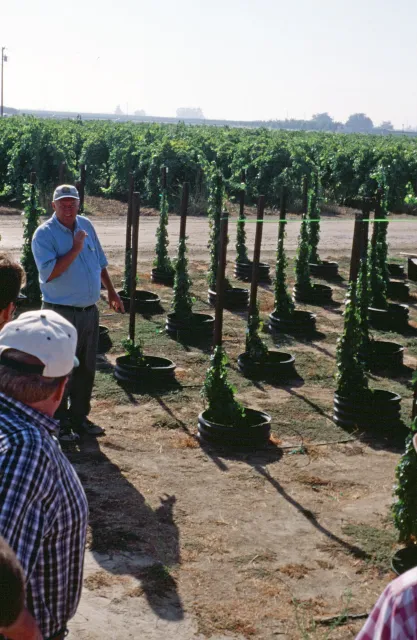
McKenry’s research was field-based and practical, thorough and meticulous, according to Peter Goodell, emeritus UC Cooperative Extension integrated pest management advisor, who was based at Kearney REC. “His projects lasted years, were complex in design and labor intensive,” Goodell said.
In long-term studies, McKenry screened thousands of candidate plants for nematode-resistance and tolerance in rootstocks of grape, Prunus, and walnut. This led to the discovery of ‘Krymsk-1’ rootstock for plum, ‘HBOK-1’ and ‘Hansen-536’ for the peach and almond industries. He contributed to the walnut industry by identifying the root lesion nematode-tolerant rootstock cultivar ‘VX211.’ He held a patent for broader nematode resistance in two new grape rootstocks.
“Mike never tired of trying new things,” Westphal said. “With this inquisitive mindset, he found a canopy-applied nematicide and defined the application protocol.”
Throughout his research and extension career, he contributed to the UC Riverside and UC Davis nematology teaching programs. He offered his research facilities at Kearney REC for one-week long classes in the summer where he would expose the students to many laboratory and field activities.
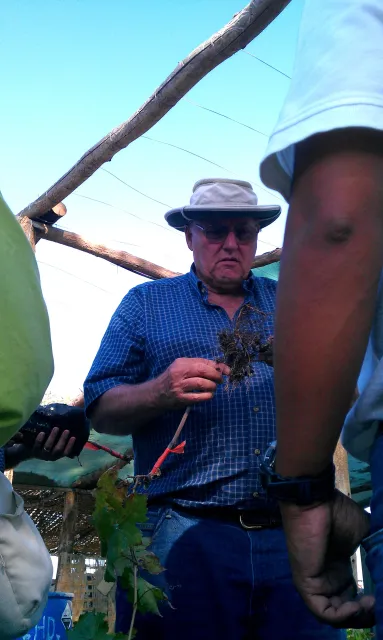
One of those students was Stephen Vasquez, former UCCE viticulture advisor in Fresno County and current executive director of the Administrative Committee for Pistachios.
“My first encounter with Mike was as a graduate student, when he gave a talk at a Cooperative Extension grower meeting on the impact of nematodes in California vineyards,” Vasquez said. “A few years later, after I became a farm advisor in Fresno County, Mike was one of the first to welcome me to the San Joaquin Valley with a phone call. Early in my career, I met with him several times a year to learn about the latest nematode research.”
“In my third year on the job, I was invited to speak to a horticulture class at a local community college – an audience that included future pest control advisers,” Vasquez recalled. “Mike somehow heard about my presentation – not from me – and showed up with Walt Bentley and George Leavitt. With three iconic grape researchers sitting in the front row, I was as nervous as I’ve ever been giving a talk. After answering the last of the students’ questions and as the room began to clear, Mike walked up to me and said, ‘That was a great presentation on nematodes! I might have to borrow a few of your slides.’ It was the kind of encouragement that stays with you.”
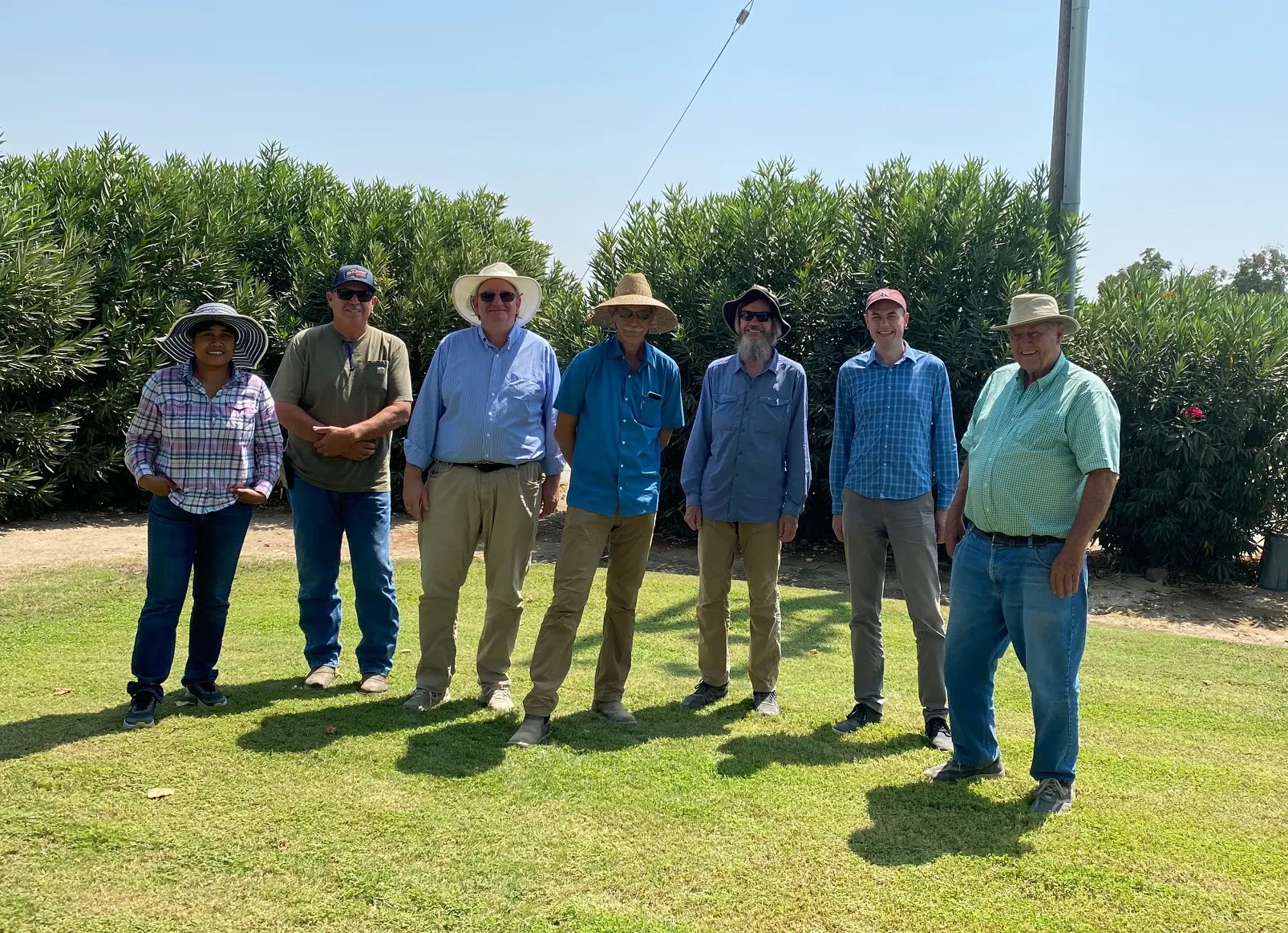
McKenry also influenced the career of Goodell.
“I worked for Mike for a summer prior to returning to UCR to pursue my Ph.D.,” Goodell said. “It was an interesting field experience working in ditches to monitor the rooting process of grapevines. I interacted with him through my graduate career, attending the annual California Nematology Conference for many years. In fact, attending one that Mike organized in Fresno County got me many introductions to nematology beyond UCR and an introduction to UCCE specialists.”
McKenry sometimes challenged his colleagues’ thinking. “I learned to formulate my questions to avoid being interrogated for having sloppy thinking,” Goodell said. “At the same, Mike was apt to go on tangents in a free flow of thoughts, usually resulting in my nodding my head and later trying to connect many of his dots around a topic.”
Equally as important as McKenry’s academic contributions were his ever-lasting enthusiasm and joy of life.
“Everyone was impressed with his positive attitude to the vagaries of life,” Westphal said. “He touched many lives with his optimism and his generous commitment of time to others. He did this selflessly and without expectation of reciprocity. His always friendly demeanor and frequent smiling put folks around him at ease and allowed him to share his vast knowledge.”
Vasquez agreed. “Over the years, I had the chance to travel with Mike to different countries and saw firsthand how growers gravitated toward him, even when they didn’t speak English,” he said. “His magnanimous personality drew people in, and he shared his knowledge freely because he genuinely wanted growers to succeed. He was a kind, generous soul and he will be deeply missed.”
Even during difficulties in later periods of his life, McKenry maintained his spirit of joy and inspired many friends and colleagues with his optimism, inquisitiveness and compassion.
“We became good friends and one of the annual highlights of our association during the 1970s and 1980s was an annual backpacking excursion in the Sierras around Yosemite and Tuolumne Meadows,” Ferris said.
McKenry is survived by his wife, his two sons and three siblings.
“Mike will be dearly missed by those who had the honor and pleasure to know and interact with him,” Westphal said.