
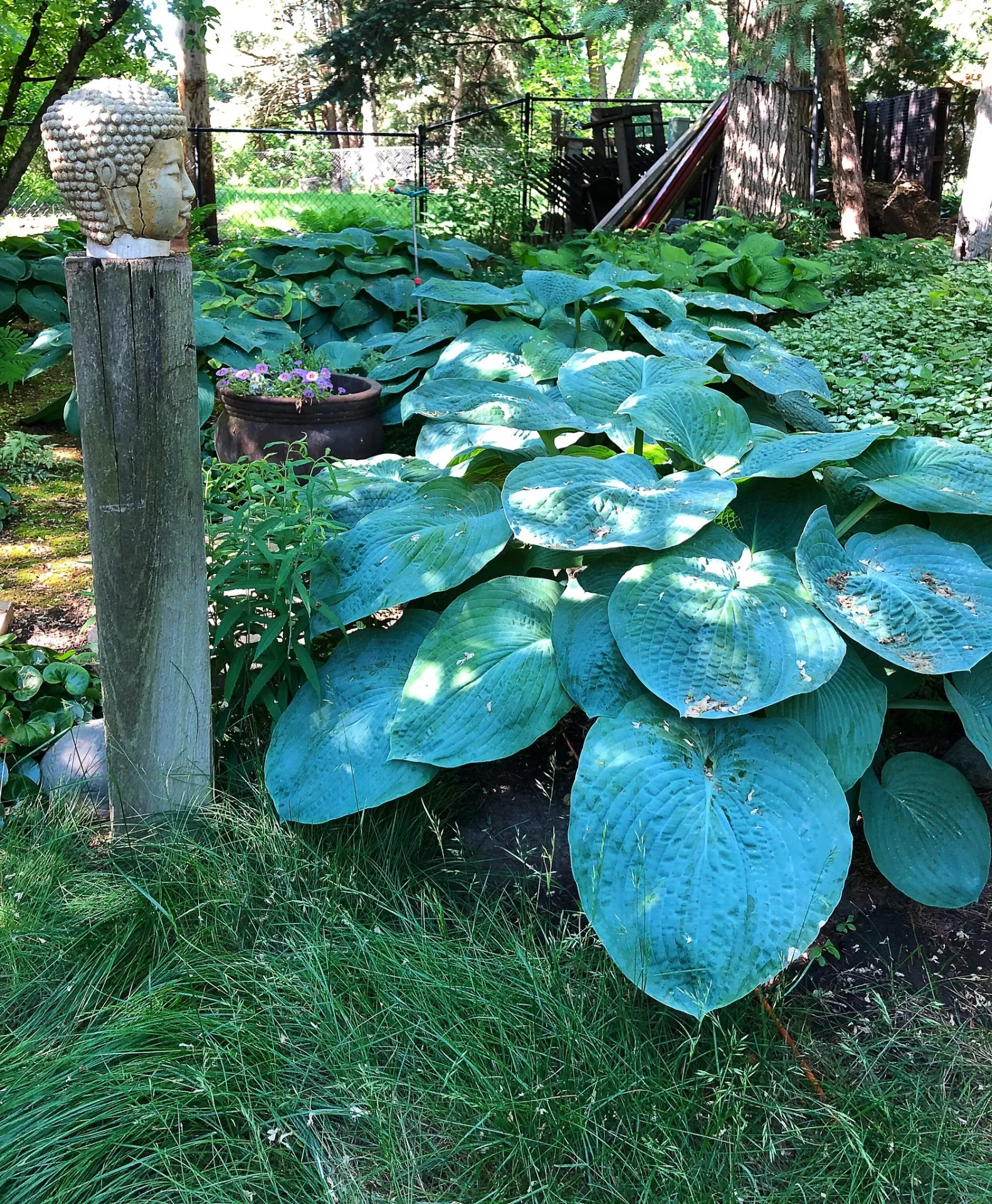
The season is changing soon; summer will approach, and we’ll be looking for a shady spot to cool off. In my yard, that’s under my camphor and fig trees. I have a table and chairs set up, a wonderful place for coffee in the morning. Under these trees, I plan on planting some hostas to brighten up the place. Hostas come in many different shapes and sizes. They are also categorized by leaf color, such as blue, gold, and variegated. Popular varieties include fragrant hostas, slug-resistant hostas, and those with unique foliage textures like rippled or ruffled leaves. Hosta is an herbaceous perennial coming from the family Asparagaceae. Named in honor of Austrian botanist Nicholas Thomas Host. They are great for edging a walkway, used as ground covers, and for accenting. One can even eat their leaves.
According to many farmers, hostas are edible for humans and are often enjoyed in various dishes, particularly in Japan, where they are known as "urui." They have a flavor similar to a mix of lettuce and asparagus. The catch is, according to Ellen Zachos, forager and writer of Backyard Foraging, one has to harvest them young before the leaves unfurl. Snip off these tight rolls of young leaves just above the soil line. The shoots will look like a chiffonade of greens. Chop them, stir-fry, and serve as a side dish or over pasta or rice. Or get primitive. Slather the shoots with oil, salt, and pepper. Then roll them around on the grill until they are slightly charred.[i]
[i] https://www.hobbyfarms.com/you-can-and-should-eat-hostas-in-your-garden/