
Visiting Yosemite National Park is an awe-inspiring experience, even for the most seasoned of travelers. The valleys, waterfalls, giant sequoias, and iconic Glacier Point are all bucket list destinations ideal for a family camping vacation. To continue enjoying beautiful parks like Yosemite, it is important to understand how our actions can have unintentional negative effects.
Have you ever brought your own firewood on a camping trip thinking it was more convenient or because you were worried about price gouging for wood at the park or campsite? While you may not realize, bringing firewood from home for an outing or camping trip can jeopardize the health of our forests and open woodlands. Invasive insects and diseases hitchhike in firewood, and these tiny destructive pests can travel considerable distances alongside their human chauffeurs. The movement of firewood is a primary way invasive pests are introduced to new areas including our national parks. Don’t be fooled, even “clean” or seasoned firewood can hide pests and disease.
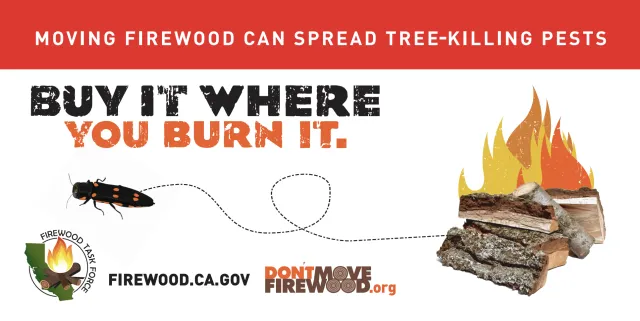
“Don’t Move Firewood” is a national campaign to prevent invasive pests from spreading. In California, the Firewood Taskforce has partnered with the national campaign to educate our state’s residents and visitors. This includes a web-based Firewood Scout map to locate firewood retailers near the location where you will be using it and educational materials. Large, clear signs along highways, at state and national park entrances, ranger stations, and campgrounds remind travelers about the importance of buying firewood where you burn it.
What pests can be moved in firewood?
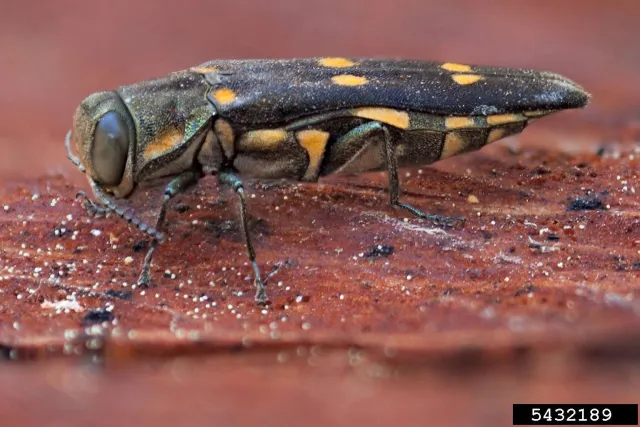
The goldspotted oak borer (GSOB) is a harsh reminder of the importance of the Don’t Move Firewood campaign. A pest native to Southeastern Arizona, GSOB was found in San Diego in 2004, believed to have been unknowingly transported west across the desert on a bundle of firewood. Invasive in California, GSOB infests and kills native California oak trees. Unfortunately, it has continued to spread across Southern California through the movement of firewood, killing more than 80,000 trees, and moving further west into Los Angeles County in 2024.
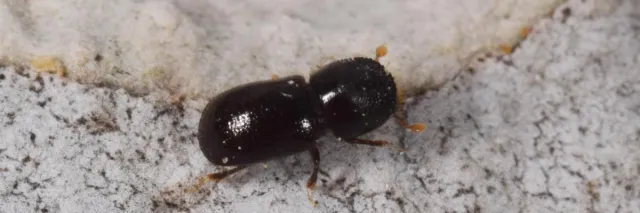
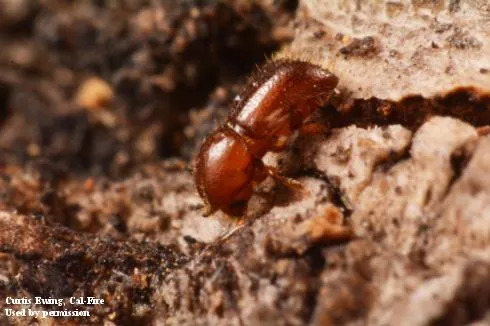
Invasive shothole borers (ISHB) are also notorious for spreading to new areas on firewood. ISHB are tiny, tree-boring beetles that infect trees with a fungal disease called Fusarium dieback. This disease can infect a wide range of tree species and is deadly to many California native and common landscape trees. Two nearly identical ISHB species, Kuroshio shothole borer and polyphagous shothole borer, are responsible for killing tens of thousands of trees in Southern California. In 2023, an infestation was discovered in the city of San Jose, marking the first ISHB detection in Northern California. Movement of infested firewood is the suspected culprit behind this long-distance “jump” from Southern California up to the Bay Area.
The Mediterranean oak borer (MOB), an invasive tree pest discovered in Napa Valley in 2019, is another example. Despite the county’s best containment efforts, Mediterranean oak borer was found in Sacramento County started in 2020 and the pest continues to spread throughout the region, killing trees as it goes. Scientists believe the movement from Napa Valley to Sacramento was on infested firewood.
You play an important role in protecting our parks!
Several agencies work together in the prevention, monitoring, and tracking of invasive pests in California, including (but not limited to) County Agricultural Commissioners, the California Department of Food and Agriculture (CDFA), CalFire, the US Forest Service, UC Cooperative Extension, and the United States Department of Agriculture (USDA). But state agencies, researchers, and government officials need our help too.
We can all be a part of the solution by spreading the word in our communities to buy it where you burn it. Firewood should only be moved short distances, ideally within 10 miles but never more than 50 miles from your camping destination. Some campgrounds and state and national parks have adopted firewood inspection policies in support of the Don’t Move Firewood campaign, often requiring campers to use USDA certified heat-treated firewood or purchase firewood onsite, creating partnerships with community vendors to “Buy local, Burn Local”.
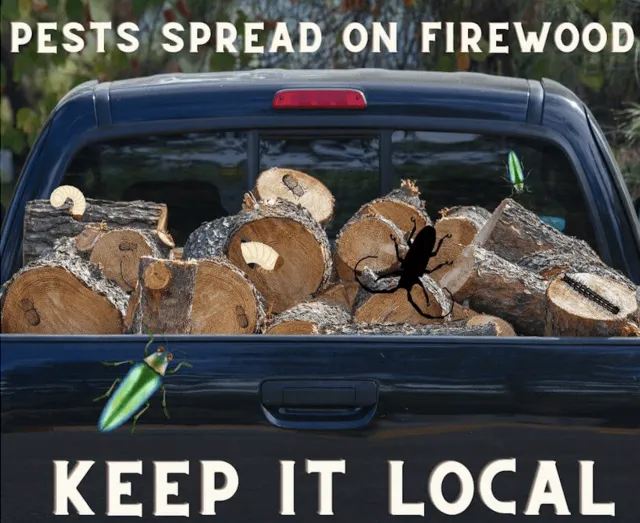
When camping on public lands outside of developed campgrounds, we are all responsible for protecting the native ecosystem. Prevention and education are the best tools we can use to help in the fight against invasive species. To view educational materials and downloadable graphics for community and social media use, visit https://www.dontmovefirewood.org/.