
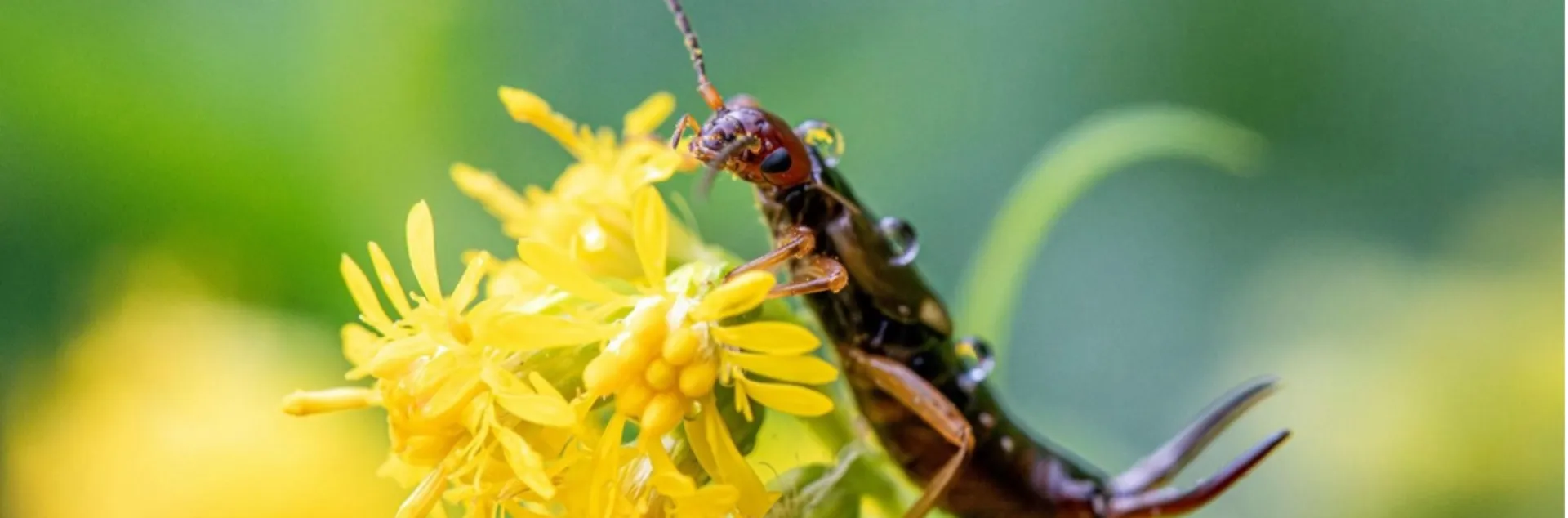
Earwigs are one of the most recognizable insects in the garden because that distinctive pair of pincers at the tail end makes them hard to mistake. While their prominent pincers might look ferocious, earwigs aren't harmful to people. Earwigs can be a mixed blessing: they can seriously damage seedlings and chew holes in flowers, soft fruit, and corn silks, but they also play a beneficial role by feeding on aphids and other insects.
Whether you need to be concerned depends on what you're growing. If your garden includes vegetables, herbaceous flowering plants, sweet corn, or soft fruits like strawberries and apricots, earwigs are worth managing. If it's primarily lawn, trees, native plants, and woody ornamentals, they're much less of a concern.
Earwigs feed at night and hide during the day in dark, cool, moist places—within flowers, in mulch, or among weeds. This nocturnal habit means the damage often seems to appear out of nowhere.
The most effective approach to managing earwigs combines a few simple tactics. Reduce their hiding places by removing dense undergrowth of ground cover and weeds around vegetable and flower gardens, and move flowerpots and other garden objects that offer safe cover.
For trapping, rolled newspaper, bamboo tubes, or short pieces of hose placed on the soil near plants just before dark work well. In the morning you can shake the accumulated earwigs into a container of soapy water. A low-sided can filled with vegetable oil and a drop of bacon grease or fish oil also attracts and traps them effectively. Daily trapping can reduce populations to tolerable levels.
Drip irrigation helps by reducing the surface moisture earwigs favor. For stone fruit trees, a band of sticky material like Tanglefoot around the trunk can keep earwigs out of the crown, and harvesting fruit promptly as it ripens removes the attraction. Insecticides are rarely needed.
For more Information about earwigs, see this link:
• https://ipm.ucanr.edu/home-and-landscape/earwigs/#gsc.tab=0
Help Desk of UC Master Gardeners of Contra Costa County (RDH)