
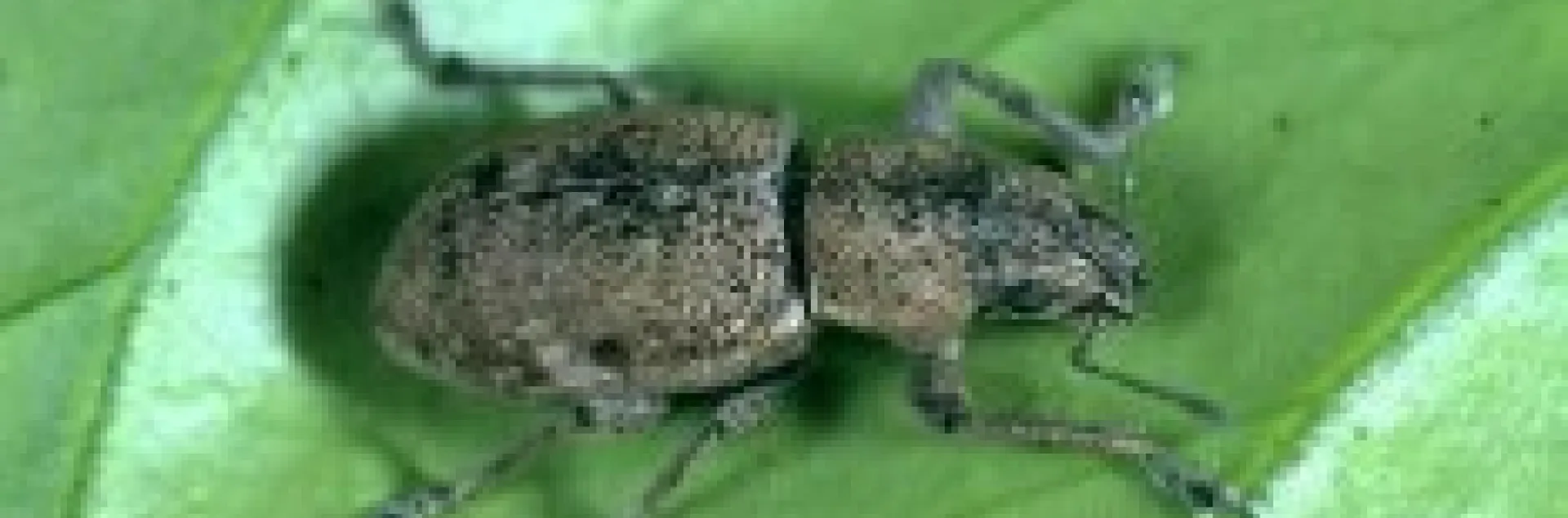
As the 2026/27 citrus season approaches, growers exporting fruit to Korea should prepare for proactive management of Fuller rose beetle (FRB), a regulated pest of concern for oranges due to the risk of egg contamination on fruit and resulting quarantine restrictions. The Voluntary Sampling Program, coordinated through industry protocols and the California Citrus Quality Council (CCQC), provides growers with structured options to manage FRB more efficiently while reducing unnecessary insecticide applications.
EXTERNAL IMAGEEXTERNAL IMAGE
Growers now have three management options that integrate monitoring with targeted treatments. These options are designed to reduce pesticide inputs when pest pressure is low, while still protecting export market access. The key shift in Korea Protocol is simple but important: as FRB populations in the SJV region has been historically low, growers are encouraged to treat based on verified pest pressure, not calendar-only sprays.
Growers have the option follow the sampling protocol and find low FRB presence (three or fewer infested trees out of 72 sampled), they can significantly reduce foliar insecticide applications. This approach offers several benefits:
- Reduces total pesticide footprint
- Minimizes late-season foliar applications
- Decreases non-target impacts on beneficial insects (Aphytis, Anagyrus, generalist predators)
- Improves compatibility with IPM programs
- Supports resistance management by avoiding unnecessary sprays
- Provides documented compliance for export protocols
For PCAs and growers, this program is especially valuable because it shifts decision-making toward data-driven orchard thresholds rather than routine sprays.
What are the three options for 2026/27 season?
Option 1: Ground Application + Sampling (New Approach since 2026)
- Apply bifenthrin as a ground application between June 1 and July 15
- Combine with the approved sampling protocol (August 7-31)
- If the treatment threshold, <3 infested trees is not reached, growers may:
- Skip two foliar applications for the season
This option focuses on immature control reducing adult emergence, and uses sampling to confirm whether additional sprays are necessary.
Option 2: Sampling-Guided Single Foliar Spray
- Conduct sampling in August
- If threshold is not reached, apply:
- Only one foliar application by October 31
- Skip the earlier seasonal foliar spray
This option is ideal for orchards with historically low FRB pressure, targets adults after emergence.
Option 3: No Sampling (Conventional Program)
If no sampling is conducted: Apply two foliar applications (this is required regardless of Bifenthrin application) - first by September 7, Second by October 31
This is the default higher-input approach and does not allow spray reductions.
If Threshold Is Exceeded (All Options)
If sampling shows three or more infested trees (out of 72 sampled):
- The orchard must follow Option 3
- Two foliar applications are required
Fuller Rose Beetle Sampling Protocol (Critical for 2026 Compliance)
Sampling is the backbone of the reduced-spray strategy and must be done carefully and consistently. Pay attention to timing, method, and record keeping.
Timing:
- Conduct sampling between August 7 and August 31
- This period aligns with peak adult emergence and provides the most reliable infestation estimate.
Sampling Design:
- Divide each block into 4 quadrants
- Randomly select 18 trees per quadrant
- Total: 72 trees per block, regardless of block sizeInspection Method
For each selected tree:
- Check inside the canopy
- Inspect suckers for leaf chewing damage, locate adult beetles
- If no beetles are found internally:
- Shake two large exterior branches over a light-colored cloth
- Inspect cloth carefully for beetles
- Any beetle presence = infested tree
- Record the number of infested trees per orchard
Threshold Rule (Very Important!)
Stop sampling early if 3 or more infested trees are found, once threshold is reached, the orchard automatically moves to Option 3 (two foliar sprays required)
Record Keeping Requirements
Accurate records are essential for compliance and audit purposes. Good records are not just regulatory protection, they are also the basis for defensible spray reduction decisions. For each block, document: Block ID; Date of sampling; Name of inspector (PCA or trained staff); Number of trees infested (out of 72); Decision outcome (Option selected or threshold exceeded)
To summarize, the 2026 Voluntary Sampling Program for Fuller rose beetle reflects a broader shift toward precision pest management in citrus systems. By tying insecticide applications to verified pest presence, growers can reduce unnecessary sprays, protect beneficial insects, and still maintain export compliance.
For PCAs, the value lies in the structure: clear thresholds, defined sampling, and flexible treatment options. When implemented correctly, this program supports both economic efficiency and environmental stewardship, without compromising market access.