
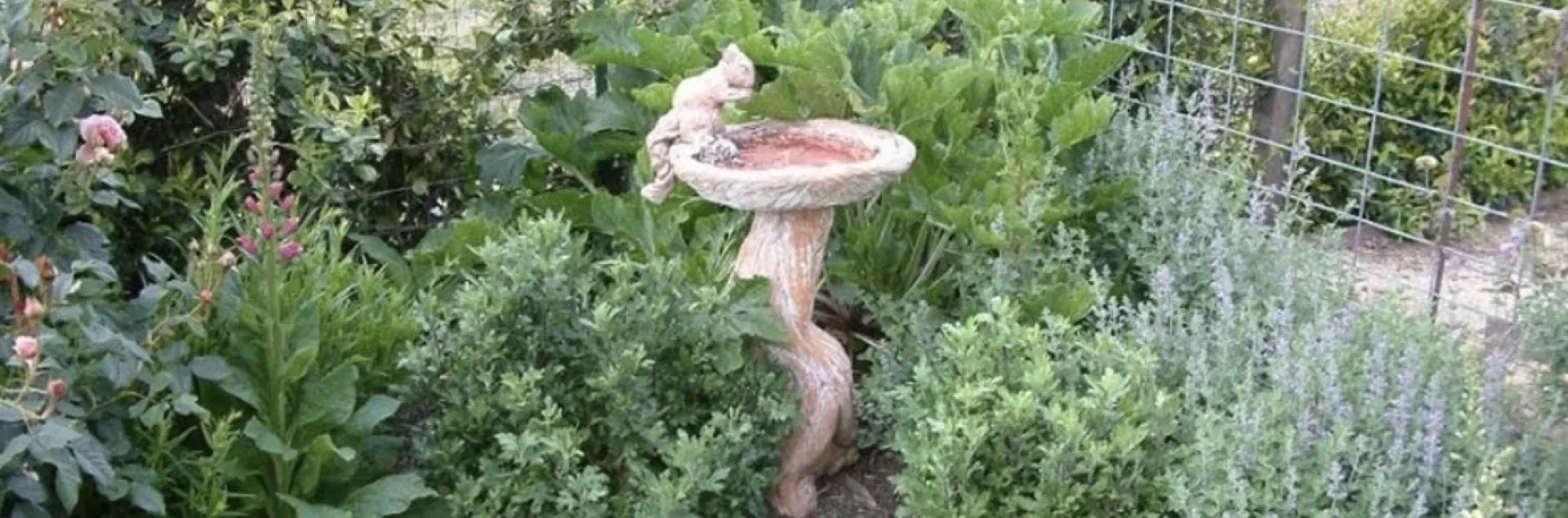
By Gail Pavlosky, UC Master Gardener of Napa County.
Sometimes, while I am in the garden — my hands in the soil and the scent of hummingbird sage rising in the Napa sun — a song comes to mind that shifts my attention. My hands may still be working, but something deeper happens: an awareness of the relationship we have with the natural world.
I remember growing up in the 1960s and 1970s in the East Bay, playing in an open field, chasing butterflies and eating plump, wild blackberries straight from the vine. I don’t think I’ve tasted a blackberry that sweet since.
It wasn’t long before that same field was paved to make room for Bay Area Rapid Transit. At the time, I didn’t yet have the language for what was lost. But when I listened to certain songs on the radio, I felt something shift. I didn’t fully understand the message. I just knew it was upsetting to lose that place of wildflowers and blackberries.
When I think of “Big Yellow Taxi” by Joni Mitchell, I think of the moment she described waking up surrounded by extraordinary beauty, only to realize how much of it had already been replaced. As she sang in her 1970 hit, “They paved paradise and put up a parking lot.” In a single line, Mitchell captures how easily land can be stripped of its beauty. The lyric remains timeless, still urging us to pay attention.
Instinctively, home gardeners understand this imperative. We see how disturbed soil and disappearing habitat can change the character of a landscape over time.
Then there is “Mercy Mercy Me (The Ecology)” by Marvin Gaye. Where Mitchell offers clarity, Gaye invites reflection. In the song, he observes, “Animals and birds who live nearby are dying … oh, things ain’t what they used to be.” More than 50 years later, the lyrics still resonate.
When I think of those words while kneeling in the soil, tending weeds or training a tomato vine, I feel the weight of them differently. The issues are no longer abstract. They are right here, in the ground beneath my hands.
In Napa Valley, we live close to the land. We notice the rhythm of the seasons: the awakening of grape buds in spring, the stretch of dry summers, the scent of autumn leaves and the relief of winter rain preparing the ground for mustard’s yellow bloom. We see what thrives, what struggles and what changes over time.
In the face of the valley’s urbanization, our gardens remain among the few places where we can still participate in the restoration of a living landscape.
In our work as home gardeners, we often focus on practical matters like building healthy soil, choosing climate-appropriate plants, supporting pollinators and conserving water. At the same time, we learn to pay attention to what the land needs from us.
I’ve seen what’s possible in the smallest spaces and how quickly nature responds when we make room for it. A neighbor recently planted a small California native garden — a modest space filled with plants suited to our region and her microclimate — and within what felt like no time at all, native bees, ladybugs and hummingbirds began returning.
We know that pollinators and other wildlife are remarkably attuned to environmental cues. They recognize shelter, food sources, seasonal changes and habitat diversity. But witnessing it firsthand still feels almost miraculous. Their return to a hospitable space reminds us that nature is resilient and constantly searching for opportunities. Even the smallest garden says: you are welcome here again.
These small acts add up quietly, becoming part of a transformation that begins in our backyards, on our balconies and in school gardens. Even modest gardens can cultivate diversity and life. Every habitat we support and every decision to garden with intention contributes to a healthier planet.
The UC Master Gardeners of Napa County offer free and low-cost workshops, library talks and hands-on community events for gardeners at every level. Whether you are growing tomatoes in a raised bed or herbs in a small container, these gatherings offer practical guidance suited to Napa County’s Mediterranean climate. What’s more, these events are an opportunity to learn alongside others who care deeply about the land we share.
They are also welcoming spaces to ask questions, exchange ideas, laugh and grow more confident as gardeners. You do not need years of experience or a large garden to participate — only curiosity and a willingness to begin.
Workshop: Join UC Master Gardeners of Napa County for a workshop on “Summer Rose Care” on Saturday, June 13, from 10 am to 11:30 am via Zoom. Keep your roses healthy all summer long with research-based information on how and why you should prune your roses, what to do about disease and bugs, when to fertilize and more. Register to receive the Zoom link.
Tree Walk: Join UC Master Gardeners of Napa County for a docent-guided tree walk around Napa’s Fuller Park on Sunday, June 14, from 10 am to 11:30 am. Learn about some of the many exotic and native trees in this 120-year-old park. Meet at the corner of Oak and Jefferson Streets. Space is limited and each attendee must register separately. Register here.
Workshop: Join UC Master Gardeners of Napa County for a workshop on “Planning and Creating a Native, Low-Water, Pollinator or Succulent Garden” on Saturday, June 27, from 10 am to noon, at University of California Cooperative Extension, 1710 Soscol Avenue, Napa. learn how to design, plant, and maintain a sustainable garden in your own landscape. Register here.
Help Desk: The Master Gardener Help Desk is available to answer your garden questions. Use our online Plant Problem Help Form or email us at mastergardeners@countyofnapa.org. Include your name, address, phone number and a brief description of the problem. You can also visit us in person on Mondays and Fridays from 10 am until 1 pm at the University of California Cooperative Extension Office, 1710 Soscol Avenue, Suite 4, Napa.
Photo courtesy of Marjon Bestema Pixabay.com