
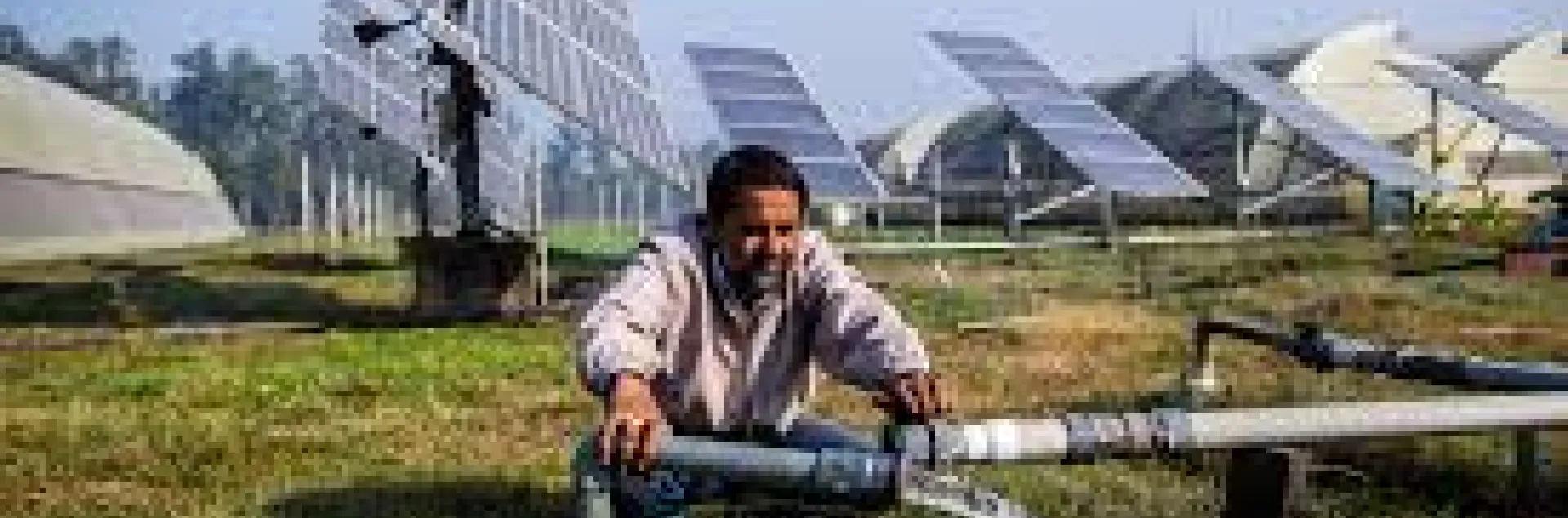
More than half of all California farmland now runs on drip or micro irrigation. That transformation is a genuine water efficiency win. But growers, advisors, and policymakers mostly missed a side effect: farm electricity use has not fallen. In many cases it has risen, and electricity rates have roughly doubled or tripled since 2008.
Here is what happened, and what growers can do about it.
Water and Energy: Two Systems, One Problem
Water and electricity are delivered through entirely separate infrastructures governed by separate agencies, priced by separate regulators, and measured in different units. Water flows through canals, pipelines, and aquifers. Electricity moves at the speed of light through transmission lines and substations.
But they are deeply dependent on each other. Moving water requires electricity; for pumping, treatment, pressurization, and distribution. And generating electricity requires water; for cooling thermal power plants, enabling hydropower, and supporting the supply chains for fuel and equipment. In California, that interdependence is especially pronounced because of the geography: most of the water is in the north, most of the demand is in the south, and moving it across the state at scale requires enormous pumping infrastructure.
Read more in depth at Topics in Subtropics