
Have you ever thought about creating your own native habitat garden? Have you heard the term, native habitat garden, and wondered what exactly it was and how you could create one? If so, you have come to the right place!
A native habitat garden is a landscaped area that utilizes native plants to create a functional ecosystem that supports local wildlife. What wildlife, you might ask? A native habitat garden is likely to support birds, bees, butterflies, and more by providing food, water, shelter, and nesting sites. When building your own native habitat garden, something to keep in mind is that the most successful habitat gardens are built around a keystone species. Today, the keystone that I want to propose to you is the Blue Oak or Quercus douglasii.
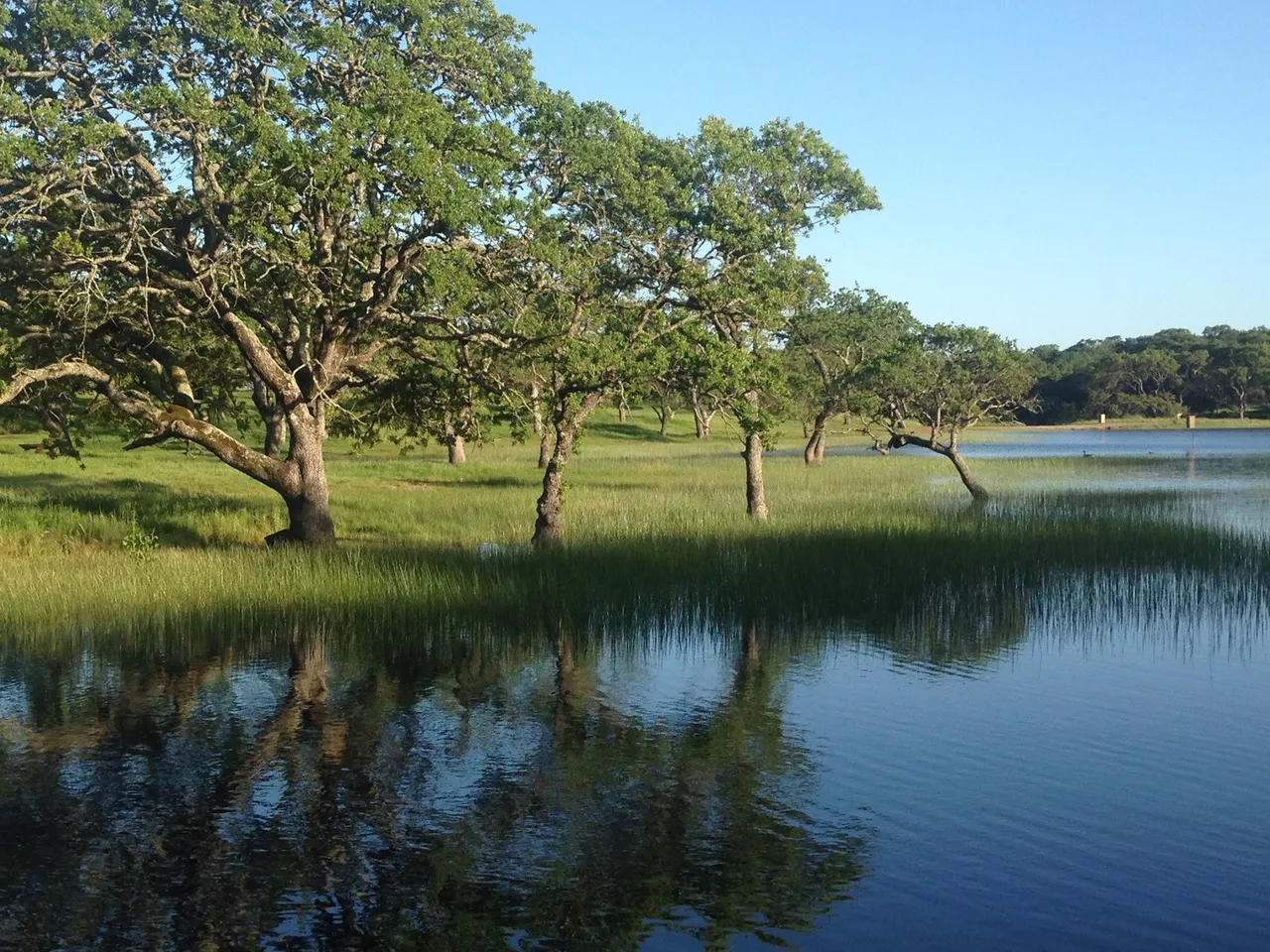
Blue Oak is a native, deciduous hardwood tree that is found only in California. It is a member of the white oak group along with valley oak, Garry oak, and the scrub oaks. It grows from Shasta County south to Santa Barbara County, with a few populations in Los Angeles County. Usually, it grows on foothills bordering hot interior valleys. Blue Oak often cohabits with grey pine, interior live oak, coast live oak, valley oak, and scrub oaks. In nature, Blue Oak can reach heights between six and twenty meters (20 to 66 ft). The tallest Blue Oak recorded was found in Alameda County at 28.7 meters in height (94 ft). Individual Blue Oak has been recorded reaching ages in excess of five hundred years old. A distinctive characteristic of the Blue Oak is its light grey bark, which is often covered with medium-sized dark cracks throughout it.
Like all oaks, Blue Oak is a keystone species. But you may be wondering what exactly a keystone species is. A keystone species is a species that is critical for various types of wildlife for either food or cover. In the case of the Blue Oak, it provides food and shelter for many species. The leaves and twigs are commonly browsed by deer, livestock, and rodents, and the acorns are consumed by a large number of birds and mammals. It provides nest sites for owls, woodpeckers, and squirrels. It is utilized as a shade tree by numerous species seeking relief from the sun in spring and summer. Owls, woodpeckers, and other birds tend to nest in older trees that have been affected by heart rot, providing them with cavities in which to nest. But if that was not enough, the Blue Oak is also the most drought-tolerant of California’s deciduous oak trees. It has a smaller canopy and invests more growth into its roots rather than its leaves during its life cycle. Its medium-sized, lobed blue-green leaves are covered with a moisture-conserving wax – hence its name.
The Blue Oak is a beautiful, majestic, and mighty tree that is only found in California. It is admirably adapted to our drought-prone climate, and in times of extreme drought, they can drop their leaves early.
Like other members of the white oak group, Blue Oak is resistant to Sudden Oak Death pathogen. All of this can help to make this tree a fantastic focal point for a native habitat garden. When paired with any of the native plants that are often found as companion plants around it in nature, it is sure to quickly become a center of attention for your local wildlife. And with time, you are sure to see your native habitat garden become a lively and thriving ecosystem.
So, do you think that you will want to plant your own California Blue Oak to start your native gardening habitat? There is no better time to start one than the present. But whether you decide to start your native habitat garden now or simply continue to cultivate the garden you already have, Good luck and happy growing!
Read more on Blue Oak (Quercus douglasii) Companion Plants by Pam Muick.