

It’s nearing the end of National Pollinator Week, June 22-28.
More than 80 percent of all flowering plants rely on pollinators, which are animals that transfer pollen between flowers, facilitating plant reproduction.
When most people think of pollinators, they think of bees and butterflies. But other insects, including moths, flies, beetles and wasps, are pollinators, too. And so are such mammals as birds and bats.
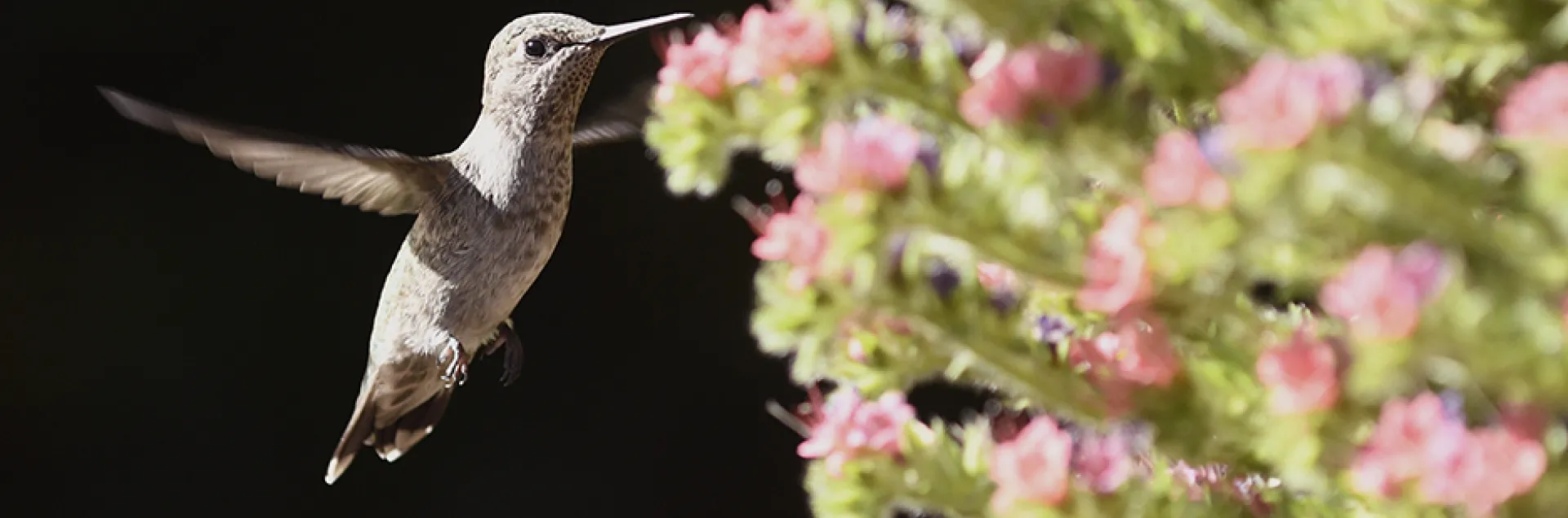
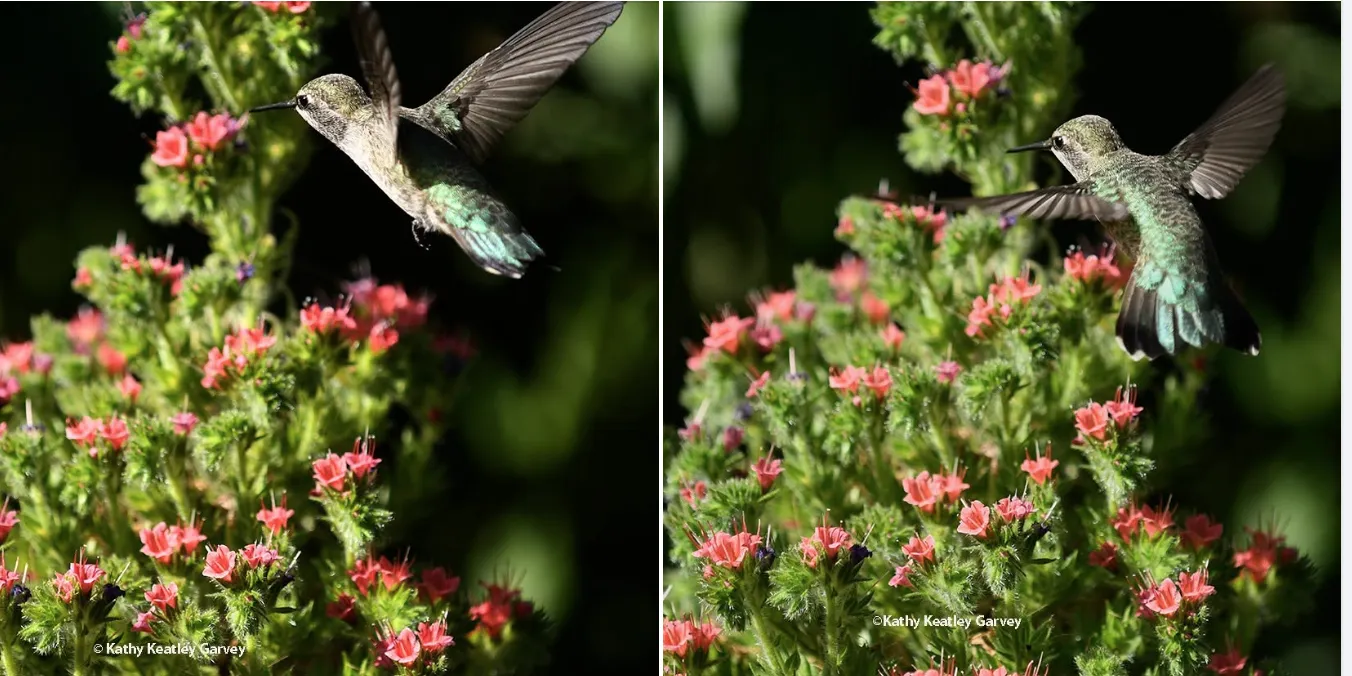
Hummingbirds are the most common avian pollinators. These high-energy birds are drawn to the nectar of bright red, orange and pink tubular flowers. While sipping nectar, they hover, transferring pollen from the plant to their foreheads and beaks.
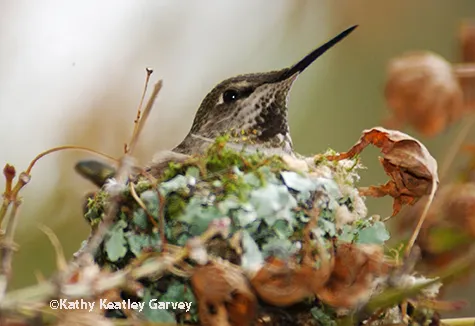
We've been watching and welcoming Anna's hummingbirds, Calypte anna, to our pollinator garden. A North American species of hummingbird named after Anna Masséna, Duchess of Rivoli, it makes a bee-line (bird-line?) toward a tower of jewels, Echium wildpretii, a plant that screams "I'm red!" and "Look at me!" and "Come over here!"
About four inches long with a wingspan of 4.7 inches, Anna's hummingbird is found along the Pacific Coast of North America, from southern British Columbia down through Washington, Oregon, California, and Baja California. Thanks to suburban gardens and mild climates, its range has expanded inland to Arizona, Nevada, and Texas,
The female sports an iridescent bronze-green back, a pale grey chest and belly, green flanks, and sometimes, a red spot on its throat. The males are easily distinguished from the females. "The male Anna's hummingbird is the only North American hummingbird species with a red crown," according to Wikipedia.
"This hardy little bird is a permanent resident along our Pacific Coast, staying through the winter in many areas where no other hummingbirds are present," according to the Audubon Society.
Listen to an Anna's hummingbird hum on the Arizona-Sonora desert website. Or better yet, tune in when they're nectaring your flowers. But be quck; they fly fast and won't stay long.
They fly at a normal speed of 25 to 30 miles per hour, "but during spectacular courtship dives, males can reach blazing speeds of up to 60 mph," according to National Geographic. "The hummingbird can even fly relatively faster than a jet fighter with afterburners ablaze, which only reaches 150 body lengths per second, or a space shuttle re-entering Earth’s atmosphere, which covers just 207 body lengths per second."
So, relative to their body size, this reportedly makes them the fastest flying vertebrate on earth, generating g-forces higher than those experienced by fighter jet pilots.