

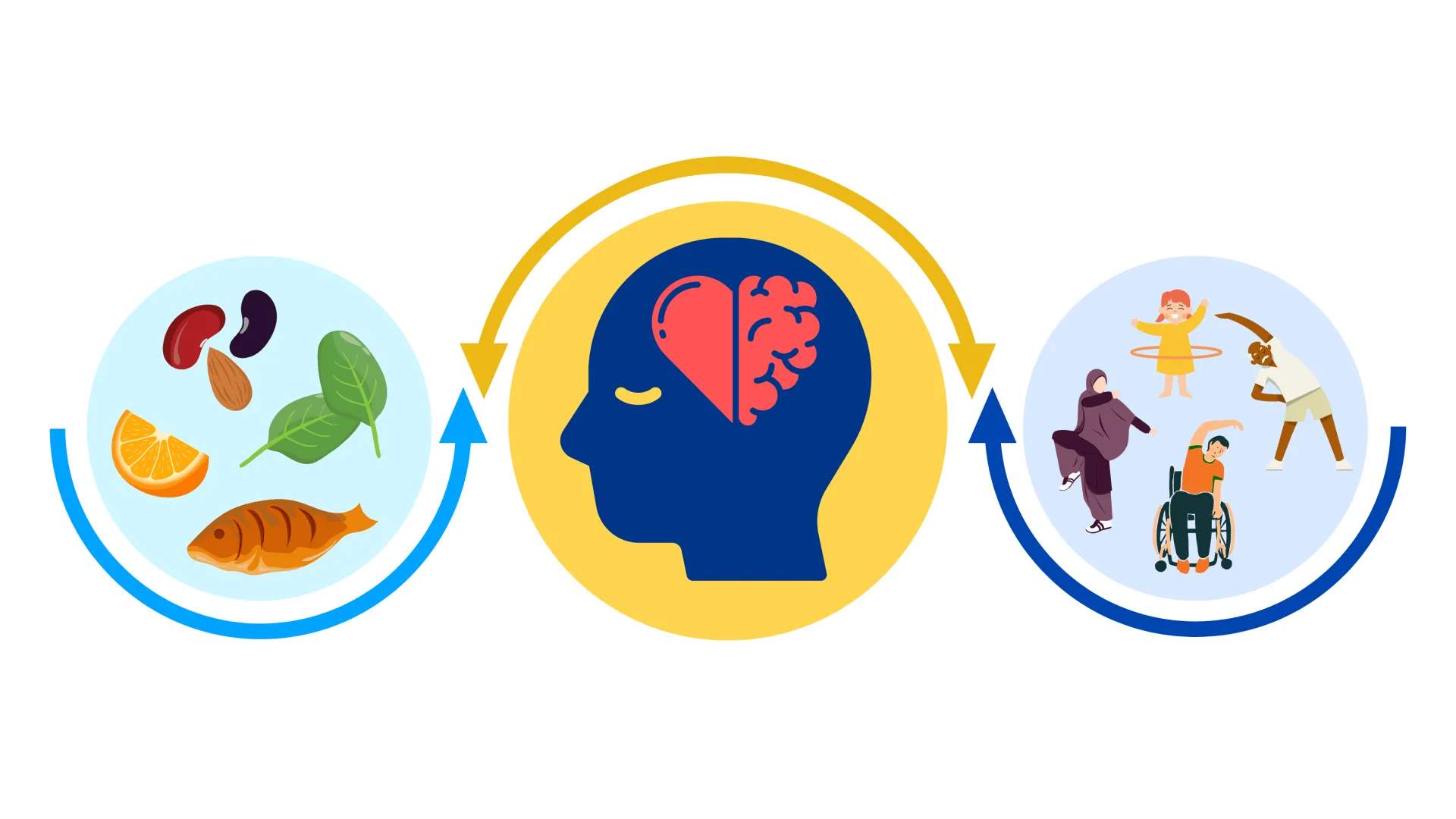
You’ve probably heard sayings like “an apple a day keeps the doctor away” or “staying active is good for your heart.” These things remind us that healthy habits make our bodies stronger, give us more energy, and help prevent sickness.
But did you know that eating well, staying active, and mental health are also intertwined? When you're in a positive place, it's easier to handle problems and make good choices, including about nutrition and physical activity. When you feel more balanced, confident, and happy, you're more likely to choose healthy options.
Think of mental health, nutrition, and staying active as three strong pillars holding you up. Each pillar is just as important as the others. If one pillar weakens – for example, if you eat poorly, stop moving, or feel mentally drained – the others have to work harder and may start to weaken, too. That’s why keeping all three pillars strong helps you stay balanced and healthy.
How Stress Impacts the Body
When you’re stressed, you might get headaches, have trouble focusing, or get annoyed more easily. To try to feel better, some people choose to eat more packaged or convenience foods, consume too much, skip meals, or avoid activities they enjoy. Over time, these things can chip away at those three strong pillars holding you up. Long-term stress can hurt your body and your mind; it can cause muscle pain, heart problems, and even lead to anxiety or depression.
What You Can Do
The good news is that you have the power to build a healthy relationship with food, your body, and your mind. Choosing healthful activities every day – like going for a walk, writing in a journal, or eating a healthy snack – adds up and helps keep those three pillars strong.
Below are recommendations for small changes exercise and nutrition to improve mental health:
Staying Active,4
Make time for aerobic exercise each day, such as going for a walk, dancing after dinner, taking the stairs, or swimming a few times each week
Do some stretching exercises a few times each week.
Add in exercises that build muscle, such as pushups and leg lifts, twice a week.
Exercise with a friend or a community class to make it more fun
Choose things that are easy to do regularly
Nutrition2,3 (see example foods below)
Choose foods rich in the nutrients listed in the table below. These foods have been linked to better mental health.
You also can check out this American Heart Association website for delicious and easy recipes that include these foods
| Nutrient | Example Foods |
Omega-3s | Hemp seeds, walnuts, and fatty fish such as salmon |
Vitamin B | Whole grains, legumes and leafy greens |
Vitamin D | Sun exposure, mushrooms that have been exposed to sunlight, and fortified milk or milk alternatives |
Potassium | Bananas, potatoes (include the skin), spinach, avocados, white beans, and lentils |
Zinc | Beef, pumpkin seeds, chickpeas, oats, and lentils |
Magnesium | Soymilk or tofu, spinach, pumpkin seeds, almonds, black beans, and peanuts |
Lean proteins | Beans, lentils, and fish or poultry |
Fermented drinks and foods | Yogurt, kombucha, kim chi, taquiña and sauerkraut |
Fiber-rich foods | Lentils, black beans, oats/oatmeal, broccoli, raspberries |
Summary
When we think about mental health, nutrition, and staying active as intertwined instead of disconnected, it’s easier to make choices that help all three. Eating healthy foods, staying active, and taking care of your mind all work together to help you feel your best.
It’s not about being perfect – it’s about finding balance, and paying attention to what your body and mind need.
Remember: taking care of your mind helps your body, and taking care of your body helps your mind.
References
1. The Importance of Exercise and Physical Activity on Mental Health. (n.d.). Retrieved August 14, 2025.
2. Regional Offices Food and Mood Project. (2023). Samhsa.gov.
3. Exercise for Mental Health: Depression and the Older Adult. (2010). The University of Texas at El Paso Physical Therapy Program.
4. Eating for Mental Health and Wellbeing. Erie County Health Department (n.d.).