
"Stop, thief!"
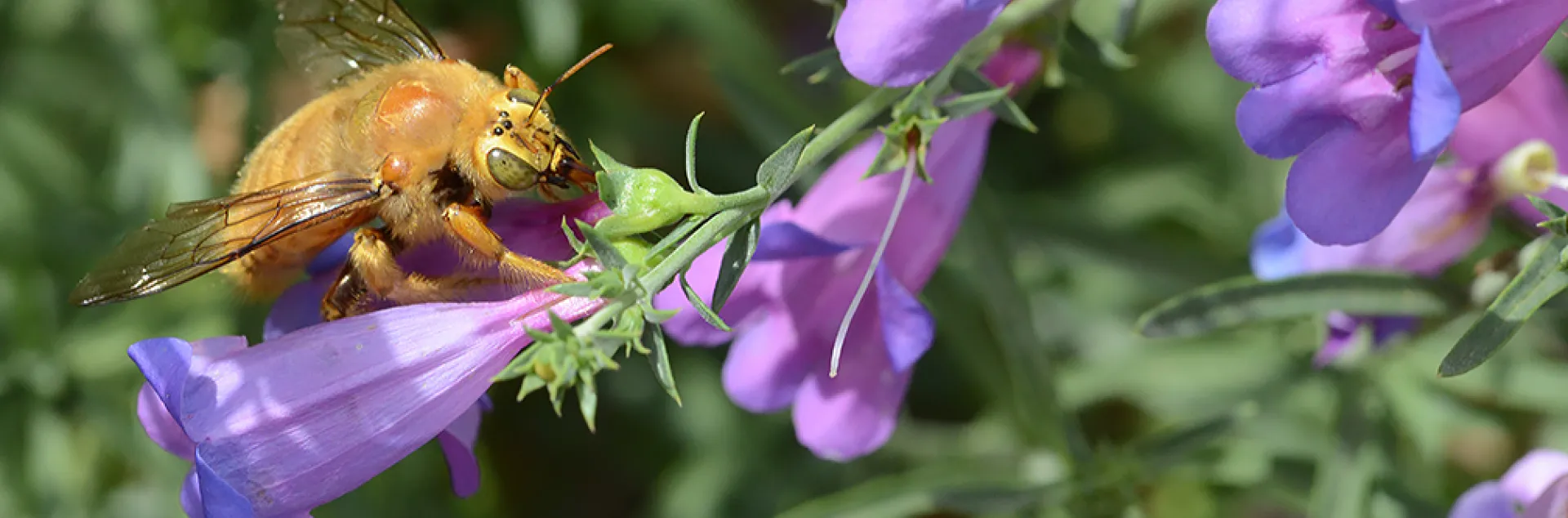
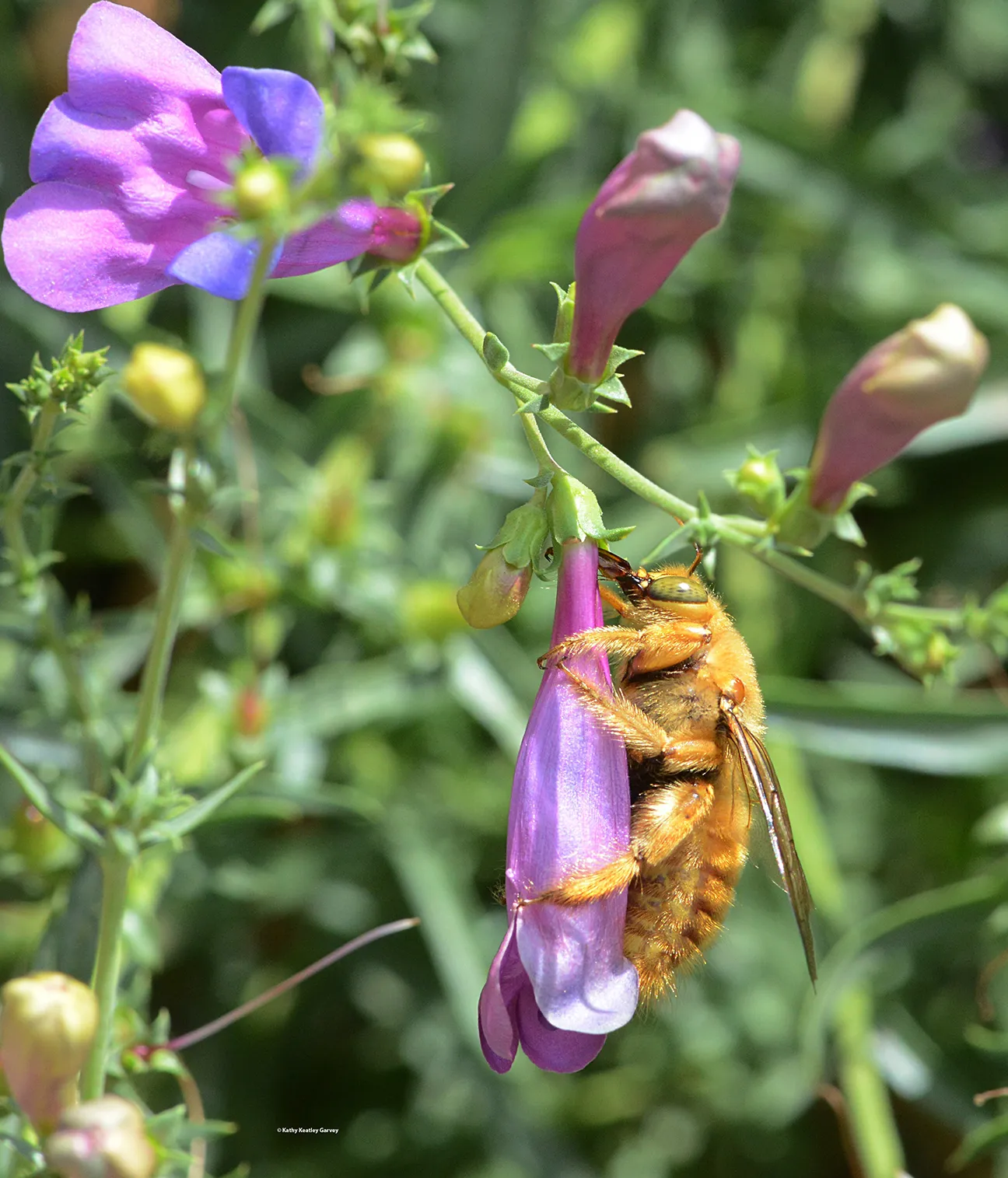
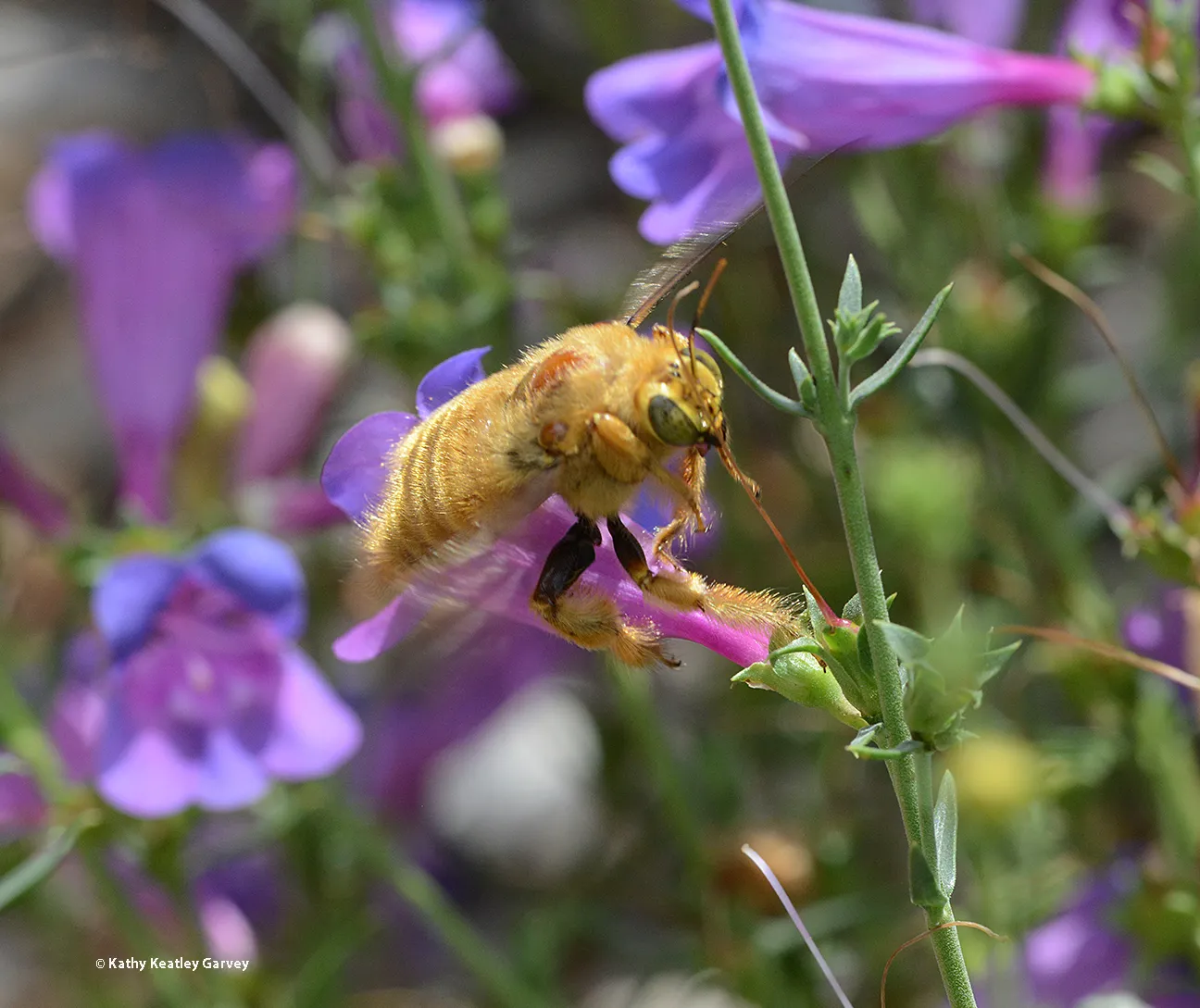
"Robbing the nectar" or "nectar robbing" occurs when a bee, such as a carpenter bee, circumvents the usual plant-pollinator relationship and "cheats" by drilling a hole in the corolla tube to "steal" the nectar, thus avoiding pollination or contact with the anthers.
The bee grabs the reward but doesn't contribute to the plant's pollination needs.
We usually see female Valley carpenter bees, Xylocopa sonorina, robbing the nectar, but we rarely see male Valley carpenter bees, let alone observing them engaged in a nectar heist.
We saw just that at the UC Davis Bee Haven, a half-acre pollinator demonstration garden on Bee Biology Road, west of the central campus. It's maintained by the UC Davis Department of Entomology and Nematology, and is open from dawn to dusk, free admission.
The male Valley carpenter bee, gold with green eyes, is also known as "the teddy bear bee," because, as UC Davis Distinguished Emeritus Professor Robbin Thorp (1933-2019), used to say: "It's fuzzy wuzzy, and boy bees don't sting."
"Stop thief?" No.
"Continue thief! You're doing great!"
Cover image: A male Valley carpenter bee, Xylocopa sonorina, bites a hole in the corolla of a Penstemon in the UC Davis Bee Haven. (Photo by Kathy Keatley Garvey)