
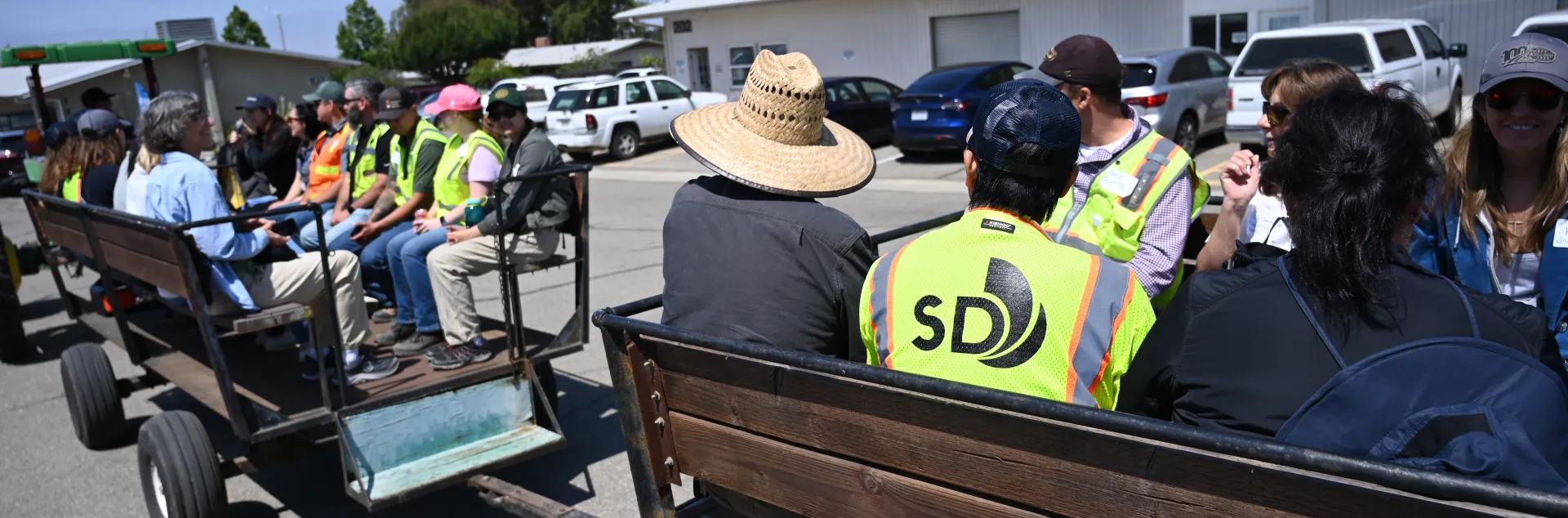
The Compost Caravan event on June 4th in Orange County featured three educational tour stops. Participants began at the James A. Musick Facility, where they observed a compost blowing demonstration showcasing how compost can be applied to hard-to-reach landscapes to improve soil health and support water-wise landscaping. They also learned about the use of compost socks and wattles for erosion control, sediment filtration, and dust suppression.
The second stop was the UC ANR South Coast Research and Extension Center (REC), where attendees enjoyed a wagon tour, visited the Teaching Garden, learned rapid composting techniques from UC Master Gardeners, and explored university research on water-wise landscaping and sustainable food production systems (this article provides more details on this portion of the event in the following sections).
The final stop was the Frank R. Bowerman Landfill and Greenery, where participants learned how green waste collected throughout Orange County is transformed into compost and mulch rather than being landfilled. The tour highlighted the importance of preventing contamination in green bins and demonstrated how locally produced compost is being returned to farms, landscapes, parks, and public projects across the region. Participants also learned about growing partnerships between compost producers and local agriculture, including the use of Organic Materials Review Institute (OMRI) approved compost products by Orange County growers.
A Living Laboratory for Soil Health and Water Conservation
A featured stop on the Compost Caravan was the UC ANR South Coast REC in Irvine. During a tractor tour led by the facility Director, Dr. Lindsey Pedroncelli, she introduced participants to the mission of this 200-acre living laboratory that supports research and extension programs focused on agriculture, soil health, water resources, urban forestry, and sustainable landscapes.
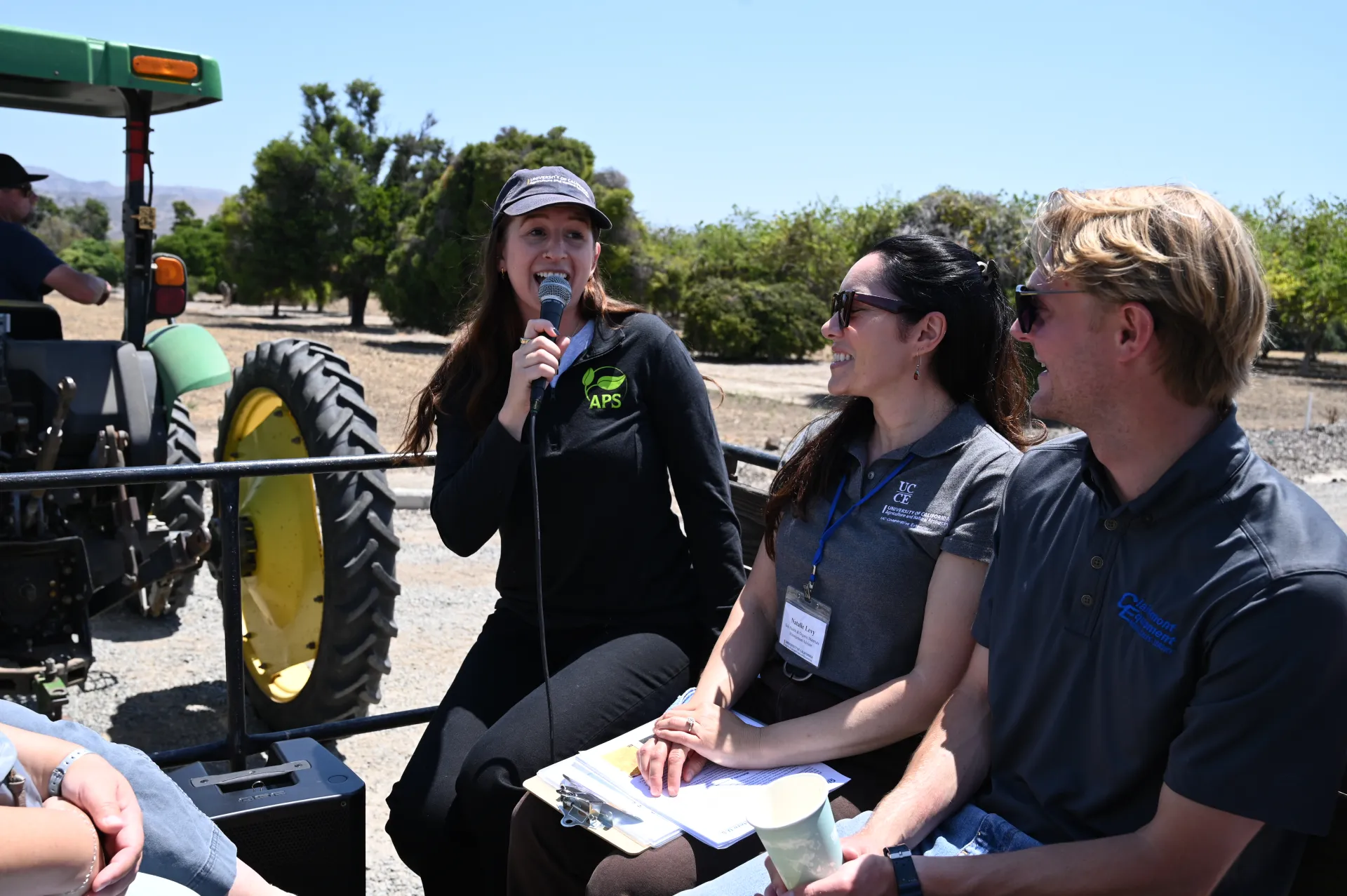
South Coast REC Director, Lindsey Pedroncelli, leading the Compost Caravan facility tour. Photo Credit: Art Zippel, art@artzippel.com
As part of the tour, Dr. Natalie Levy shared how the UC Landscape Plant Irrigation Trials™ have evolved from identifying low-water-use landscape plants to evaluating how organic mulch can improve soil structure, increase water infiltration, enhance soil moisture retention, and ultimately reduce irrigation demand in both urban and agricultural systems. Dr. Levy highlighted how compost (incorporated) and mulch (top layer) applied to urban landscapes can help address some of Southern California’s most pressing challenges, including water conservation, climate resilience, and organic waste recycling.
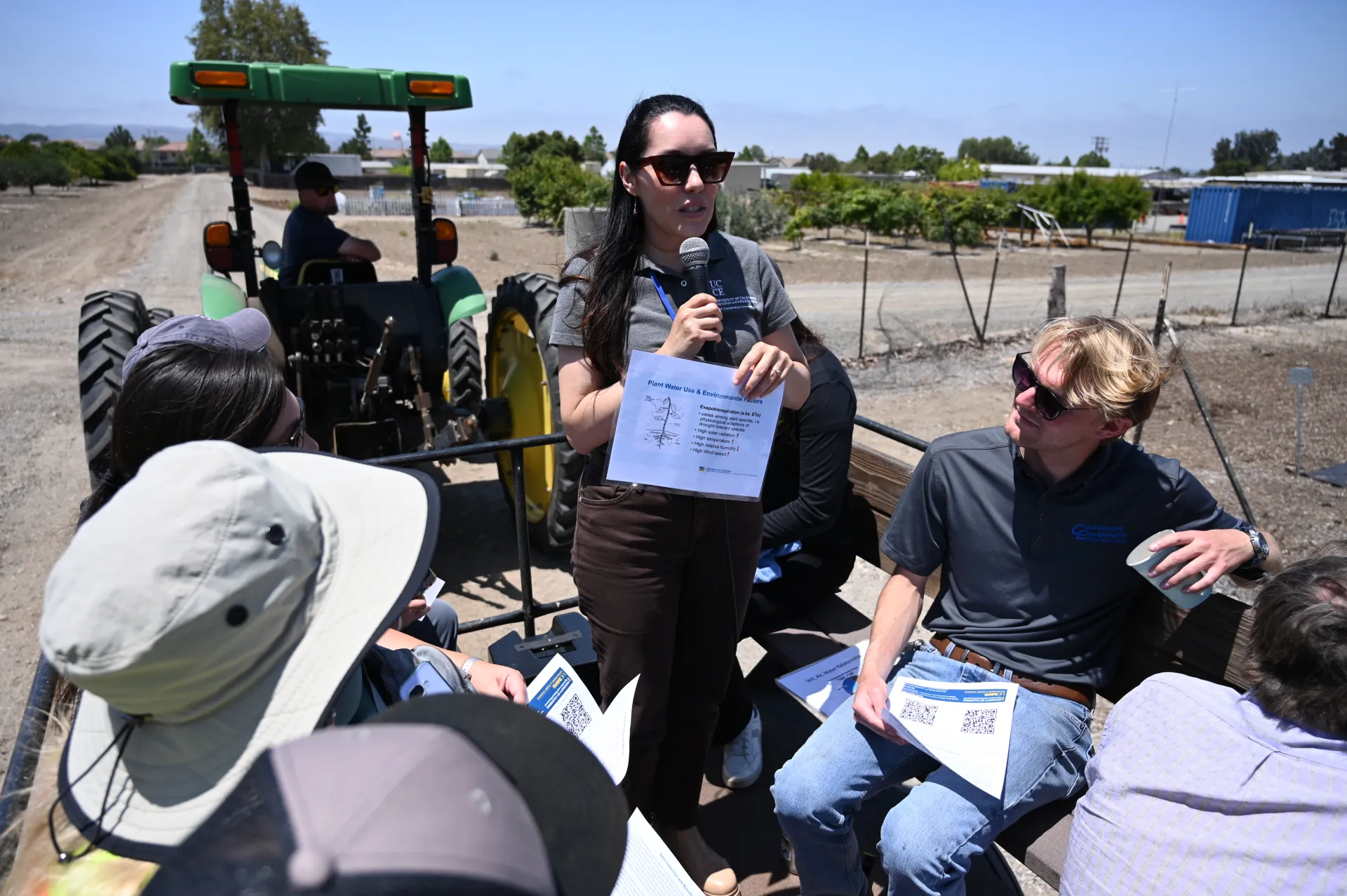
Natalie Levy, Soil Health & Organic Materials Management Advisor sharing details from the UC Landscape Plant Irrigation Trials™ with tour participants. Photo Credit: Art Zippel, art@artzippel.com
Why Urban Landscapes Matter
One of the key messages of the Compost Caravan was the critical role that urban landscapes play in conserving Orange County's water resources. According to the USDA 2022 Census of Agriculture, Orange County contains 37,658 acres of farmland. While the Census does not report the acreage of urban landscapes, irrigated residential, commercial, institutional, and park landscapes collectively represent one of the county's largest managed vegetation systems. Because outdoor irrigation accounts for an estimated 30–60% of residential water use (U.S. EPA Water Sense website), improving landscape water efficiency presents one of the greatest opportunities to conserve potable (drinking) water. Thoughtful irrigation management, combined with practices that improve soil health—such as compost incorporation and wood chip mulching—can significantly reduce water demand while creating healthier, more resilient landscapes.
Smarter Irrigation Through Healthier Soils
At South Coast REC, participants toured the Climate Ready Vines trial that was recently completed in April 2026. They learned how irrigation scheduling can be based on soil moisture depletion and weather data collected through the California Irrigation Management Information System (CIMIS). Rather than watering on a fixed schedule, irrigation can be triggered when plants have used a predetermined portion of the water stored in the soil. This approach encourages deeper rooting, healthier plants, and reduced water waste. The research demonstrated a simple but often overlooked principle: healthy soils with improved aggregation store more water, allowing plants to go longer between irrigation events.
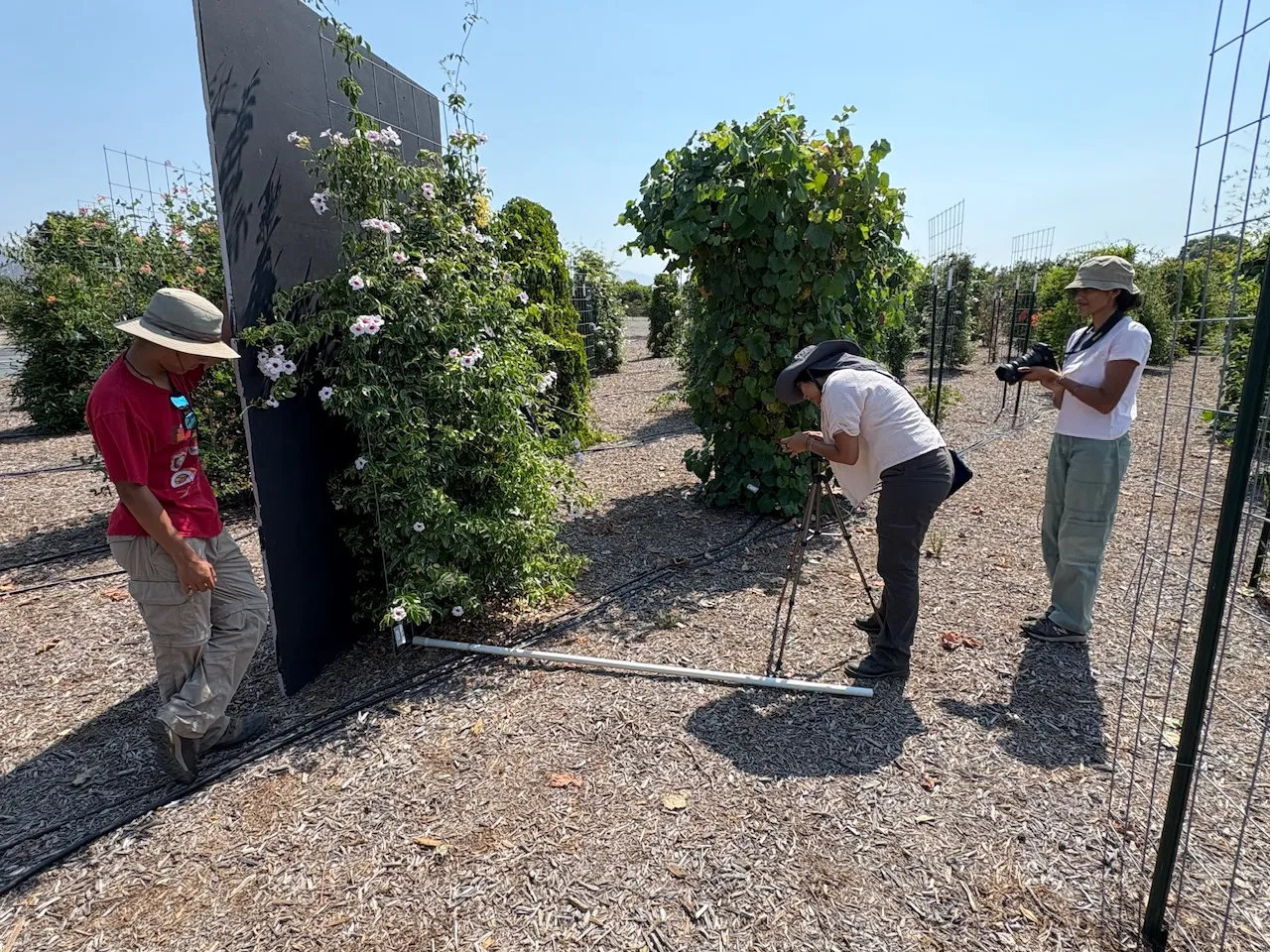
Thermal data collection method used in the Climate Ready Vines trial. Photo credit: Natalie Levy, nlevy@ucanr.edu
The Hidden Value of Wood Chip Mulch
One of the most popular discussions during the field tour focused on arborist wood chip mulch and its role in water conservation.
A 3–4 inch layer of mulch provides immediate benefits by:
- Reducing soil evaporation
- Moderating soil temperatures
- Suppressing weeds
- Protecting soil from erosion and compaction
A recent review of mulch research (Ramos et al., 2024) found that mulches can significantly reduce soil evaporation and improve irrigation efficiency, helping more rainfall and irrigation water remain available to plants. Over time, wood chip mulch also contributes organic matter to the soil. As the mulch decomposes, it supports soil organisms, improves aggregation, increases infiltration, and enhances the soil’s ability to store plant-available water. Participants learned how repeated mulch applications gradually create a biologically active “soil sponge” that can store and slowly release water to plants. Even before measurable increases in soil organic matter occur, improvements in soil structure often led to greater infiltration, deeper rooting, reduced runoff, and improved moisture retention. In Southern California’s compacted urban soils, maintaining a continuous layer of wood chip mulch is one of the most effective long-term strategies for increasing soil water storage while reducing irrigation demand.
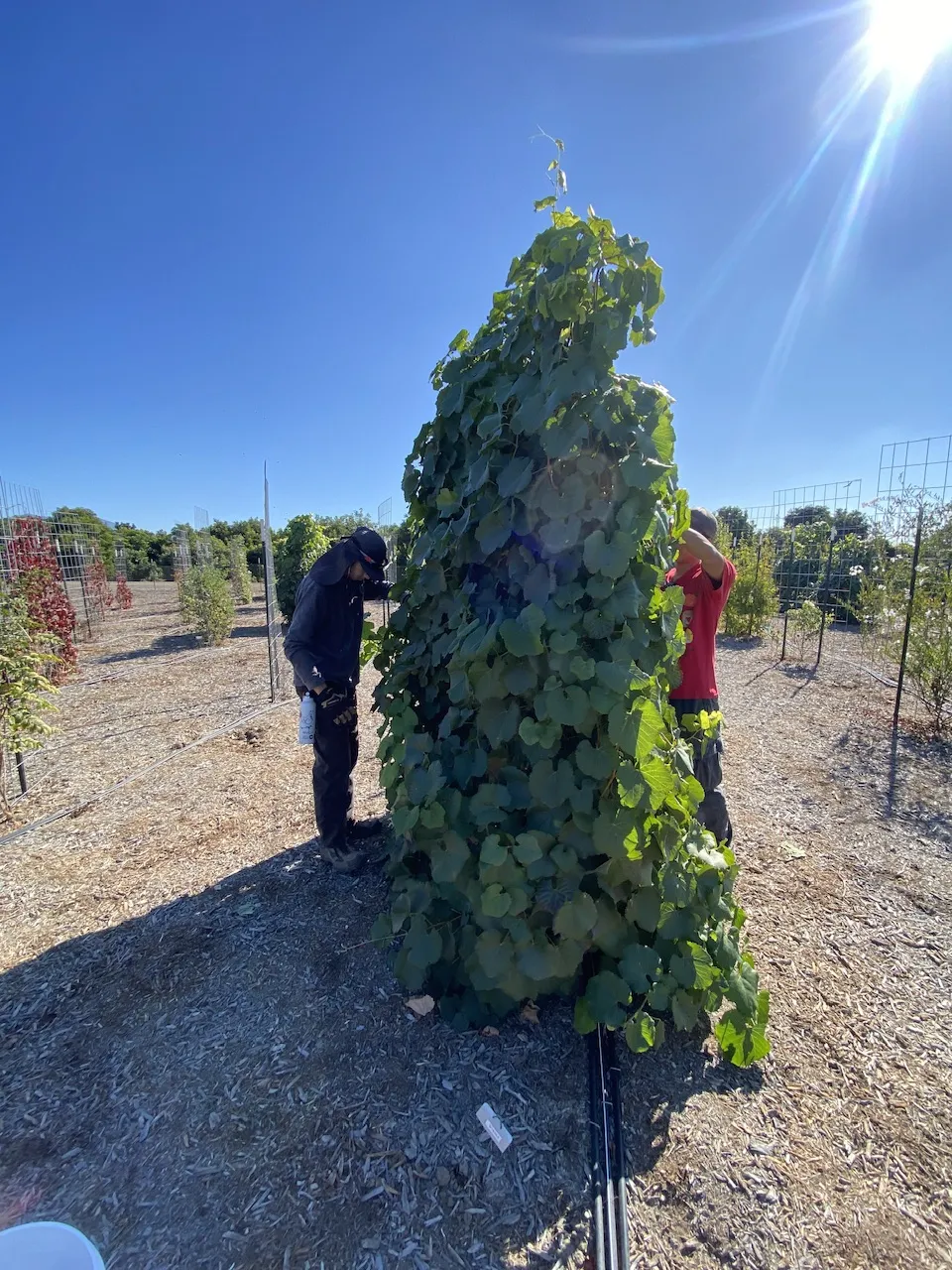
Maintenance of Roger’s Red grapevine (Vitis californica) grown in the Climate Ready Vines trial. Photo Credit: Natalie Levy, nlevy@ucanr.edu
Learning the Rapid Composting Method
Another highlight of the Compost Caravan at South Coast REC was a visit to the Orange County UCCE Master Gardener compost demonstration area. Participants learned the fundamentals of the UC Rapid Composting Method, often referred to as "hot composting," which accelerates the decomposition process through careful management of carbon-rich ("brown") and nitrogen-rich ("green") materials, moisture, oxygen, and temperature.
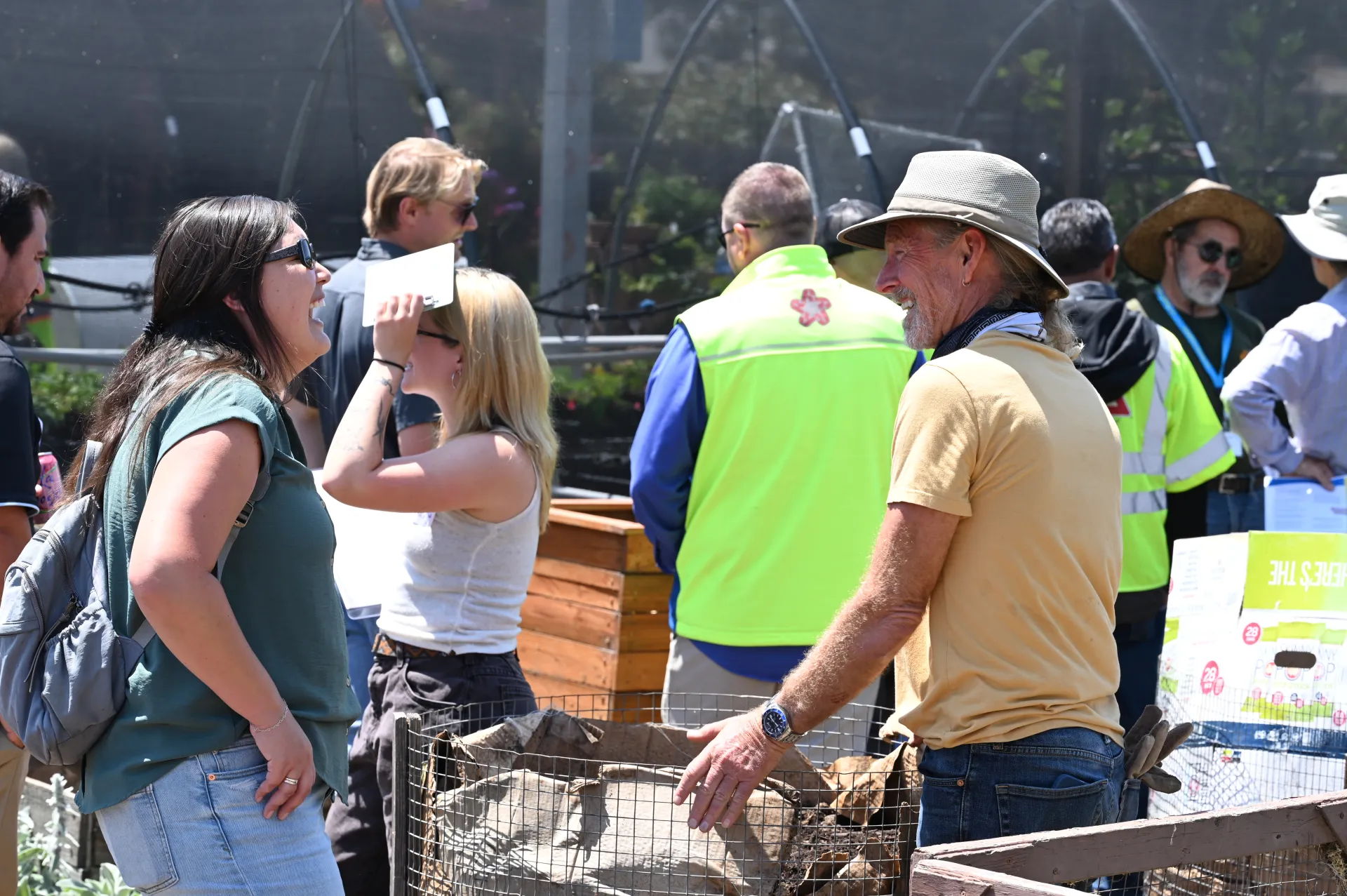
Master Gardener, Derek Voien (pictured right), discusses the UC Rapid Composting Method with Compost Caravan participant. Photo Credit: Art Zippel, art@artzippel.com
Master Gardener volunteers demonstrated how compost piles are constructed using approximately equal volumes of carbon and nitrogen materials and discussed the importance of maintaining moisture levels similar to a wrung-out sponge while regularly turning the pile to provide oxygen. Participants were able to observe compost thermometers in active piles and learn how beneficial microorganisms generate heat during decomposition. The rapid composting method can produce finished compost in as little as six to eight weeks when temperatures are properly managed, compared to many months for traditional passive composting methods.
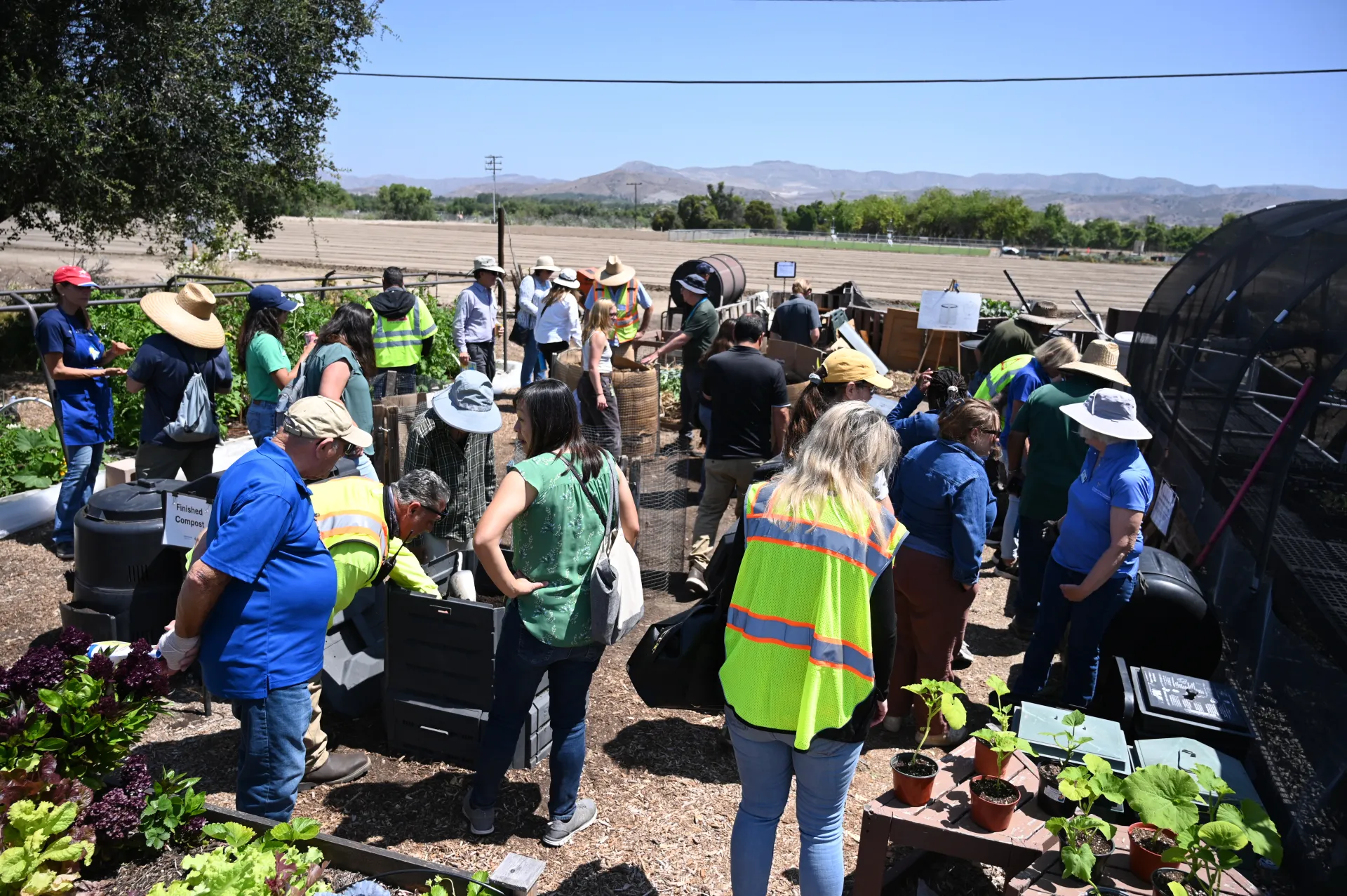
Compost Caravan participants touring the Compost Demonstration Area at South Coast REC. Photo Credit: Art Zippel, art@artzippel.com
The demonstration also connected backyard composting to California's SB 1383 goals by showing residents how they can divert certain food scraps and yard waste/trimmings from landfills and process them at home. Participants received educational materials developed by the OC Master Gardeners to help them compost successfully at home and create a valuable soil amendment that improves soil health, water retention, and plant growth.
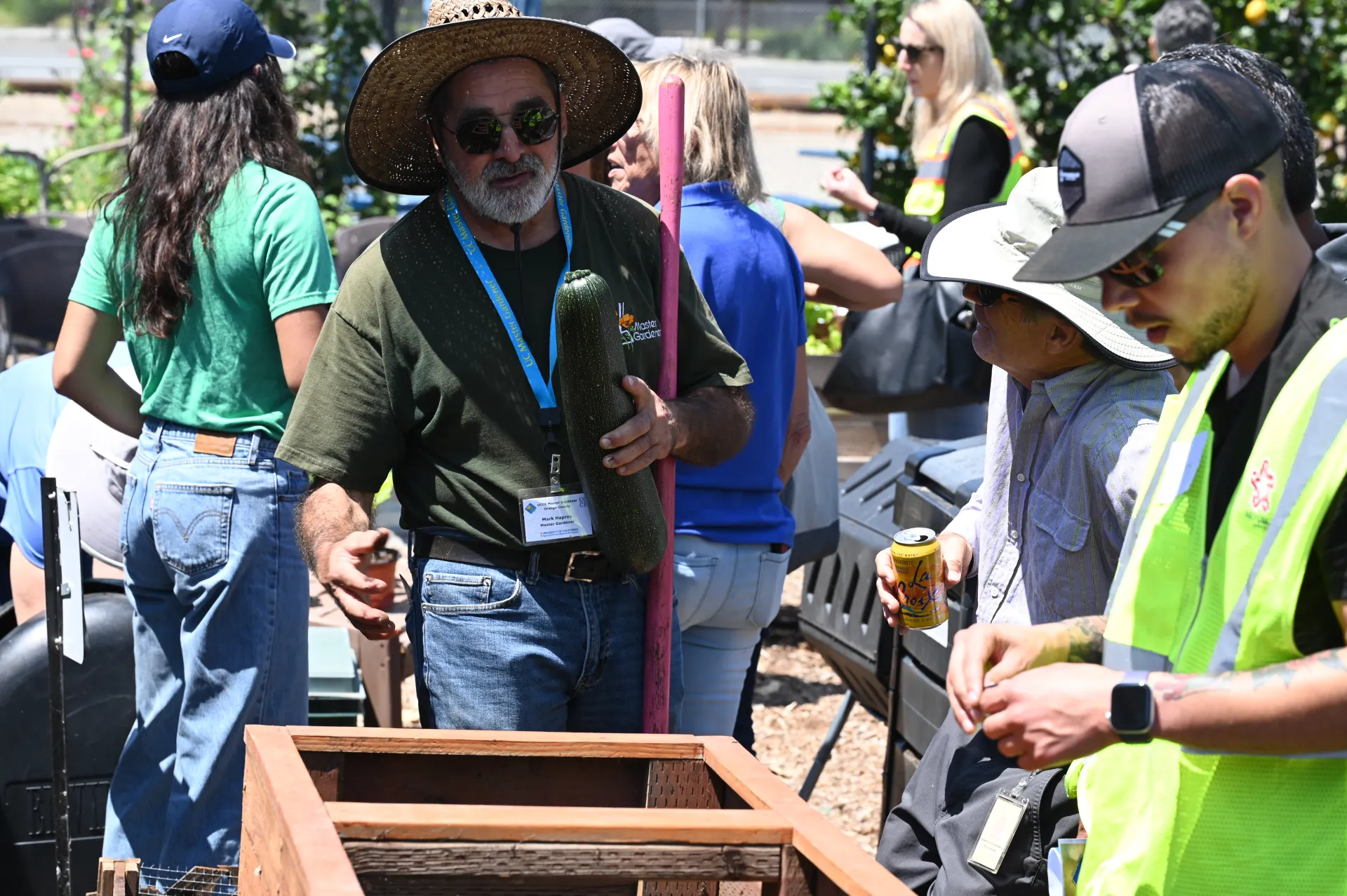
Mark Haprov, the UC Master Gardener Compost Demonstration lead, discusses vermicomposting with Compost Caravan participants. Photo Credit: Art Zippel, art@artzippel.com
Community Impact: Support for the Compost Caravan
The success of the Compost Caravan was made possible through the collaboration and generosity of numerous community partners, public agencies, private organizations, and local leaders who share a commitment to advancing soil health, water conservation, and sustainable organic materials management in Orange County.
The organizing partners—including OC Waste & Recycling, the UC ANR South Coast Research and Extension Center, the Orange County Sheriff's Department, Finn Corporation, and Cool OC—each played a vital role in creating a unique educational experience that connected participants with real-world examples of composting, research, landscape management, and organic waste recycling. Their contributions provided access to facilities, equipment, expertise, and demonstrations that brought the concepts of the circular economy to life.
The event was made possible through the support of sponsors (Tetra Tech, SCS Engineers, Ecoverse, and Agromin) and demonstrated the importance of public-private partnerships in advancing innovative solutions for resource recovery and environmental stewardship. Additionally, the participation of Vice Mayor James Mai, Council Member Melinda Liu, and staff from Council Member Mike Carroll's office underscored how vital local leadership is in advancing policies that promote composting, water conservation, and climate resilience. Their participation, along with the questions, ideas, and enthusiasm shared by attendees, helped make the event a meaningful exchange around local sustainability solutions.
The Compost Caravan demonstrated that meaningful progress happens when researchers, public agencies, elected officials, businesses, growers, educators, and community members come together around a shared vision. The partnerships showcased throughout the event help build a stronger circular economy in Orange County one that transforms organic waste into valuable resources that support healthier soils, more resilient landscapes, and a more sustainable future.
References
Ramos, T. B., Darouich, H., & Pereira, L. S. (2024). Mulching effects on soil evaporation, crop evapotranspiration and crop coefficients: A review aimed at improved irrigation management. Irrigation Science, 42, 525–539. https://doi.org/10.1007/s00271-024-00882-0
U.S. Environmental Protection Agency. (n.d.). Outdoor water use in the United States. WaterSense. Retrieved June 11, 2026, from https://19january2017snapshot.epa.gov/www3/watersense/pubs/outdoor.html
United States Department of Agriculture National Agricultural Statistics Service (USDA NASS). (2024). 2022 Census of Agriculture: Orange County, California County Profile. USDA Census of Agriculture.