
According to the June 2026 NASS Acreage Report, U.S. rice planted area fell sharply to 2.017 million acres, a 28% drop from the previous season and the lowest number of rice acres since the 1970s. The steep decline is largely attributed to severe weather issues (including localized moderate to extreme drought across key production states like Arkansas, Mississippi, and Missouri), ever-increasing input costs, and a slow domestic and export demand outlook.
Grim news continues from Arkansas, where in 2025, the state led the nation with 33 Chapter 12 farm bankruptcy filings, a record high in the 21st century. At the end of June, Riceland Foods, a major cooperative based in Stuttgart, AR, announced a temporary closure of nine of its 23 rice drying facilities, citing both historically low rice acres and prices. Another Arkansas rice cooperative, Producers Rice Mill is considering also temporarily idling two drying facilities for the same reasons. While the reduction in drying operations is concerning, what is more concerning is the potential for permanent changes to rice infrastructure and the potential long-term impact of losing some traditional U.S. markets. There is also the threat of long-term loss of workers to other industries if these operations are ceased for too long.
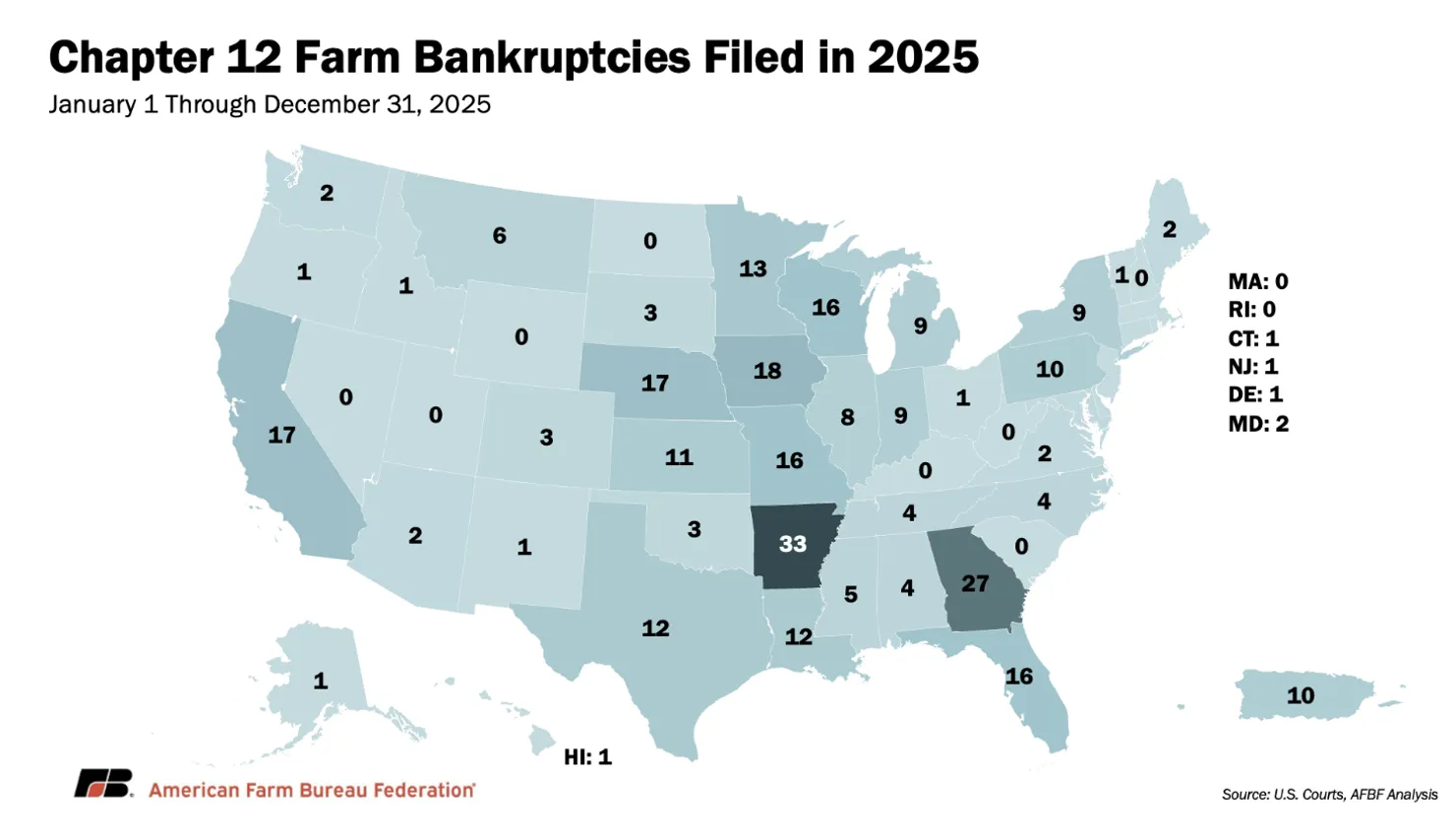
Figure 1: The surge in Chapter 12 farm bankruptcies across the U.S. in 2025, with Arkansas and Georgia experiencing the heaviest financial strain (AFBF Analysis).
In California, it is a bit of a different story; California rice acreage is notoriously difficult to confirm, with visual (and proprietary) estimates coming from Land IQ on July 1. With a planting season plagued by recurrent storms, planted acreage for the 2026 season is estimated at 455,000 acres, compared with 524,000 acres the previous year (USDA Acreage Report). Still a drop in acreage, but not to the level experienced in the Mid-South. Despite this (or perhaps because of it), American medium- and short-grain production projections have not changed from May to June, remaining at 52.7 million cwt (WASDE, 2026).
Existing supply
Closing out June 2026, the USDA released the quarterly Rice Stocks report on June 30, 2026. To possibly no one’s surprise, the rice market is looking bearish; rough rice stocks were up 7 percent from last year, totaling 74.8 million cwt, with medium grain and short grain varieties accounting for 27% of the total rough rice. California accounts for 17.9 million cwt of rough rice stocks and is the only rice-producing state to have less rice in storage than the previous year (down 4.7%).
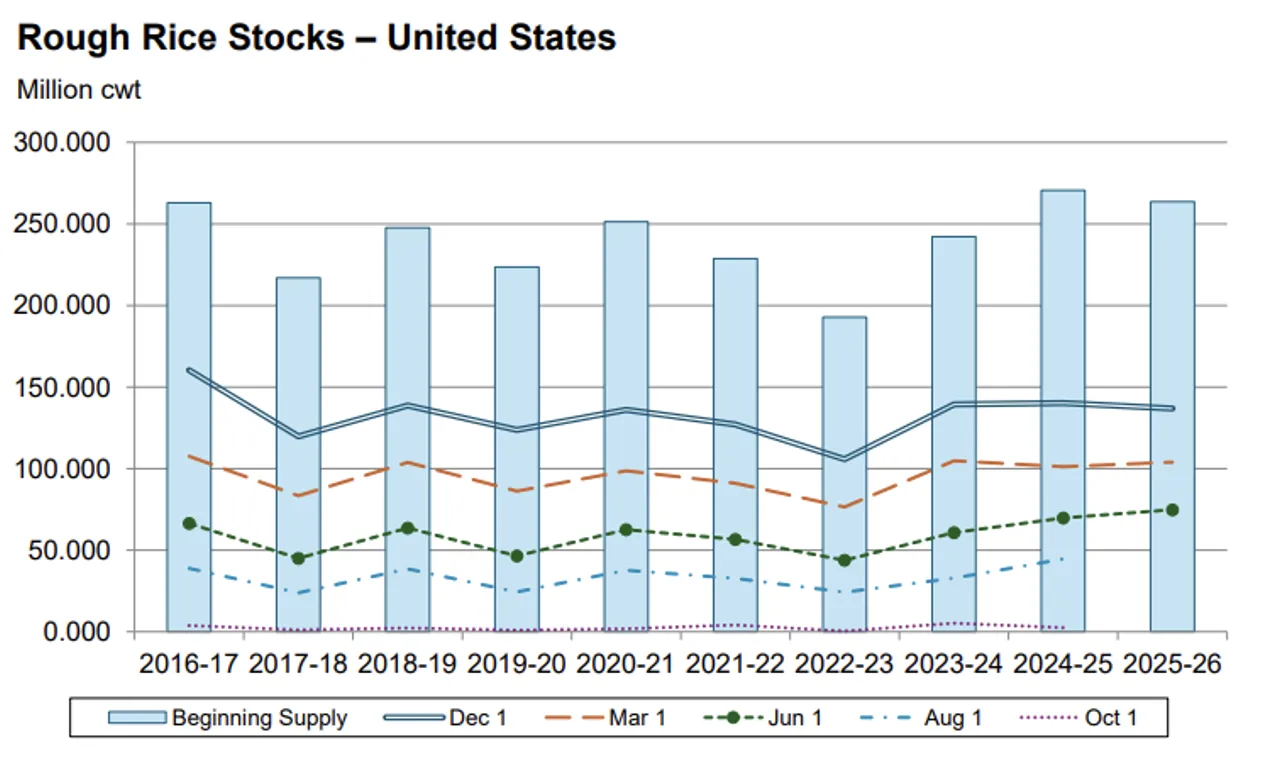
Figure 2: The amount of rough rice stocks in the United States by position and month against the beginning supply (USDA NASS data).
Looking forward
As of June 2026, the outlook for 2026/27 U.S. rice is for slightly higher supplies, equivalent demand from domestic use and exports, and slightly higher ending stocks. Total supplies are up due to larger beginning stocks. This increase was driven by a drop in 2025/26 long-grain exports, partially offset by a minor decline in medium- and short-grain imports. With 2025/26 domestic demand holding flat, the resulting supply surplus pushes ending stocks up by 0.5 million cwt to a 40-year high of 54.8 million. Price projections remain unaffected, with the 2026/27 season-average farm price (SAFP) steady at $13.50 per cwt, compared to the updated 2025/26 estimate of $12.50.
Compared to long-grain prices, medium- and short-grain prices, while not the strongest, are relatively stable. According to the June 2026 projections in the June 2026 World Agricultural Supply and Demand Estimates (WASDE), California medium/short-grain SAFP is projected at $20.00 per cwt for the 2026/27 marketing year, down slightly from an estimated $20.30 in 2025/26. The California medium/short-grain price largely reflects rice that is sold through price pools. In these marketing pools, cooperatives or handlers market the growers' rice collectively throughout the crop year to achieve the best average market price, rather than selling it all at a single spot-market price at harvest. Because of these pooling arrangements, the final pool price is not settled until all the rice within that specific pool has been completely marketed. As a result, the monthly prices reported by the National Agricultural Statistics Service during the year are often fluid.