
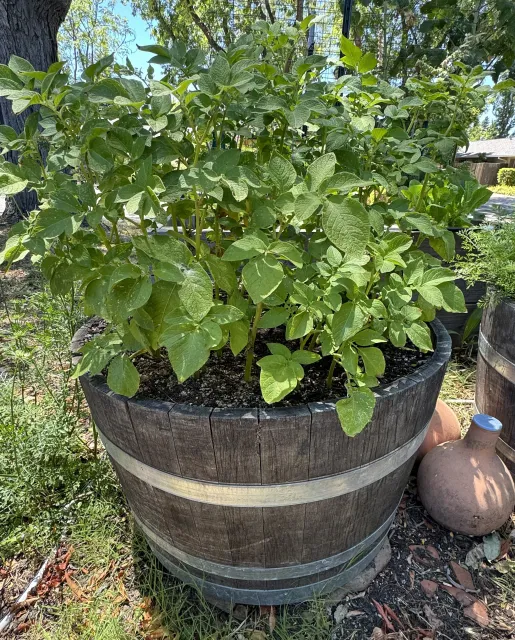
This column is written by the UC Master Gardeners of Yolo County each month. It provides answers to selected questions recently asked by Yolo County gardeners.
Question: How do you grow potatoes?
Answer: Potatoes are nutritious, versatile, and easy to grow. They can be planted directly into the ground or grown in containers such as pots, bags, and even “straw towers.”
Unfortunately, unlike the potatoes of yesteryear, you won’t be able to grow a new crop using store-bought potatoes, which these days are treated to prevent sprouting.
Instead, you’ll need seed potatoes specifically bred for planting and (if they’re certified) disease-free. These seed potatoes—they’re not literally seeds, by the way—can be planted whole into the ground or, if larger than egg-sized, can be cut into pieces containing at least one bud eye. To help keep the cut pieces from rotting once they’re planted, allow them to sit for a day or two until the cut sides callous over. Before cutting the seed potatoes, it’s recommended that you “chit” them by laying them in a bright, dry and warm room until sprouts emerge from the bud eyes. This “chitting” encourages early plant growth and can speed the development of the crop.
Whether you’ll be growing potatoes in soil, compost, straw, or potting mix, you’ll want to plant your seed potatoes or cuttings about six inches deep and one foot apart in a well-draining medium where the plants will receive six to eight hours of sunlight each day.
When the plants reach about six inches high, you’ll need to mound the growing medium around the base of each plant to cover the lower stems, a technique called “hilling.” Continue hilling through the growing season. This keeps the potato tubers from direct sunlight (which turns them green and toxic) and encourages the production of more tubers along the buried stems. If using containers, you can plant the seed potatoes or the cut pieces lower in the container and add the medium to the container when it’s time for hilling. Potato plants will need about 1 to 2 inches of water per week.
Small “new potatoes” can be harvested once the plants flower. The full-sized potatoes won’t be ready until the leaves start to yellow and die back, at which point you’ll want to stop watering and wait a couple of weeks for the skins to toughen before digging up the crop.
There are many varieties available, but the more reliable ones for our Yolo County climate include ‘Russet Norkotah (also Nekota),’ ‘Yukon Gold,’ ‘Kennebec,’ and ‘Red Norland.’ Planning around potential winter frost, you can plant potatoes at different times of the year. Depending on the variety, crops will be ready for harvesting 85 to 100 days after planting, so it’s possible to start some varieties during the summer. The only risk with growing potatoes in the summer months is that the soil gets too hot for the tubers.
If you’re still wondering whether potatoes are worth trying to grow in your own garden, consider that researchers believe potatoes are such an important crop that they’re currently studying ways to grow them on the moon. Yes, astronauts will one day be growing potatoes in space, but that doesn’t mean it’s rocket science.
This article previously appeared in the Winters Express and Davis Enterprise.
Have a gardening question? Send it to jmbaumbach@ucanr.edu, with “Ask MGs” in the subject line. Include as much detail as possible and pictures if you have them.