"It's a trap, a floral trap."
That's what we wrote in a 2020 Bug Squad blog.
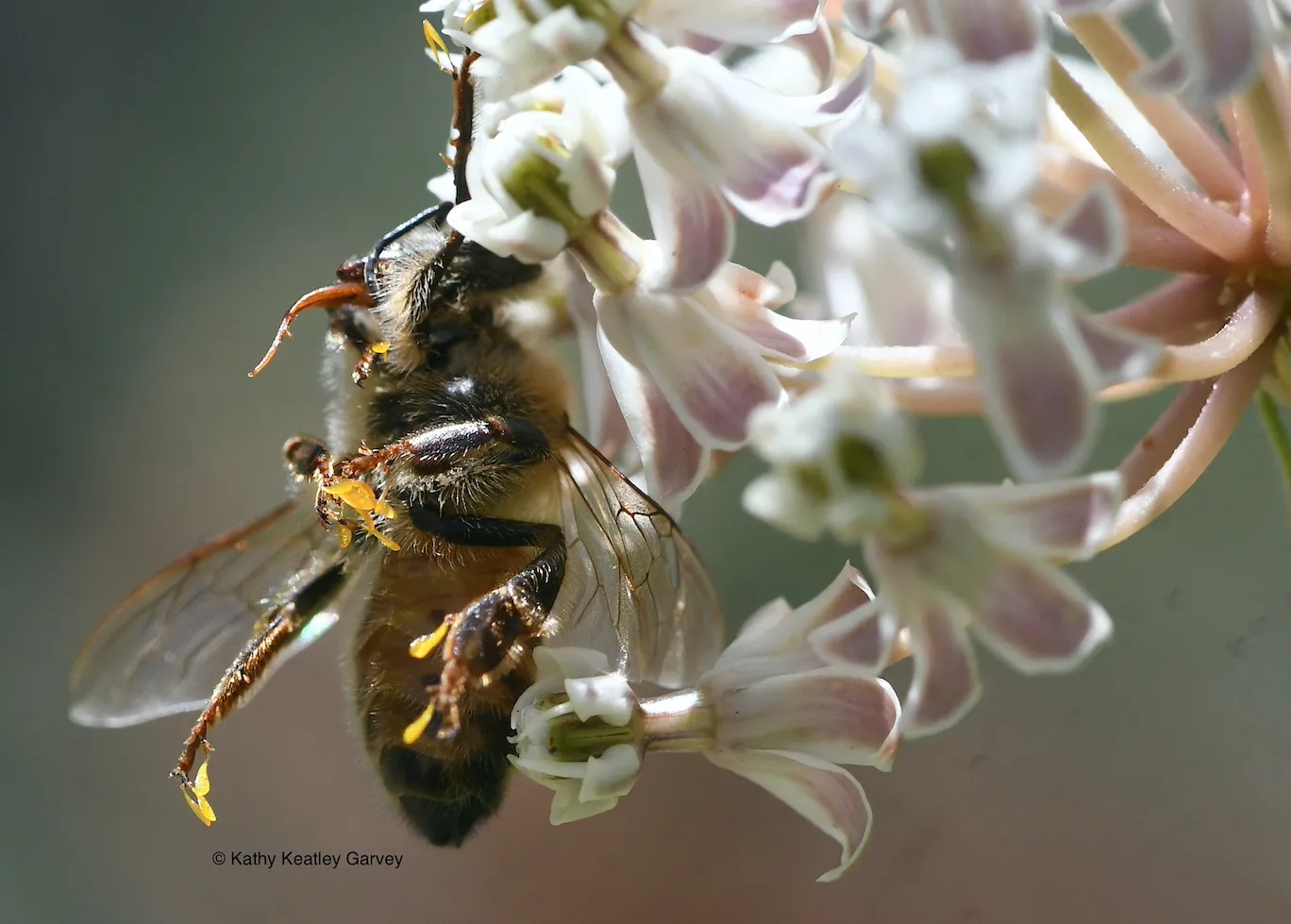
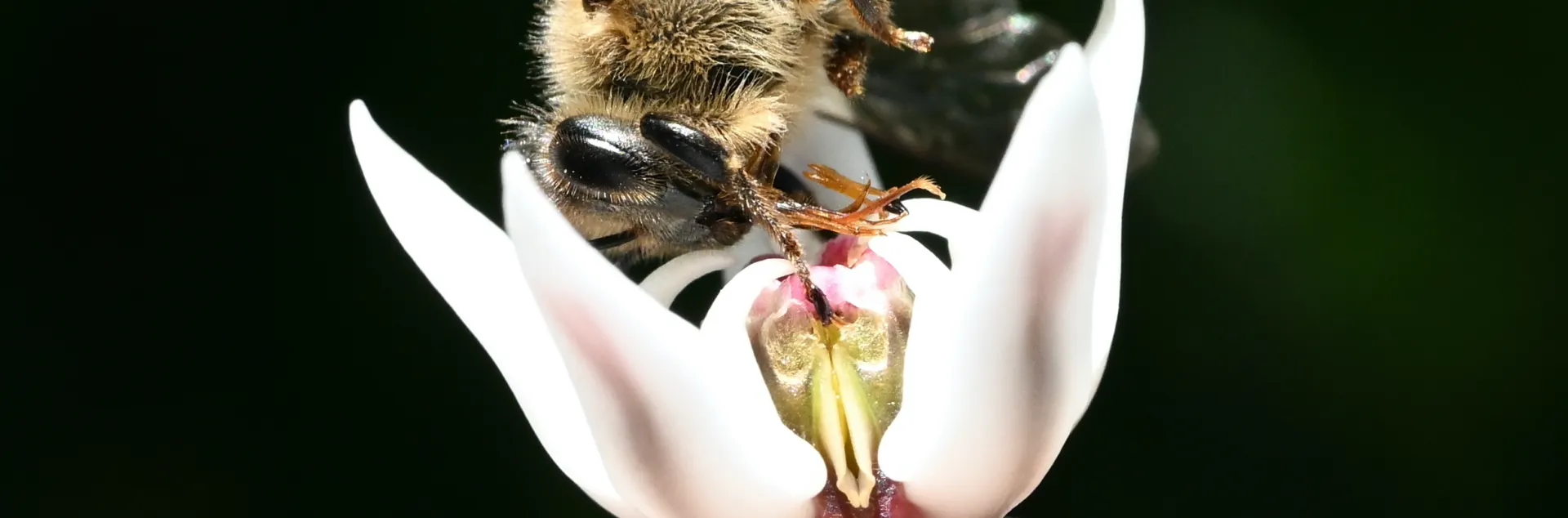
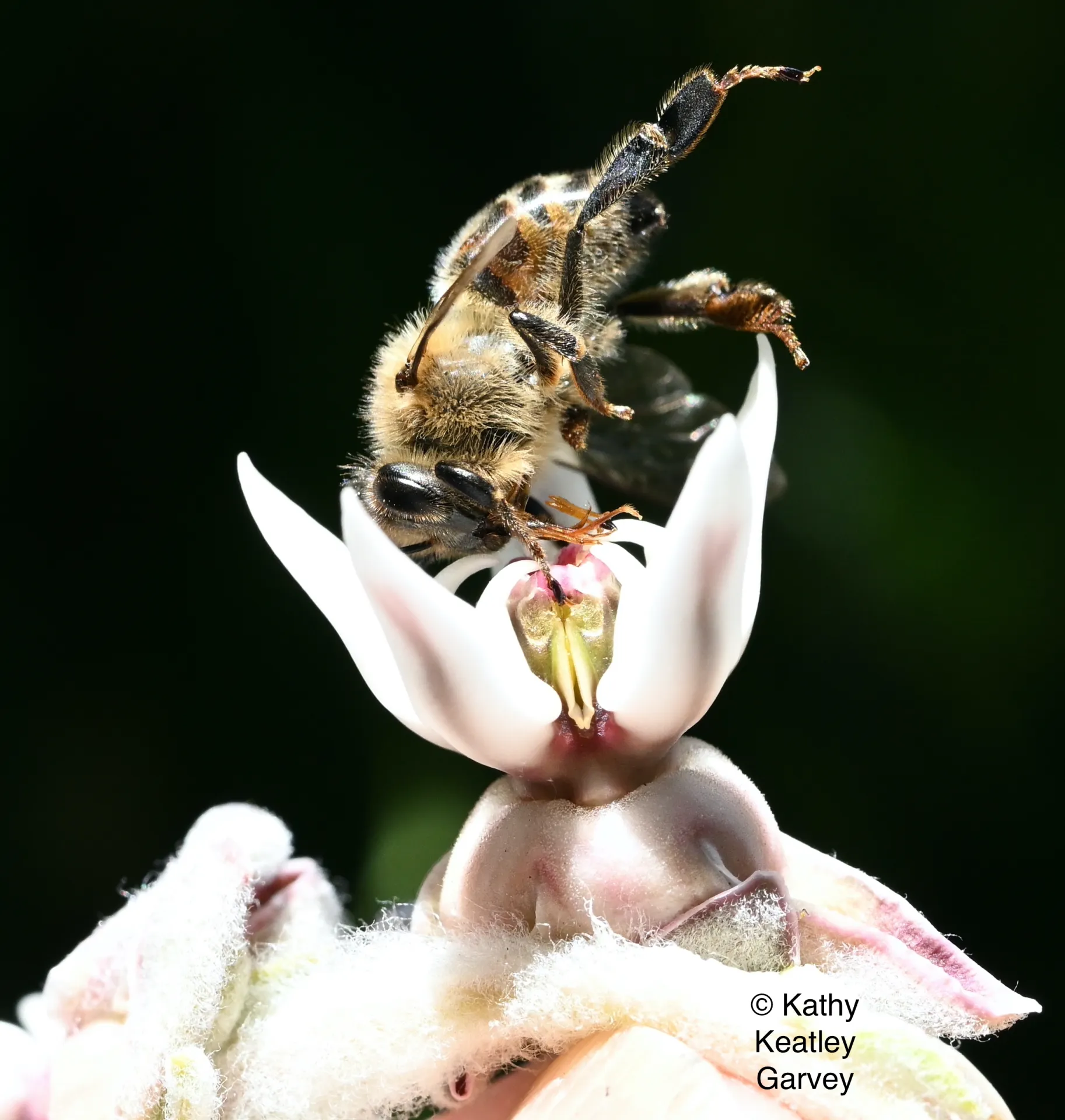
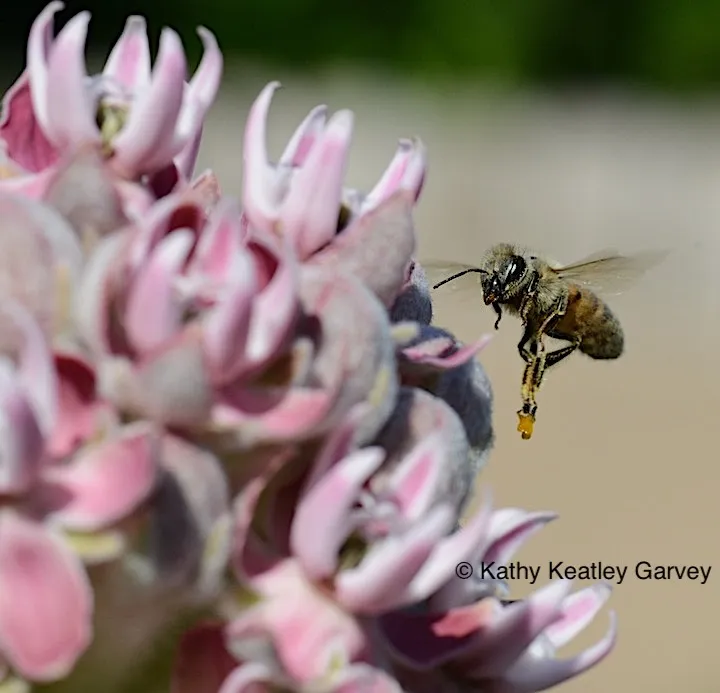
"If you've never seen this, this is how it works: milkweed produces pollinia, a sticky structure or packet of pollen grains originating from a single anther (male part). During the flower's complex pollination process, the mass is transferred as a single unit and looks like a yellow wishbone dangling on a honey bee's legs or other parts of her anatomy. It's a devious way for the milkweed to force insects to help them reproduce--in exchange for the sweet nectar reward. (Orchids produce pollinia, too.)"
"Oh, the nectar is so enticing! Honey bees (and other insects) literally make a bee-line for the it. They buzz and bump around as they await a vacancy. The scenario almost calls for crowd control or at least traffic lights."
"But it's a trap, a floral trap. Sometimes you'll see frenzied bees struggling to free themselves from the sticky nectar trough. They are not always successful. Return to the scene of the grime and you'll see insect parts or whole insects trapped in the sticky mass. Dead."
Fast forward to today.
When the Louie Yang lab, UC Davis Department of Entomology and Nematology, recently published its research, “Trapped Honey Bees Reduce Floral Visitation on Milkweed Flowers,” in the journal Ecology, that prompted some folks to look for dead bees in milkweed. Note that the research is unique in that it examines the potential costs of arthropod entanglement. Co-authors are Professor Yang and Louie Yan Jett, a 2025 UC Davis graduate in entomology who worked with Yang for three years as part of the Research Scholars Program in Insect Biology (RSPIB).
"We expected," the scientists wrote in their abstract, "that the presence of a dead trapped bee would reduce floral visitation via two non-mutually exclusive pathways: (1) a direct deterrent effect on floral visitors and (2) an indirect deterrent effect mediated by an increased abundance of scavenging predators such as ants. The presence of a dead bee reduced floral visitation by 37 percent compared with controls, and this effect was stronger and more robust for honey bee visitors than non-Apis visitors."
"Our results suggest that the lethal entanglement of honey bees is likely to incur an ecological cost for milkweed flowers, although the deterrence of honey bees could also shift the pollinator communities on milkweeds with unexpected consequences," they noted.
On a recent visit to the UC Davis campus, we encountered one trapped--and dead--bee in a patch of showy milkweed. Other bees buzzed by, choosing to forage on other blossoms.