
As the days warm up, get longer, and invite a stroll through the garden or just a sit to enjoy the surroundings, know that garden pests are not taking a summer break. Spending a bit of time in the earlier, cooler mornings to monitor and remove pests will lead to a more enjoyable garden and landscape experience.
Summer Weed: Enjoing the heat, living on minimal water, and being difficult to eradicate are the hallmarks of summer weeds.
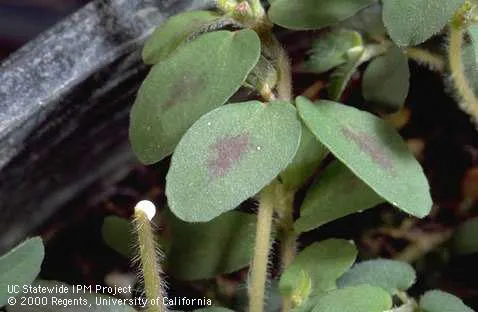
Spotted Spruge (Euphorbia maculata) is a scourge facing most gardeners, and one that needs immediate attention to prevent it from spreading throughout a garden or landscape. These weeds invade everything and, although annuals, are difficult to eliminate from the garden.
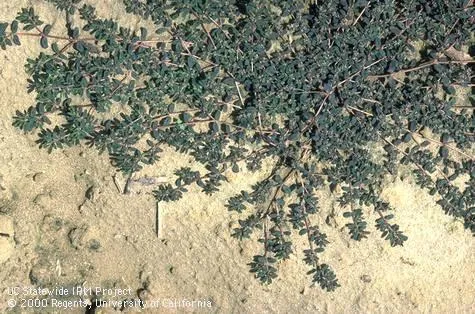
It’s easy to spot this weed. As the name suggests, each leaf has a spot midway on the small, dark green leaf. The leaves are only ⅛ to ½ inch long and about ½ inch wide. The plant grows close to the ground, often forming a spreading mat of up to three feet. That is most dense at the base of the weed. These weeds are prolific, capable of producing thousands of seeds per plant if left to grow unchecked. Spotted spurge will happily grow in flower or vegetable gardens, on bare ground, under trees, in sparse lawns, and even in sidewalk and driveway cracks.
Constant monitoring is required to rid an area of spotted spurge. Solarizing areas before planting (covering the soil with clear plastic for four to six weeks before planting), using thick organic or synthetic mulch, or hand pulling young plants before they produce seed are all good control measures, as is using a preemergent herbicide applied in late winter.
Summer Insect/Pest: The heat and lack of water may deter many pests during the summer months, but those that remain are hardy and need to be sought out and reduced to allow plants to flourish.
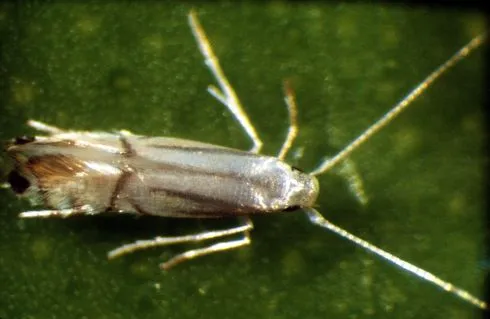
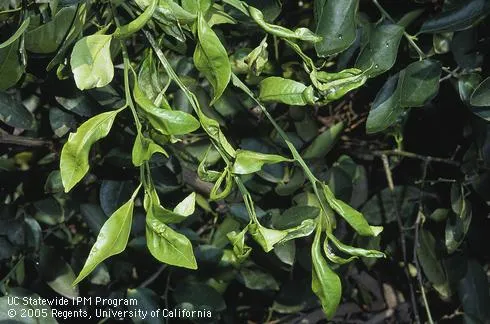
Citrus Leafminer (Phyllocnistis citrella) is unlikely to cause a mature or even a young tree in the garden to die, and usually doesn’t affect the yield of fruit, but its damage is unsightly. Leafminer larvae feed on young shoots and leaves in citrus trees. Pruning more than once a year invites not only abundant new growth, but also leafminer moths and their resulting damage. The larvae of these moths feed by creating shallow tunnels (mines) in the new leaf growth of oranges, mandarins, lemons, limes, grapefruit, and other varieties of citrus, plus the new leaf growth of closely related plants like kumquat and calamondin. As the larvae grow, they mine the leaf for food in a meandering path. Once ready to pupate, the larvae leaves its mine and rolls the leaf around itself, preparing for adulthood. This rolled, distorted leaf is unsightly and a reason enough to work on the control of the citrus leafminer.
Citrus leafminers are killed by various parasites and predators (beneficial insects). Tiny, non-stinging wasps lay their eggs inside the mine, inside or on top of the leafminer larva. The wasp hatches and eats the larva. Older, hardened leaves are not attractive to leafminers, so limiting pruning to once a year will aid in control.
Summer Disease: Like human diseases, landscape and plant diseases are seen as more prevalent in some areas than others.
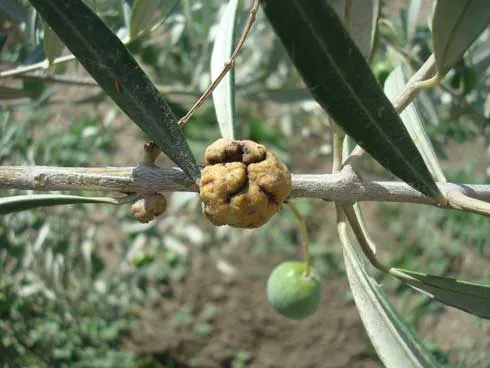
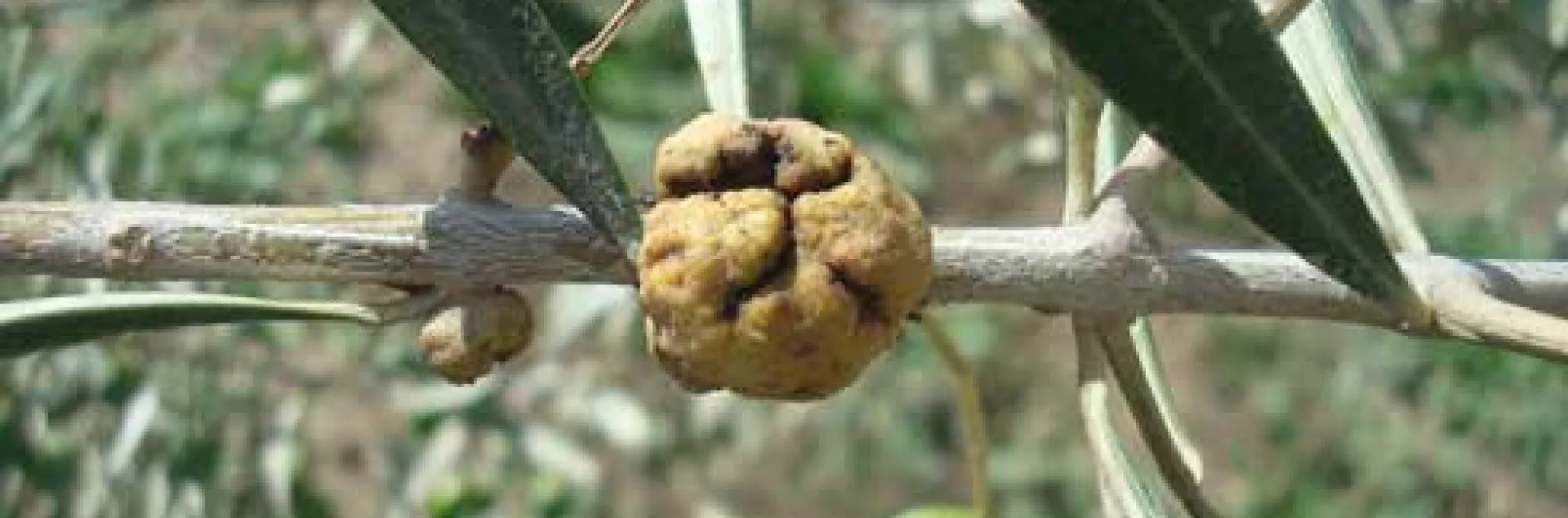
Olive Knot (Olea europaea) is, as its name suggests, a bacterial disease that is limited to olive trees. Spread by rainfall, the disease forms knots at the site of infection, whether at a leaf node, pruning wound, or wounds caused by frost damage, hail, or even mechanical means. The bacterium causes prolific plant growth at the injury that results in gall or “knot” development. The galls are easy to see on stems and twigs, but they have also been noted to form on leaves and fruit. development. Though galls typically form on stems and twigs, galls also have been observed on leaves and fruit. When it rains, the bacteria may form an ooze on the galls, which then spreads to other parts of the plant. This ooze is highly infectious!
Galls can be small or grow to encircle and kill an affected twig. Once a twig dies, fruit production for that tree is reduced, creating a problem for not only the commercial grower but also the home enthusiast. Olive knot not only hampers yield, but also adversely affects fruit size and quality, not to mention the actual aesthetic of the tree.
Although Olive knot disease spreads in the winter months when it rains, control must happen in the summer. Rain, wind, and contaminated pruning tools all contribute to the spread of the disease. A pruning wound can remain susceptible to infection for at least fourteen days, while a leaf scar (after a leaf drops) can remain open to infection for up to seven days. Clearly, to avoid the high probability of infection from rain and wind (during winter and spring months and starting again in autumn) and lessen the openings for the disease caused by leaf drop (heaviest in spring for olive trees), the best time to prune is summer. Pruning wounds made in the summer months scar over before there is an opportunity for the pathogen to attack the tree, so sanitizing the pruning tools with a ten percent bleach solution between cuts is less important in summer. Additionally, consider planting a less susceptible variety of olive tree than the Manzanillo.
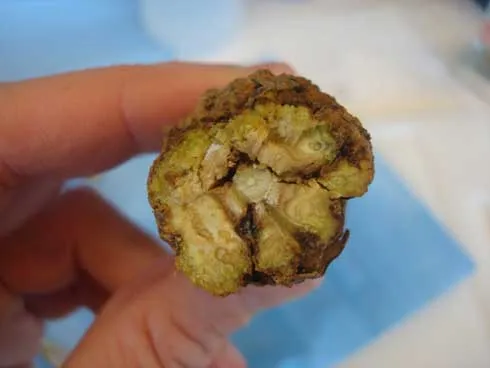
Insert pic gall issue can girdle twigs and stems
All information for this article has been gathered from the UC Statewide IPM Program site:
Spotted Spruge (Euphorbia maculata)
Citrus Leafminer (Phyllocnistis citrella)
Olive Knot (Olea europaea)
Image Credits:
Adult citrus leafminer. Credit: Rita E. Duncan UC IPM Pest Notes
Citrus shoots damaged by citrus leafminer larvae. Credit: David Rosen UC IPM Pest Notes
Spotted spurge with red leaf spots and a broken stem exuding milky sap. Credit: Jack Kelly Clark, UC IPM Pest Notes
Mature spotted spurge is a low-growing plant. Credit: Jack Kelly Clark, UC IPM Pest Notes
Olive knot galls form on twigs at sites of infection by Pseudomonas savastanoi. Credit: Elizabeth J. Fichtner UC IPM Pest Notes
Gall tissue can girdle twigs and stems. Credit: Elizabeth J. Fichtner UC IPM Pest Notes