

Question: I have a few plants that require low pH soil and I’ve read that adding coffee grounds helps acidify the soil. Is this true?
Answer: Great question! This is a commonly recommended remedy, but unfortunately it doesn’t work. It’s true that fresh coffee grounds are acidic. However, used coffee grounds are neutral and therefore won’t change your soil pH. The good news is that grounds are a good addition to your compost pile, where they’ll break down and add micronutrients that benefit your plants.
There are many garden remedy myths circulating throughout social media and the internet. Even experienced gardeners believe some of them. It’s always a good practice to check out such claims for yourself. Each Master Gardener program is associated with a university and provides research-based information to the public. We encourage you to contact your county’s Master Gardener program when you have questions.
Since we’re on the subject, here are a few more common garden remedy myths.
Myth: Eggshells prevent blossom end rot
Fact: Although eggshells are high in calcium, this remedy in unlikely to help. Blossom end rot is a disorder primarily affecting tomatoes that causes black water-soaked areas on the blossom end of the fruit. While the disorder occurs when plants lack calcium, it’s rarely because of a lack of calcium in the soil. Rather it’s caused by the plant’s inability to absorb the calcium due to inconsistent watering.
But even if your soil is deficient in calcium, adding eggshells probably won’t help. Crushed eggshells can take as long as 5 years to break down. Also, you would need a large quantity to make a difference. It’s better to add crushed eggshells to your compost instead.
To help control blossom end rot on tomatoes, water deeply but infrequently, giving them a good long soak every few days or so, and mulch with grass clippings, straw or other material to prevent rapid soil drying. Planting tomatoes too closely can interfere with water and nutrient uptake, so allow sufficient space around each plant. Applying too much nitrogen, especially when the plants are young, can also interfere with calcium uptake, so follow fertilization directions carefully.
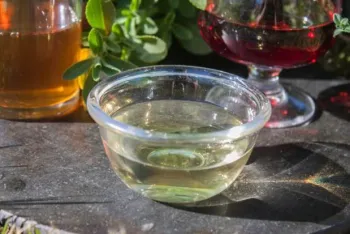
Myth: Household vinegar is a good weed killer
Fact: It may help, but vinegar is not very effective. Vinegar is caustic and may kill the foliage of young annual weeds. However, it doesn’t affect root systems so the weeds will likely regenerate. It’s completely ineffective against perennial weeds.
Herbicidal vinegar, which is stronger than household vinegar, is more successful at killing surface foliage. But as a contact herbicide, it doesn’t affect root systems, so weeds eventually grow back. Herbicidal vinegar is also dangerous and can burn the skin and cause eye injury. Be careful to follow instructions for safe use.
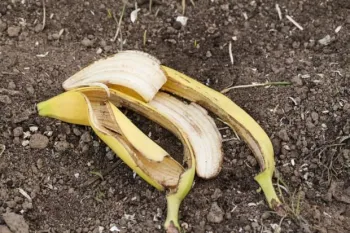
Myth: Banana peels add potassium to the soil
Fact: They’re unlikely to help and may create problems. Although bananas peels do contain potassium, which is needed by plants for growth and flower production, it takes a long time for banana peels to break down and release potassium into the soil. Furthermore, the breaking down process requires nitrogen, which means less nitrogen is available for the plants. Also, leaving peels on the soil may attract unwelcome pests, such as rats and skunks. A better idea is to incorporate the peels into your compost pile.
Myth: Baking soda is a good way to control powdery mildew
Fact: It may help, but it can also harm your plants. The use of baking soda (sodium bicarbonate) in the garden has been promoted since 1924 when it was first recommended for rose diseases. Today, it’s commonly used to control powdery mildew on plants. When mixed with oil and water, baking soda can be effective if applied at the first sign of powdery mildew, but without oil it won’t work.
However, baking soda is a salt. Since repeat applications are necessary, this treatment, especially with the added oil, can burn foliage. It can also add salt to your soil, which is highly damaging to plant life. There are far better and safer treatments for powdery mildew than baking soda.
Myth: Epsom salts are a good general fertilizer
Fact: It probably won’t have any effect unless your plants have a magnesium deficiency. Epsom salts are composed of magnesium and sulfur, nutrients necessary for plant growth. However, it shouldn’t be added to plants unless they’re deficient in those elements. Adding Epsom salts to soil that has sufficient magnesium can harm your soil and plants by inhibiting calcium uptake. Even if there is such a deficiency, check the acidity of your soil first, as deficient magnesium can mean acidic soil. In that case, it’s better to add dolomitic lime, which will increase the soil pH as well as add magnesium. Keep in mind that Epsom salts can leach quickly from the soil, and your plants might benefit more from a slow-release source of magnesium and sulfur.
For additional information on garden remedies, see Water Smart's Monthly Lawn and Landscape Watering Schedule.
Contributors to this week’s column were Wendy Stern, Karen Felker and Joy Lanzendorfer.