
Events Calendar > Fall Garden Fair > Garlic and Shallots
In Santa Clara County, shallots can be planted from fall into spring. Just a few varieties are commonly grown in our area, all descended from French or Dutch shallots. Some require 110 to 120 days from planting to harvest, but quick ones like Dutch Red Shallots can be grown in about 90 days. So unlike garlic, which is planted in the fall for June harvest, it’s possible to plant quick shallots in two or even three 90-day cycles within the same year.
Soil preparation
Shallots prefer full sun. They tolerate a variety of soils, but do best in loose, loamy soil with high organic matter that provides good drainage. Boggy or wet soil can cause cloves to rot or develop poorly. Water your bed a few days before planting so your soil is nicely damp.
Planting
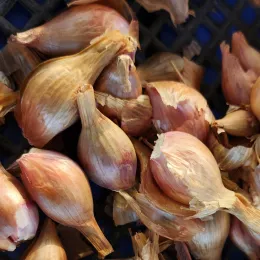
If your shallots are in clusters, carefully separate them. Do not plant any bulb that appears distressed or damaged. Plant shallot bulbs 5 to 6 inches apart in rows 10 to 12 inches apart. As a rule, the greater the space, the better the results. Unlike garlic, which produces a single bulb, the shallot develops as a cluster, which then spreads out. Push the individual bulb with its roots facing down until the soil just covers it. Water the area where you’ve planted. If the weather is particularly hot, you can top with some mulch. Mulch helps preserve moisture in the soil, but should not be allowed to remain if it becomes soggy because excessive wetness will reduce air circulation and may invite the shallot to rot. Unless the weather turns very hot, you should only need to water sparingly, if at all, after planting.
Unwanted visitors
Newly planted shallots may be visited by gophers and ground squirrels who “un-plant” them. Simply re-plant them until the critters lose interest. The green stems of growing shallots can sometimes attract experimental chewing. This should not be too serious and can be managed with row cover or, if necessary, netting.
Caring, watering, and fertilizing
Weed, weed, weed! Shallots don’t like competition. If flowers or scapes begin to develop, cut them off at the stem to prevent the shallot from beginning to reproduce. In the middle of the growing cycle, you can choose to fertilize the plants with a mild, well-balanced fertilizer such as fish emulsion. Do not water or fertilize during the last month of the cycle. Withdrawing water causes the stalks to dry, which is essential for the growth of the bulb.
Harvesting
When the stems have yellowed and begun to dry out, carefully uncover the shallots by loosening the soil and exposing them to the sun. Do not uproot; simply allow them to dry for a day or so. Then lift the shallots free, breaking off the roots holding them to the soil.
Curing and storage
Cure shallots by spreading or hanging in a warm location out of the sun until they feel completely dry. This can take 1 to 4 weeks. Trim the stems and roots, leaving about 1½ to 2 inches of stem. Store out of sunlight at moderate temperatures.
Just like garlic, shallots can be saved for replanting. Save the best and eat the rest!