
Events Calendar > Fall Garden Fair > Garlic and Shallots
The best time to plant garlic in Santa Clara County is between mid-October and the end of November, preferably a month before the first frost of the season.
Soil preparation
Garlic tolerates a wide variety of soils, but does best in loose, loamy soil with high organic matter (i.e. compost) that provides good drainage. Boggy or wet soil can cause cloves to rot or develop poorly.
Water your bed a few days before planting so that your soil is damp when you plant. Add a slow-release fertilizer at planting and again when the weather begins to warm up in the spring.
Planting
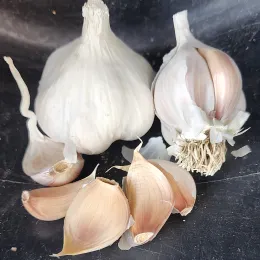
When you are ready to plant, break the bulb into individual cloves, taking care not to damage the very bottom of the head. Do not remove the papery skin from the individual cloves (the skin protects the cloves from rotting). Plant the largest cloves, as the size of the clove typically determines the size of the bulb it develops. Smaller cloves can be planted 2 inches apart and grown as spring green garlic, which you can use when the stems are full-size but before bulbs develop. Alternatively, you can use them for cooking right away.
Plant cloves 5 to 6 inches apart in rows spaced 10 to 12 inches apart. Plant cloves root end down (that is, the flat part that was attached to the base of the bulb), with tops an inch or so beneath the soil surface. Simply press the cloves into the ground.
Watering and fertilizing
In a typical winter, garlic does not need additional watering, but if we have a particularly dry winter, you may need to water occasionally. When the weather begins to warm—typically early March—fertilize your garlic by side-dressing (digging fertilizer into a trench 4 inches away from the plants) or by watering with a liquid fertilizer such as dilute fish emulsion. You may fertilize again in about a month, but no later than mid-April.
Harvesting
In May, when the stems have begun to brown, withdraw all water. That is the cue for your garlic to develop its cloves. The bulbs should then be left in the ground for several weeks. Wait until the stems have become at least halfway brown before you harvest.
Curing and storage
After you harvest, let the garlic cure in a warm place, out of direct sun, with good air circulation around each head. After curing, cut off the stalks, leaving an inch or so at the top, and trim the beard. You can gently brush off the outer coating and store in mesh or paper bags or hang together in a dark place with good air circulation. The ideal storing temperature is 60 to 65 degrees F.
Be sure to keep some of your garlic for replanting. Save the best and eat the rest!