

Question: I have the usual plants in my herb garden and would like to add something a little different. Do you have any suggestions?
Answer: There are number of unusual herbs you could try, but for all around usefulness I recommend trying borage.
A historic medicinal herb, borage (Borago officinalis) is a Mediterranean annual also known as starflower, bee bush, bee bread, and bugloss. It has served many purposes from the time of ancient Rome to the present. Pliny the Elder believed borage to be an anti-depressant, and that it gave courage and comfort to the heart.
Borage is very easy to grow and once established will readily self-seed. You can purchase plants to get started, but borage is very easy to start by seed. Plant after all danger of frost is passed, spacing plants 12-15 inches apart. Sowing new plants every four weeks will provide a continuous supply of foliage for harvest throughout the summer. When you have a full bed established you will likely never need to reseed. Any stray or unwanted borage seedlings will be easy to pull out.
Borage prefers full sun but will tolerate some shade. The plants need little water and will grow in poor soil, but will thrive in rich soil, so top dressing with compost in recommended. Borage is virtually pest-free.
Borage attracts many pollinators and wildlife, particularly bees. It’s not only a favorite plant of honeybees, but also attracts bumble bees and small, native bees. At one time borage was grown by beekeepers to boost honey production. Borage also deters pests such as Japanese beetles and tomato hornworms.
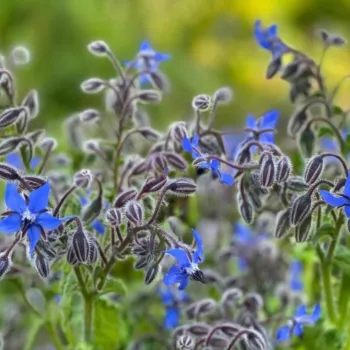
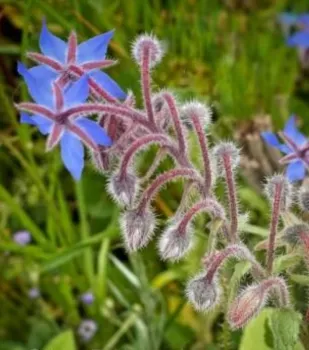
Plants produce beautiful star-shaped azure blue blossoms with cucumber-flavored leaves and stems. Borage will bloom for many weeks if the older flowers are trimmed off, and you can often push tattered plants to make a comeback by pruning them back halfway in midsummer.
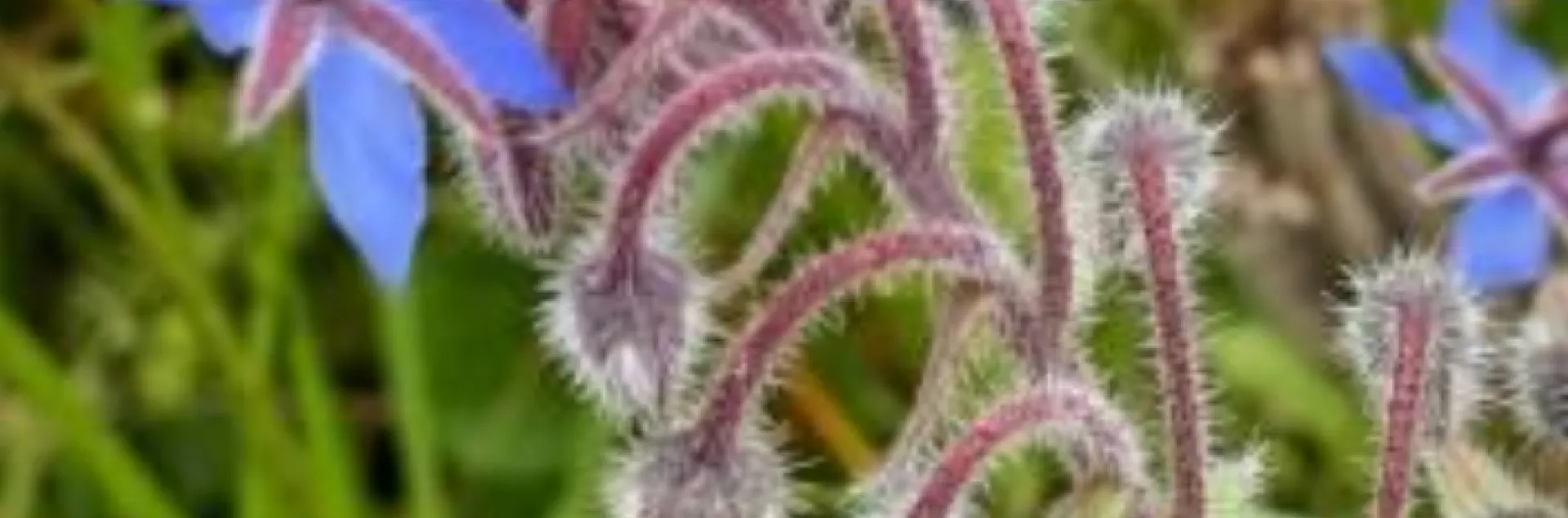
The leaves are rough and covered in fine hairs, while long hairs densely coat the stems. The stems will reach 2-3 feet in height. These plants are attractive enough to be used solely as ornamentals.
Both flowers and leaves of borage are edible. The young, tender leaves and flowers have a flavor similar to cucumber. Use borage fresh in salads, dips, and soups. The flowers also make a pretty garnish for drinks and desserts. Freezing the flowers inside of ice cubes can add a delicate touch and light cucumber flavor to iced beverages. Borage is traditionally used as an edible supplement in salads and is added to omelets, ravioli, and even used to make green pasta by Italians in place of spinach.
As a note of caution, some gardeners shy away from including borage in the garden because of the stiff, prickly hairs that cover leaves and stems. Also, the sap is known to cause skin irritation in some people. However, prickly hairs and contact dermatitis can be avoided by wearing gloves when you the handle plants. The youngest leaves tend to have fewest hairs and are favored for harvest.
In short, borage is a beautiful and useful addition to any herb garden.
Contributors to this week’s column were Wendy Stern, Lisa Howard and Robert Williams.