

From Silicon Valley to Modoc County, UCCE advisor Lio Wayne continues to accrue, share knowledge
Laurie “Lio” Wayne might be the only person at University of California Agriculture and Natural Resources who can converse fluently about sustainable food systems – as well as the futurism of early 20th century Italian poets.
Wayne earned a bachelor’s in Italian literature (specializing in Dante) at UC Santa Cruz and a master’s in linguistics at Portland State University. In her career, she has taught English as a second language to immigrant and refugee families, worked as a bus driver, pedaled the streets of San Francisco as a bike messenger, led teams at tech companies in Silicon Valley, and grown and sold vegetables as a farmer in one of the remote corners of California.
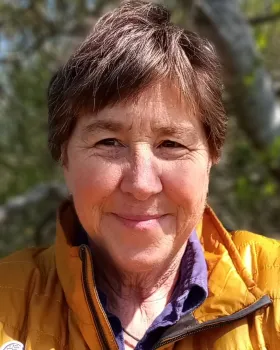
“If you learn something deeply and with focus, there is no knowledge or experience that’s wasted – ever – in life,” Wayne said.
Those varied experiences in life and work have led Wayne to her current role as UC Cooperative Extension community nutrition, health and food systems advisor for Lassen, Modoc and Siskiyou counties.
“This is absolutely my favorite job I’ve ever had because it gives me a chance to pull together everything I’ve learned and continue learning and stay humble,” she explained.
As part of an ongoing series to commemorate the International Year of the Woman Farmer, Wayne recently sat for an interview about her journey into agriculture and her “dream job” at UC ANR.
Around the turn of the millennium you were in various roles at Cisco; can you talk about what happened when you started working on a community garden in Alviso, a district in San Jose?
I was living in Alviso, which at the time was 95% Latino and historically experienced all kinds of inequities – and it was literally two miles from the Cisco campus. We got a bunch of Cisco employees to come and help revive this kind of derelict garden space. And for at least a couple of years there, it became a pretty amazing place for people to grow.
That’s where I really became interested in working with communities through food. I continued that work in grad school in Portland. I was doing a practicum, teaching adults in the evening at an elementary school site. There was an old garden there that we revived and turned into a teaching space for multigenerational families to share language, culture and food. The students at the school represented 55 different language groups, so sometimes, English was the only language to communicate between gardeners – other than the language of food, of course!
I saw that a shared garden space is a place of profound social connection and negotiated norms. And I learned that the art and work of producing food – and keeping a garden or community thriving – require long-term, near-constant care and attention.
You had purchased some land, years ago, in Fort Bidwell in the far northeastern corner of California. But it wasn’t until after your work in the gardens in Alviso and Portland that you really became interested in growing food for the community.
I know for a couple years you were working in the Bay Area and also squeezing in time to commute up to Modoc County, but how did you decide to farm full-time at your Locavore Farms?
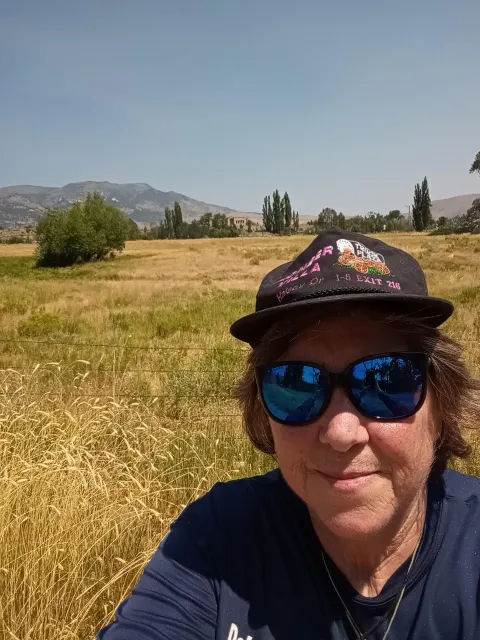
I fell more and more in love with the land. I was so lucky to land in Surprise Valley because it’s absolutely stunning in terms of its beauty and its many gifts. But I loved my job at Cisco too! So the thing that kind of made a difference was just turning 40 and realizing that, wow, if I had two lives to live, I would just live both of those lives – staying in Silicon Valley and also spending time on the land.
But it turns out you’ve only got one life to live. I built a relationship with the land and was just pulled to it. I did not show up there intending to be a farmer; it took me a few years to grow into it. I just wanted to be there – I didn’t have a plan and I didn’t have the skills. I spent a lot of time teaching myself.
But then one day somebody said those words to me: “Oh, you’re farmer.” Very casually, right? And I was like, “Yeah, I’m a farmer.”
Verbalizing that identity is so important, isn’t it?
Someone once told me that you only need two things to be a farmer: the first is you need a name for your farm. And the second one is you need to say the words, “I’m a farmer.”
I don’t know if that’s the whole truth, but it seems to be where you start. If you don’t have both of those things, you don’t have the foundation.
Starting there creates the vision of the place you want to go. Saying that out loud changes your mindset and your vibe about what you expect from yourself and how you expect to spend your time. It doesn’t change anything materially, but it changes everything about your behavior.
And it also acknowledges that you got into agriculture and you found the land because of something happening in your heart. Saying those words, “I’m a farmer,” connects you with that. That’s the thing that keeps you going outside at 2 a.m. when it’s windy and 20 degrees, so you can help a calf be born.
Do you come from a family of farmers?
Not really, but as I reflect on my winding path, I’ve often tried to figure out exactly what my grandfather's influence was. He was a farmer who had a big old victory garden during WWII, but I never knew him during that part of his life, and in fact I never learned about the victory garden or how involved he was in farming…until after I had started farming.
He had a big garden in his backyard in Lodi that I wasn’t at all interested in, way back when. But I often wonder whether my choice to do the things I do is because of that genetic inheritance, or if growing or producing food is actually an important part of being human that our current cultural setup kind of makes us forget.
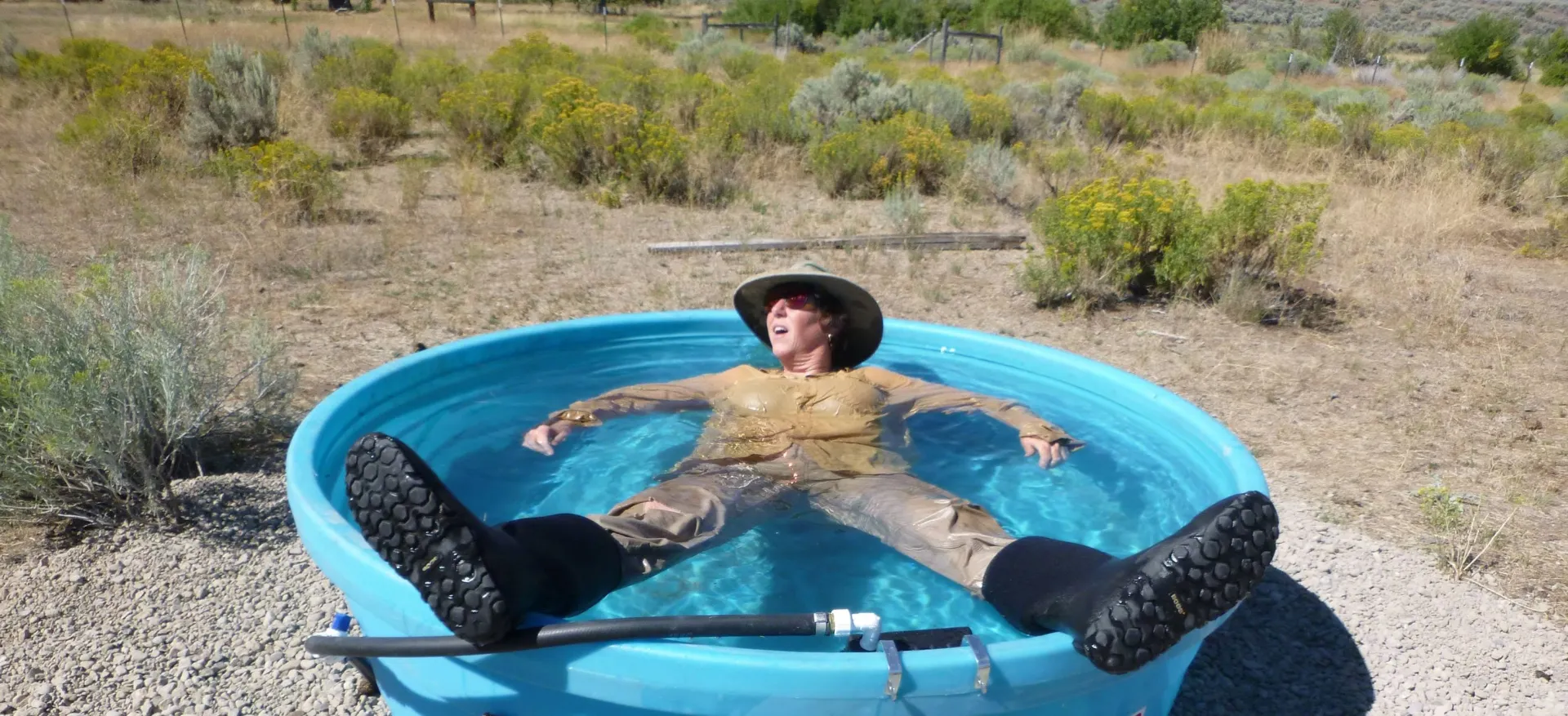
What did you enjoy about farming and operating Locavore Farms?
Every day was this beautiful gift of learning and problem solving. There was something new every day.
And, 20 years ago, it was kind of at the beginning of people remembering local food. I had a u-pick vegetable farm – have you ever heard of a u-pick vegetable farm? Everybody does fruit, of course! – and it was just like a produce aisle. It was so utterly magical to watch people come out to the farm. It was like, as soon as their foot landed in that space, they became seven years old. They didn’t worry about their ego. They didn’t worry about cultural divides. They became playful; they became exploratory.
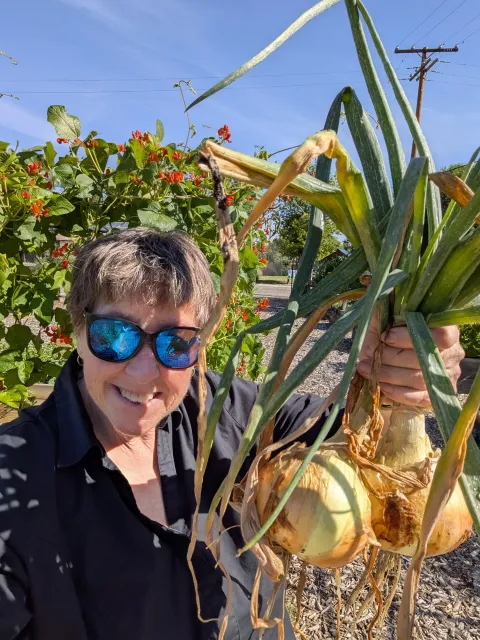
It became a real motivator for me to introduce people to the practice of agriculture – this is what it looks like digging up potatoes, or pulling an onion out of the ground. Everybody was learning all the time. People would be so proud of all this stuff that they picked that they were for sure going to go home and eat it.
How did you start the food hub and farmers market in Surprise Valley?
A big part of it was I was farming away with my little u-pick farm and I realized that there was nowhere to sell my stuff, other than trying to have a farm stand or something.
So I started talking with my neighbor, Leah Larsen, who was starting a farm at about the same time. We had kind of a brainstorm and thought wouldn’t it be really cool to have a market where we could sell our stuff, and what would that look like?
It was rough for a long time; we started a nonprofit, Modoc Harvest, to steward the farmers market and to advocate for local food in general. Then we decided we needed a food hub, which was kind of a new concept when we started it. At the beginning we were doing it with Google Sheets, and it was so slow, and there was a lot of learning.
My favorite example is one of our volunteers drove from where he was, south of Fort Bidwell, all the way down to Eagleville – about 40 miles – to pick up two bunches of green onions, deliver them back up, and make the food hub delivery. For two bunches of onions! It was at that level.
So that’s where we started from, to create better infrastructure for moving stuff around. And the farmers market and the food hub are still up and running; there are actually two farmers markets now – one in Cedarville still, and now one in Alturas – and there are two food hubs too.
What is one thing you wished you knew more about, going into farming?
The biggest one is money, and how to manage it. There’s plenty of money to support farmers. If a farmer’s broke, it’s because they don’t know how to connect with money, like through the USDA’s Farm Service Agency or the Natural Resources Conservation Service.
There are plenty of things you can do to support your farm. It’s a lot of work, for sure, to manage that money. But there is support for you to do the thing you actually want to do – as opposed to going off and having an unrelated job just so you can afford to farm.
In your current role, how are you helping connect people to those resources?
I’ll connect people with grant programs, like if somebody wants to write a proposal for a Farmers Market Promotion Program grant, which is one of the USDA’s flagship local food programs.
I’ll turn people on to sources of financing, and we also have a pretty extensive library of almost everything you’d need to know about small farming in this region.
And I’ll also encourage people and tell them – if they can at all do it, just hang in there and not quit, when it seems like quitting is the easy way out…because it’s not!
There are so many times when you want to give up. So many. I, at one point, just threw in the towel. I just did. It was around pandemic times. There was stuff happening in the family and I was like… “Okay, I’m done. This part of my life is over.”
But that part of your life is never over. I’m realizing that you cannot get that out of your system. I mean, it’s been six years, right? And that’s still part of my identity.
There are lots of farmers who give up, and I think the farmers who are successful are the ones that spend enough time not giving up. What’s that saying? It’s okay for you to fall down – you just have to get up one time more than you fall down.
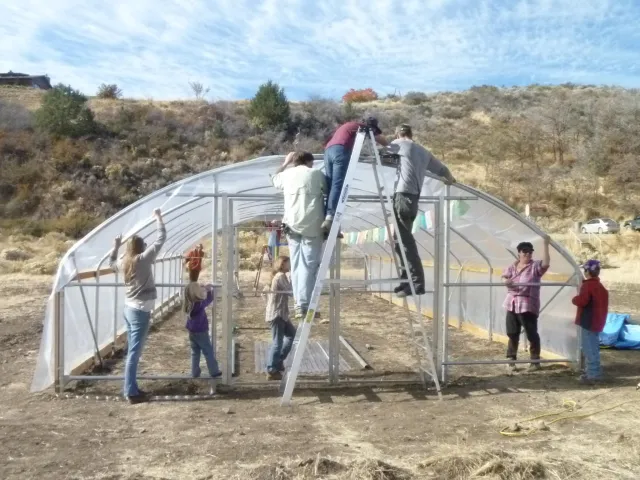
When you were contemplating what to do with Locavore Farms, I understand you went on a pilgrimage of sorts to figure out the next chapter in your life. What was one thing that you discovered on that journey?
I met some people randomly online through a food hub mailing list and heard about Open Food Network, sort of this open-source platform for food hub management.
And I was like, “Wow, this is awesome!” It’s community oriented; it’s open source; it’s international. It’s just a total platform for running food hubs, and it was built in this extremely generous way – very values-based, like Cisco had been.
I was excited about that, but it was not at all happening in the U.S. It was happening in 12 other countries. I ended up joining a group of people and then… it’s not like I stepped up; everybody else stepped back and I stayed there. So it was just me for a few years [serving as executive director and running the platform].
Then the pandemic showed up, right? And everybody started ordering stuff online; everybody was flocking to platforms and this one was free, actually. We made our very first sale online sale in January, and it went from something like $400 in sales in February to $132,000 in May. I think in that first year OFN was open, it supported almost a million dollars’ worth of sales! That’s what happened in the pandemic. It happened to everybody; it wasn’t just OFN.
It was such a great education for me because I learned a lot about what’s involved in supporting networks internationally, as well as in technology-enabled networks. I got to meet like a million food hubs! And now I have these food hub-using friends from Alaska to Puerto Rico, and I’m still in touch with a bunch of them, even though I walked away from OFN a couple of years ago.
OFN was one of the things that I did when I was completely away from the farm and just kind of like a little bit lost – and that ended up being a really beautiful bridge between my Surprise Valley-Modoc County chapter to what I’m doing now at the UC, where I’m supporting multiple food hubs and lots of farmers markets.
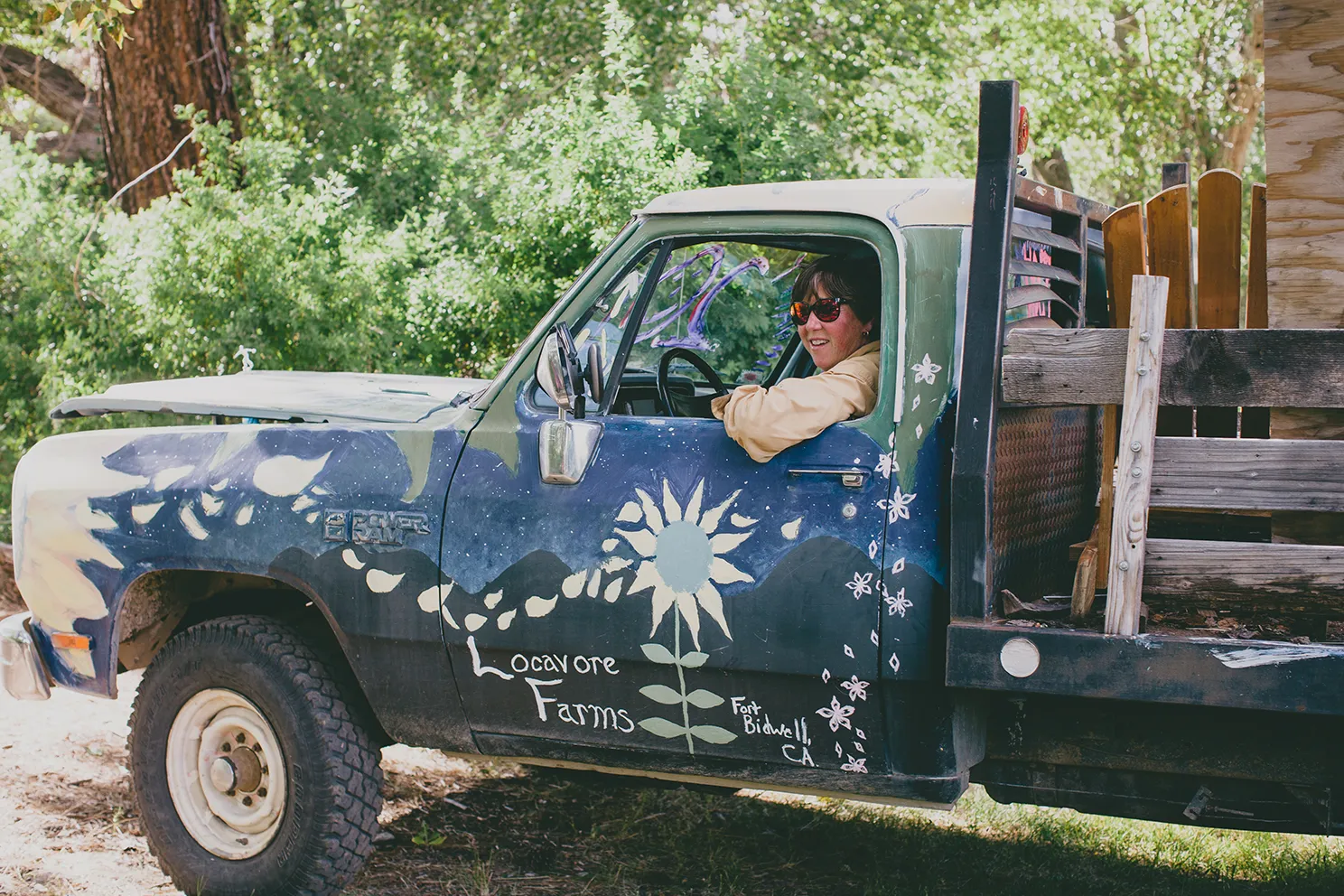
How did you land this particular job with UC?
After my pilgrimage and then working in Oregon and eventually selling Locavore Farms in 2021, the thing that brought me back to Modoc County was this very job.
Laura Snell, who is now the UC Cooperative Extension county director, landed here in Modoc around 2016, and we had worked together on a couple of projects, launching Modoc Harvest and doing outreach activities, and it was great. So we knew each other.
Then this food systems advisor position came available about three years ago. It’s been basically my dream job, because I get to spend a lot of time on farms talking to farmers about very practical topics. I get to work on developing the food system infrastructure and I’m continuing to learn about what makes a farm successful – financially and practically. I get to look at the logistics and how communities can support food production at the level of like a public utility.
That’s really my journey, and one of the things I was thinking about was what I wish I had known when I started, like if I could rewind the clock, how I would have done things differently as a farmer.
So my goal is: If somebody wants to start farming or they’re just getting going, I want to be the advisor that I didn’t have, someone who can just connect people to what they need.