

Question: I’ve heard that I can grow avocados in the North Bay Area. What is the best kind to grow?
Answer: Happily, you’ve heard right. Avocados are loved by many, and while the majority of California’s avocados are grown in Southern California, we are also able to grow several great tasting varieties in the North Bay Area. In fact, as you drive around Sonoma County, you may recognize large, mature trees that have survived and produced delicious avocados for decades without too much fuss.
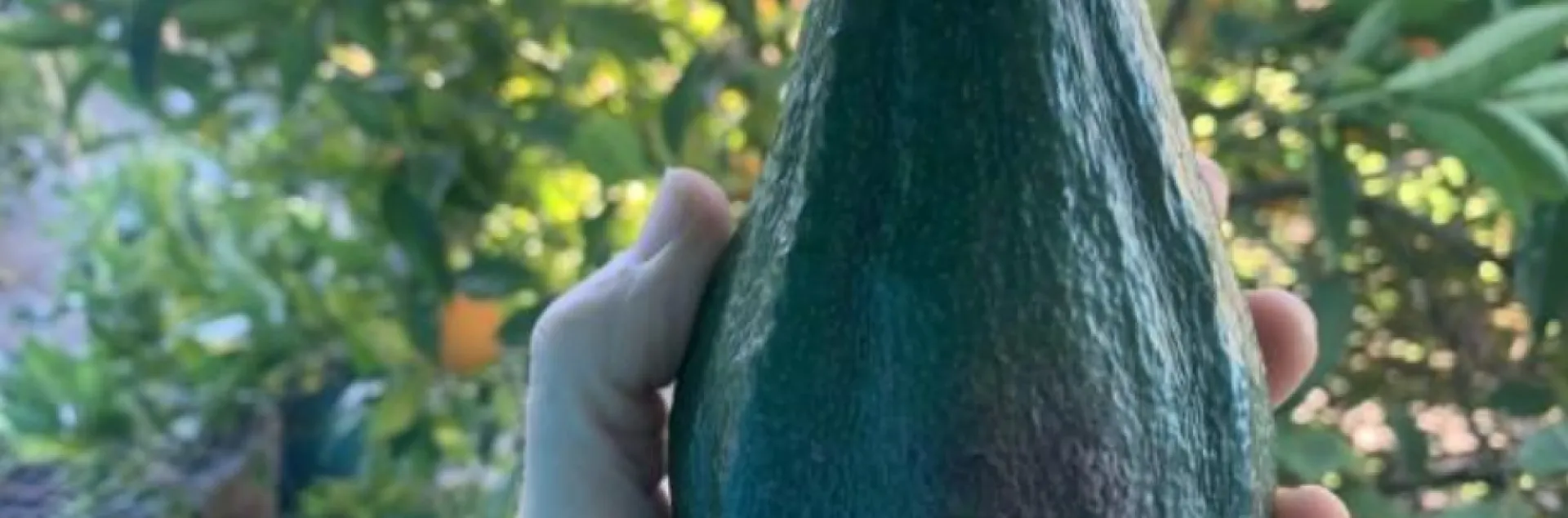
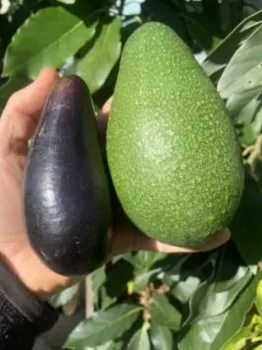
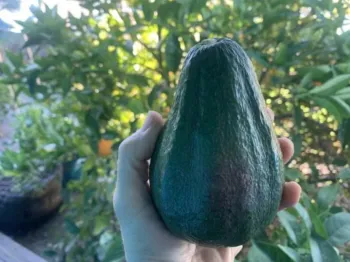
There are many avocado varieties from which to choose. Compared to the industrystandard Hass, some varieties are smaller and some are much larger. Some have green skin when ripe, and some have thin, smooth, edible, purple-black skin. A few fruit types have lower oil content than Hass, while others have even higher oil content. Would you like an avocado that takes just six months to ripen, or can you wait 18 months? As for tree size, there are small trees that grow to about 14 feet while some varieties can reach close to 40 feet.
Your main concern when planting a subtropical tree far from the equator is the tree’s ability to tolerate frost. If your garden tends to get frosty and you don’t want to bother with frost protection, select one of the cold tolerant varieties: Mexicola Grande, Palo D’Oro, D’Arturo, Bacon, Stewart, Bonny Doon, or Zutano. These varieties are able to handle cold well; some tolerate temperatures as low as 18 to 24 degrees. Many of these bear thin-skinned fruit with flavor that ranges from good to excellent. Although these trees are cold tolerant, you should still protect them from frost with blankets or incandescent string lights during the first few years of growth.
If your garden doesn’t often get below 32 degrees and you’re willing to use frost protection on occasional very cold days, consider one of these trees that are not as cold tolerant but highly rated for flavor: Hass, Carmen Hass, Lamb Hass, GEM, Gwen, Reed, Bird Avenue, and Santa Clara Gold. Many of these are improved offspring of Hass, with similar flavor and sometimes heavier fruit production.
Remember that avocado trees need certain growing conditions in order to thrive. Find a great location in your garden that gets full sun all year round, if possible. Avoid any area that gets high winds or that is a particularly low, cold spot in your yard.
Avocados also need excellent draining soil. Planting them in heavy, wet clay with inadequate soil aeration fosters soil-borne diseases such as root rot, damping off, vascular wilt and eventual tree death. If you have clay soil in your garden plant your tree in a raised box or on a mound above the soil line.
The majority of avocado tree roots are within the first 6 to12 inches of soil, so keep them appropriately watered with drip irrigation. Add a thick layer of wood chip mulch to keep the roots cool. Feed the trees by dressing the soil with compost and applying an appropriate organic fertilizer according to the instruction label throughout the growing season.
When young trees don’t have enough leaf cover, shield exposed branches from sunburn with shade cloths and an application of 50% diluted indoor white latex paint or a similar commercial product. For more details on tree care, see the references at the end of this article.
Avocados can be found at reputable nurseries locally and online. Don’t hesitate to inquire about placing a special order for the particular varieties you want to grow. These tips should get you on your way to growing and enjoying one of California’s favorite fruits.
For further reading on growing avocados:
- Avocado Variety Collection
- Growing Avocados On The Central Coast
- Avocado Flowering Basics
- Container Grown Trees
- Soil Borne Diseases
- Soil Health
Contributors to this week’s column were Jeffrey Pierce, Karen Felker and Kim Nielsen-Glynn.