
Honey bees and other pollinators visit blooming yucca for the nectar.
It's not a good source of nectar, like Russian sage (Perovskia atriplicifolia), catmint (Nepeta), and lavender (Lavandula) are, but it's a source.
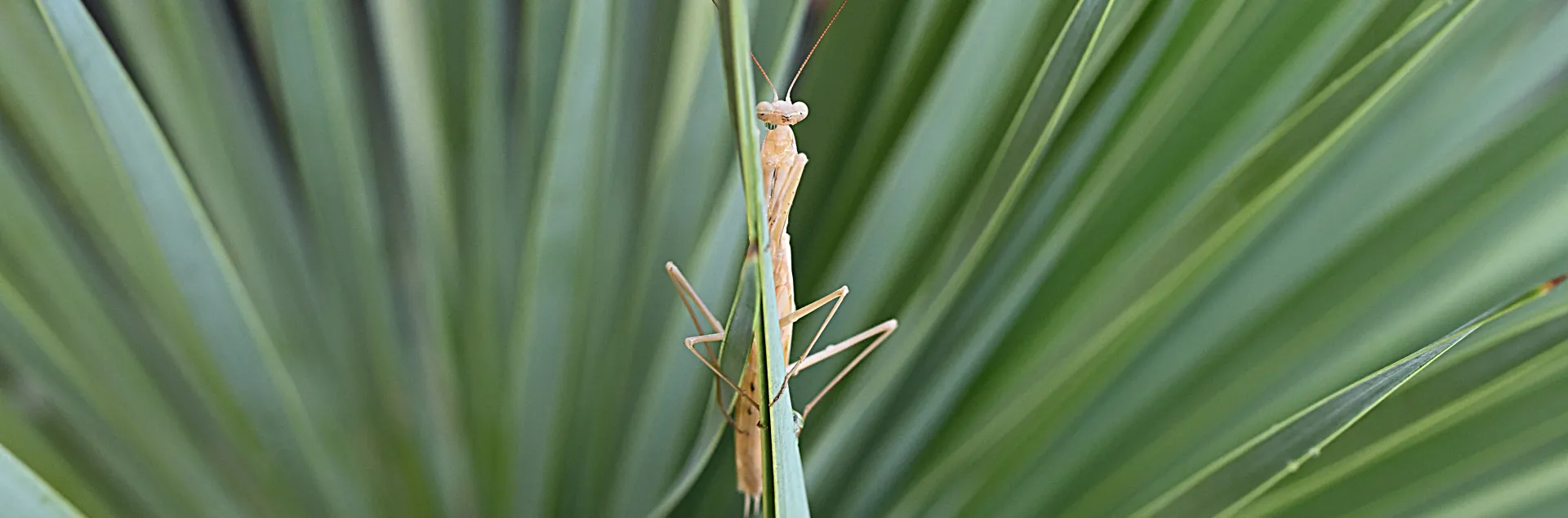
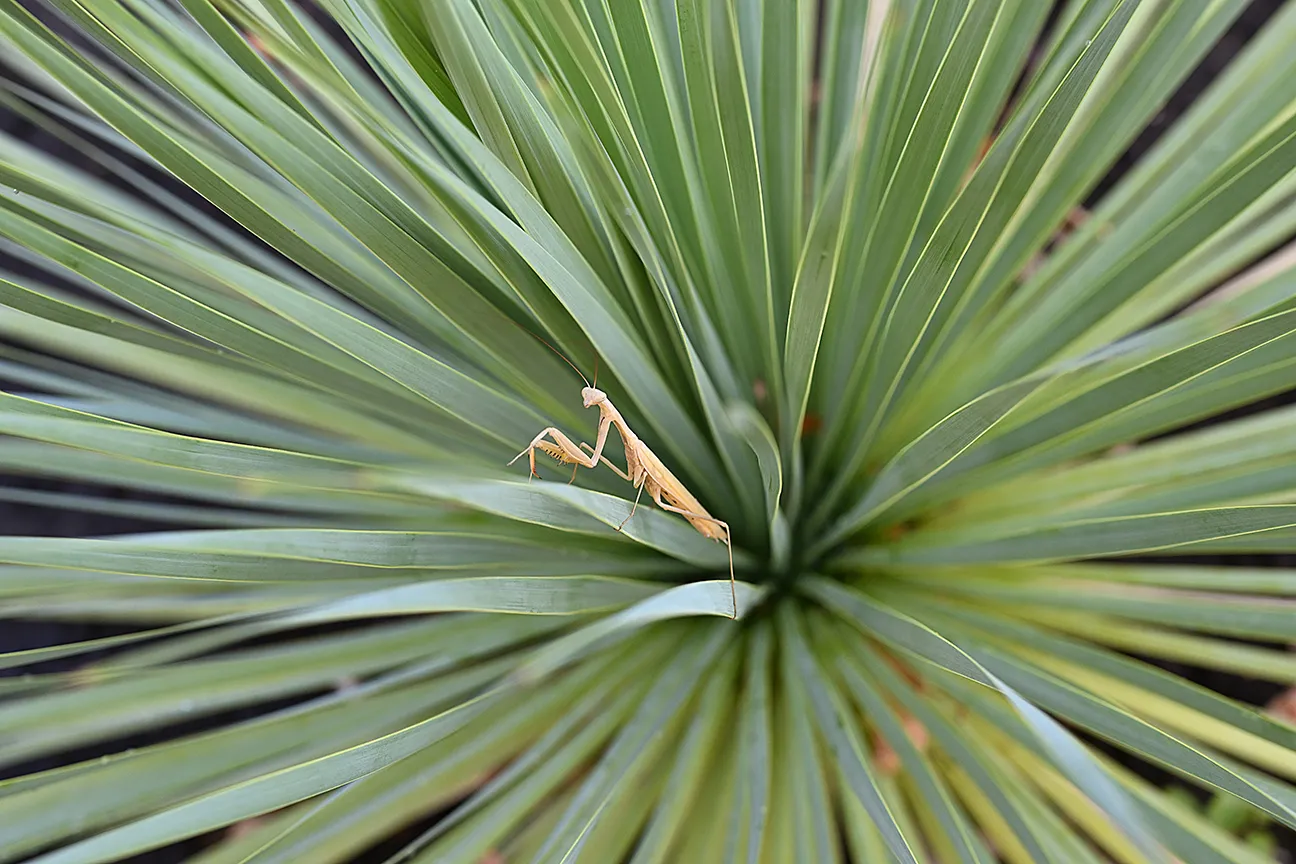
But there it was, a male praying mantis, Mantis religiosa, in a yet-to-bloom young yucca.
Me: "Mantis, what are you doing here? You have a long wait if you're planning to grab a bee. Cancel your breakfast, lunch and dinner reservations. What were you thinking, hanging out in the rosette of a yucca not ready to bloom? Frankly, there aren't enough flowers on a yucca to impress any of the neighborhood bees. Besides, yuccas don't rely on bees for pollination. The real pollinators of yucca are the moths in the genus Tegeticula or Parategeticula.
Mantis: "What, moths visit yucca?"
Me: "Yes. Yucca moths lay their eggs in the seed capsules of yuccas and then the yucca moth larvae eat the developing seeds inside the fruit pods. The moths and the yucca help one another survive. It's called obligate mutualism or a mutualistic symbiotic relationship. Neither species can survive or reproduce without the other. So, why are you here?"
Mantis: "You sprayed me with water, that's why! You watered the yucca and you watered me!"
Me: "Sorry, It's a new plant and it needs a little water. What's your next move, mantis? Your next dining opportunities?"
Mantis: "Make mine moths."