

As students and teachers settle into the rhythm of a new school year, it’s the perfect time to reflect on a critical component of student success: school meals. While often viewed simply as breaks in the schedule, school breakfast and lunch are actually a powerful tool to improve students’ health and academic achievement.
More Than Just a Meal
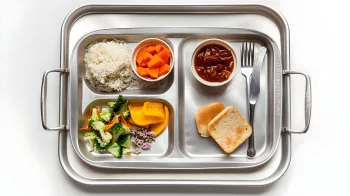
Nutrition is the foundation of learning. Research consistently shows that students who participate in school lunch programs have a higher intake of nutrient-dense foods—particularly fruits and vegetables—while consuming fewer desserts and processed snacks.
These programs are an essential component of children’s health. School lunches not only ensure that students can focus on classwork instead of hunger, they also reduce food insecurity and decrease the risk of obesity. When a child is well-nourished, they perform better in courses and on tests than when they have an empty stomach, leading to better cognitive function, improved behavior, and higher overall health.
History and Future of School Lunch
This commitment to student nutrition in the U.S. dates back to 1946, when President Harry Truman established the National School Lunch Program. For decades, this program provided essential meals to children based on strict eligibility requirements.
However, California recently led the way in expanding the program and its benefits. In 2022, California became the first state to implement a Universal School Meals Program, providing free breakfast and lunch to all students regardless of their household economic status. By removing the "means-test," California has created an environment the stigma surrounding free meals because every child has access to the fuel they need to succeed, and no child has to feel embarrassed about using this program. Since then, many other states have proposed or enacted their own universal models. 9 States provide free school lunch to all students, 4 more provide free breakfast for all, and another 23 have introduced legislation to the state congress.
Innovation in the Cafeteria: From Farm to Fork
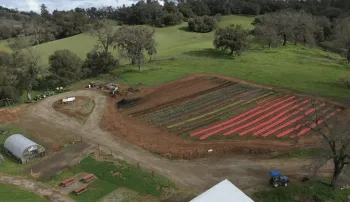
Across the state, many schools are evolving beyond simply implementing the standard nutrition guidelines to create holistic food experiences.
One example is Amador County Unified School District, where the connection between the land and the lunchroom is literal. In partnership with UC Cooperative Extension and the Motherlode Land Trust, the district established a school farm. Here, students aren't just consumers—they are producers and active participants in the food system. By planting, caring for, and harvesting produce that is eventually served in their own cafeterias, students gain hands-on experience in agriculture, environmental science, and nutrition.
Meanwhile, in Nevada County, schools are championing the "scratch-cooked" movement. By eliminating pre-packaged, heat-and-serve meals, these schools are providing homemade entrees and locally grown produce. The food served has been well received by students, increased their dietary diversity, and helped them to understand where their food comes from. Through collaborations with local farmers and community organizations, they are teaching students that healthy eating is both sustainable and delicious.
The Road Ahead: What’s Next?
While California has made historic strides, the journey toward optimal school nutrition continues. To further improve student health, the focus is now shifting toward:
- Expanding "Farm to School" Initiatives: Increasing the number of districts that source directly from local growers.
- Reducing Ultra-Processed Foods: Moving further away from refined ingredients and toward whole, minimally processed foods.
- Integrating Food Literacy: Ensuring that the garden and the cafeteria are treated as classrooms where students learn the "why" behind healthy eating.
By investing in the quality of school meals, we aren't just feeding children—we are investing in the long-term health and intellectual potential of the next generation.
Sources
National School Lunch [Fact Sheet]. USDA Food and Nutrition Service. (2021). https://www.fna.usda.gov/nslp/101.
School Meals are Essential for Student Health and Learning [Research Brief]. Food Research and Action Center. (2021). https://frac.org/programs/national-school-lunch-program/benefits-school-lunch.
California Universal Meals. CA Department of Education. (2025). https://www.cde.ca.gov/ls/nu/sn/cauniversalmeals.asp .
Healthy School Meals for All [Fact Sheet]. Food Research and Action Center. (2026). https://frac.org/wp-content/uploads/HealthySchoolMeals_FRAC_FactSheet.pdf.
Curtis, C. Amador County Unified School District opens first district-wide farm. Fox 40. (2026).
Community Roots: About Us. (2026). https://communityrootsnc.org/about/.