

Happy New Year from the Sonoma County Master Gardeners! With the cold weather and shorter days, gardening in January can be a challenge. Watch weather reports and protect your plants from frost and other weather conditions. Cover them when necessary and adjust watering both for cooler temperatures and for seasonal rains.
Post-holiday cleanup and declutter
Has your holiday amaryllis (hippeastrum) stopped blooming? While many people discard amaryllis bulbs once their initial blooms have faded, proper care can encourage them to bloom again the following year. After flowering, the plant still needs the basics: sunlight, water, and fertilizer, followed by a period of dormancy.
Remove each flower as it fades. First, snip off the individual spent flowers at the top of the stalk to prevent the plant from wasting energy producing seeds. Once all the flowers on a stalk have faded and the stalk itself begins to turn yellow or wither naturally, use clean, sharp pruners or a knife to cut it back, about 3 to 4 inches above the bulb. Leave any existing leaves intact.
Move the plant to a location with bright light and continue to water and fertilize consistently throughout the spring and summer months. You may choose to keep the amaryllis indoors during this time or move it outside after the danger of frost has passed.
Begin the dormancy preparation about eight to 10 weeks before you want the amaryllis to start growing again. Move the plant to a cool, dry and dark location, ideally with temperatures between 40 and 55 degrees. A basement or cool closet works well. Achieving these temperatures outdoors may be challenging depending on your region but do your best; even less-than-ideal conditions can be successful. For example, leaving the plant in a shady side yard may work well.
Over a two-week period, gradually reduce watering to dry out the soil. Once the foliage dies back, remove it completely. During this rest period, do not feed or water the plant. If the bulb remains outside, ensure it stays in a dry spot to avoid winter rains.
Check the amaryllis weekly during its dormancy. After eight to 10 weeks, you should see the tip of a new flower stalk emerging from the center of the bulb. At this time, repot the amaryllis with fresh soil, move it to a sunny location, and resume watering to initiate the next blooming cycle.
Over time, small bulblets may develop alongside the primary amaryllis bulb. These can be separated and repotted to bloom in several years or left attached to mature with the original bulb.
Citrus
Don’t put your holiday lights away yet. A strand of holiday lights in a citrus tree is often enough to protect the plant from frost, which could occur through mid-January. If leaves on your citrus have turned yellow, the chlorosis could be caused by a variety of factors including nitrogen deficiency, over-watering, or both. With the arrival of warmer temperatures in the spring, nitrogen deficiencies in the plant subside as the soil drains and nitrogen becomes available and the leaves green up again. Protect the root zone of citrus from seasonal temperature fluctuations by mulching with a thick layer of aged compost. The nutrients in this surface layer of compost gradually find their way into the root zone and provide a balanced nutrient supply. Citrus need a regular supply of nutrients, so plan to apply an organic fertilizer formulated for citrus according to manufacturer’s instructions in early February, and then two more times, four to six weeks apart. For more information on growing citrus, see the UC California Backyard Orchard website.
Pruning
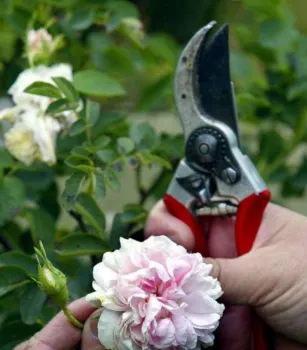
Anytime between New Year’s Day and Valentine’s Day is good for pruning. Prune roses hard, down to three to six young vigorous canes per plant and leave three to five buds on each cane. Undesirable canes have discolored pith or hollow centers indicating disease, insect or weather damage. Be careful not to compact the soil around the plants with your feet as you prune. Read on for more information on pruning roses.
Prune pines and other dormant conifers by thinning where necessary and cutting out entire branches to the base. Don’t trim individual branches back part way or top them, topping causes irregular growth. You can control the size of most pines by pinching out new shoots, called candles, at the tip of each new growth cluster.
Begin to cut back deciduous ornamental grasses, pruning to within several inches from the ground. If you like the existing structure, wait until February or March to cut back.
Don’t forget about your houseplants. Make sure to keep your houseplants watered as they tend to dry out from indoor heating during the winter months.
January is a good time to start seeds indoors for cool-season leafy vegetables like lettuce, collard greens, kale, Swiss chard and spinach, and for brassica family crops like broccoli, spring cabbage and cauliflower. For information on when to plant your starts, see the useful guide to year-round food gardening in Sonoma County.
Contributors to this week’s column were Diane Judd and Debbie Westrick.