


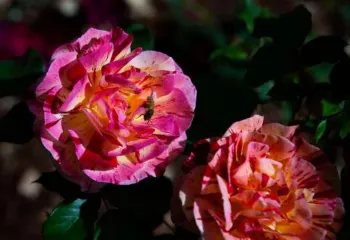
Question: I want to try growing roses. What type should I consider? Is it best to buy them bare root or in a pot?
Answer: Roses are an enduring symbol of beauty, love and romance and one of the most popular flowers. All they need is at least six hours of full sun and fertile soil with good drainage. Understanding their growth habits and general requirements helps you choose what kind to buy.
Rose specialists and the American Rose Society divide roses into three main groups:
- Wild roses: Also called “species roses,” are considered the ancestors of the thousands of hybrid varieties grown today.
- Old garden roses: Also known as antique or heirloom roses, existed before the hybrid tea rose was introduced. They are known for their rich complex fragrances and full old-fashioned blooms.
- Modern garden roses: These have been in existence since 1867 when the first hybrid tea rose was introduced. Bred to bloom more continuously throughout the season, they have better disease resistance, resiliency, and lower maintenance than older rose varieties.
Modern garden roses, the most common roses found in nurseries and garden centers, are available in the following types:
- Hybrid tea: Known for their classic, long-stemmed blooms, these are the iconic florist-style roses, ideal for cutting gardens and formal displays. They have a longblooming season, grow 3 to 7 feet tall, and feature one flower per stem.
- Polyantha: Introduced in the late 19th century and similar to floribunda roses, these roses grow up to 3 feet tall. Their small, delicate flowers grow in large sprays providing a mass of color. As disease-resistant and sturdy roses, they’re ideal for edgings and hedges.
- Floribunda: A cross between a polyantha rose and hybrid tea rose that grows two to three feet tall. Floribunda roses produce multiple flowers on a single stem, forming what is commonly referred to as a “spray of flowers.” This feature makes them ideal for adding color and dimension to landscapes.
- Grandiflora: A cross between hybrid teas and floribundas, they feature large blooms in clusters on sturdy plants that can grow 8 to 10 feet tall. Because of their height they’re ideal as a background or border planting. They are also excellent as a solo specimen in a prominent location.
- Climbing: With long, flexible canes, these roses can be trained over arches, fences, and trellises, offering vertical impact in the garden.
- Shrub: Hardy, disease-resistant, and often fragrant, shrub roses include English and landscape roses. They offer a natural, bushy form and abundant blooms. Shrub roses are available as upright plants, mounding shrubs, and groundcovers.
- Miniature: Small but mighty, these roses have petite blooms and compact growth, perfect for containers or small gardens. They typically grow 12 to 18 inches tall.
Another type of rose available for yards are tree roses. The “tree” part is the tall stem; the actual rose bush has been grafted on top, like a lollipop. They’re used in beds, borders, or containers for a formal look. A tree rose is not a category in the same way as modern or old garden roses. If the grafted variety is a modern rose such as hybrid tea, floribunda, or grandiflora, then the tree rose is modern.
Once you’ve decided the type of roses that are best for your space and appeals most to you, it’s time for the fun part: Shopping! Roses are available as bare-root, dormant plants in the winter and early spring or as containerized plants most of the year.
Bare root roses are less expensive than potted roses and a wider variety is available, especially if you want specialty or rare cultivars. However, you must plant them during late winter or early spring while they are still dormant and after soaking their roots overnight. Because you plant them while they are dormant, you encourage deep root growth.
Roses in containers can be planted almost any time during the growing season and have instant visual impact. Since they have foliage and blooms, you can inspect their health before purchase. However, potted roses cost more and are heavier to transport. They also take a bit longer to establish because the roots must adjust to the transition from potting soil to garden soil.
Bare root roses are desirable if you want the best selection, lower cost, and are comfortable planting early in the season. Choose potted roses if you prefer convenience, flexibility in planting time, and the ability to see what you’re buying.
Read on for tips on selecting and planting bare root roses.
Contributors to this week’s column were Lisa Howard, Karen Felker and Robert Williams.