
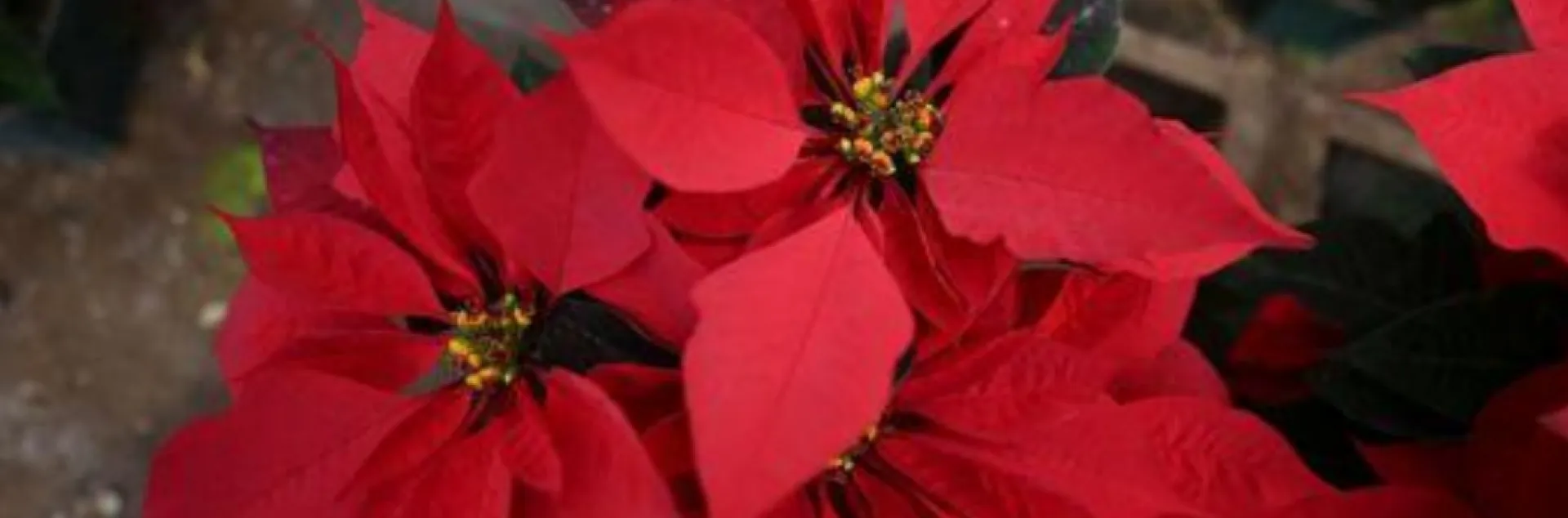

Poinsettia popularity has grown in recent years, especially with the introduction of long-lasting cultivars.
Even before the air takes a chill, holiday decorations begin appearing in window displays, at markets, and on front porches. One of the most popular decorative plants this time of year is the poinsettia which can be found in an array of colors from bright red to pink and even white. You might choose one or more of these Central American natives for your own December décor, or you may give or receive one as a gift.
Poinsettias are a classic holiday plant whose popularity has grown, especially with the introduction of long-lasting cultivars in recent years. The plant was first introduced to the United States in 1825 by Joel Robert Poinsett, America’s inaugural ambassador to Mexico, after he discovered it in southern Mexico. The name “poinsettia” honors Poinsett’s legacy although botanically it’s known as Euphorbia pulcherrima. Dec. 12 is recognized as National Poinsettia Day, commemorating Poinsett’s passing and celebrating his admiration for this beautiful plant.
Poinsettias are most often used for festive decorations during the winter holidays, but with proper care, they can remain attractive as green plants throughout the year.
To keep your poinsettia healthy and vibrant while it is still in bloom, follow these guidelines:
Light and Temperature
Place poinsettias in bright, indirect natural light for at least six hours each day. Avoid direct sunlight, which can cause fading; consider using a shade or sheer curtain to diffuse intense light.
Keep the plant away from high-traffic areas, cold drafts, and sources of excessive heat, such as heat ducts, fireplaces, fans, and space heaters. The ideal temperature is 67-70 degrees during the day and 60-62 degrees at night.
Watering
Water when the soil surface feels dry or the pot feels light when lifted, ensuring the soil stays moist but never so dry that the plant wilts.
Remove any decorative foil or outer pot before watering. Use a pot with good drainage and water thoroughly, allowing excess water to drain completely. Never allow the pot to sit in standing water, as constant wetness will lead to root rot.
Fertilizing
While poinsettias are in bloom, fertilization is not necessary. After the holidays, apply a balanced, all-purpose houseplant fertilizer monthly to maintain healthy foliage and encourage new growth. Always follow the instructions on the fertilizer label. Read on for more details on care and rebloom schedules.
December to-do list
Although much of our time this month is spent indoors preparing for the holidays, there are still several tasks on a gardener’s December to-do list.
Cover your existing compost pile with cardboard, burlap, or tarp during heavy rains to avoid overly soggy compost. Too much water blocks out air, kills beneficial microbes, and may cause unpleasant odors.
Clean out gutters to avoid overflow and to direct water to downspouts.
Clean and store any unused pots and containers that can be used as hiding places by overwintering insects, slugs and spiders.
Clean garden tools. Disease microorganisms also overwinter on the surface of stakes, tomato cages, trellises, and other garden equipment. Remove all soil from the tools and clean them with a 10% bleach solution or other disinfectant to protect tools from spreading diseases. Apply a light layer of oil to prevent rusting if you will not be using them for a while. Wash garden gloves.
Feed the birds: Keep suet and seed feeders full. Be sure to clean and disinfect feeders every week to prevent diseases. Leave some spent flowers in your garden as natural bird forage.
Lightly fertilize potted winter-growing succulents such as Aeonium, Aloe, and Kalanchoe if needed. Take cuttings of succulents and create small container gardens for holiday gifts.
Mulch: Protect your soil during winter rains. Mulch is one of the best means to maintain soil health. Mulch encompasses any number of materials placed on the soil to protect it from compaction, conserve soil moisture, moderate soil temperature, minimize soil erosion and/or prevent weed growth.
Of the many different types of materials that can be used to cover the ground, only one benefits both the soil and the gardener—a mulch derived from plants. As organic materials slowly break down into compost over time, they assist gardeners by reducing time spent on weeding, but, more critically, they slow evaporation, moderate soil temperatures, prevent erosion, and gradually improve soil quality and fertility. The continuous supply of compost feeds soil organisms, key to converting nutrients into forms plants are able to absorb. Food plants, ornamental perennials, shrubs, and trees all benefit from a continuous renewal of layers of mulch.
Read on to learn more about nurturing your soil with mulch, types of mulch, and the application of mulch.
Winter garden pests Winter is the season when rats forage — and damage — ornamental plants. If you have had problems in the past or if your neighbors have noticed rats, put out traps early before rats damage fruit trees, vines, climbing roses and shrubs.
Rats favor heavy cover like overgrown ivy. If you have ivy, the best time to prune or remove it is winter when growth slows, and soil is somewhat soft. If you wait until spring, ivy quickly grows, and roots are more difficult to remove.
Contributors to this week’s column were Diane Judd and Debbie Westrick.