

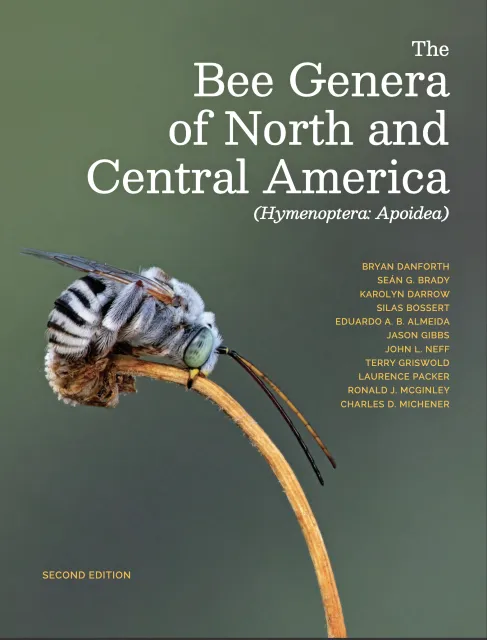
If bees fascinate you--and they should--be sure to download a free PDF of "The Bee Genera of North and Central America (Hymenoptera: Apoidea): Second Edition."
That's also the where you can view it on the website for free.
The 313-page publication is the work of Bryan N. Danforth, Seán G. Brady, Karolyn Darrow, Silas Bossert, Eduardo A. B. Almeida, Jason Gibbs, John L. Neff, Terry Griswold, Laurence Packer, Ronald J. McGinley, and Charles D. Michener.
The Smithsonian Scholarly Press, Washington, DC, published this on Aug. 3, 2026.
"Bees," the authors wrote, "are ecologically and economically important as pollinators of both wild plants and managed crops. In North America--from Panama to Canada--there are more than 5,000 bee species currently placed in 173 genera. Studies focused on bee diversity, pollination, biogeography, ecology, and conservation are dependent on the ability of researchers to identify bee specimens to genus and, ultimately, to species. Identification tools, such as dichotomous keys, allow the scientific community to conduct meaningful field and laboratory research on wild bees."
They noted that "The first edition of The Bee Genera of North and Central America (Hymenoptera: Apoidea) (Smithsonian Institution Press, 1994) provided easy-to-use, fully illustrated keys to the bee genera of North America. Since then, significant changes have taken place in bee classification, largely driven by new and improved phylogenetic studies. The generic, tribal, and subfamily classification of bees has been completely revised, as has our understanding of the spatial patterns of bee diversity."
"This second edition presents a fully updated treatment of the bees of North America, with illustrated keys to the genera, notes on the biology, ecology, and classification of each of the 173 genera, and color habitus photographs of both the male and female of each genus. Smaller, more manageable keys with improved illustrations and images help make this edition essential to identification by bee researchers for the foreseeable future."
The authors divide the book into 12 chapters, ranging from "The Importance of Bees" (Chapter One) to specific chapters devoted to genera Meliponini, Halictinae, Eucerini, and Anthidini to "Notes on the Genera" (Chapter 12).
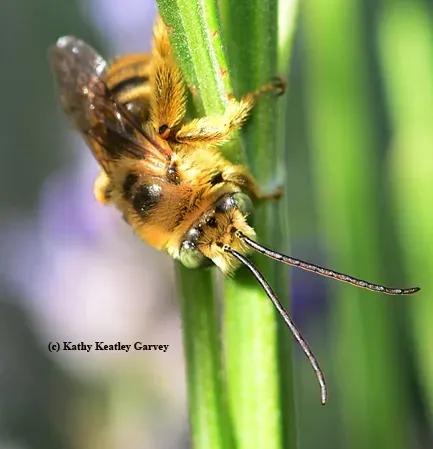
Bees evolved from wasps, as Chapter One relates: "Approximately 125 million years ago, in Western Gondwana--a fused landmass that included South America and Africa-- an obscure group of solitary predatory wasps (probably similar to modern thrips-hunting Ammoplanidae) gave rise to a group of highly specialized pollen--and nectar-feeding insects that we now call bees. Unlike any other lineage of hunting wasps, bees feed their offspring a diet of angiosperm pollen, nectar, and sometimes floral oils. At the same time, the eudicots, a group that now comprises greater than 75% of flowering plant species, formed a particularly tight partnership with bees.
"The eudicots evolved attractive floral rewards--sugary nectar, protein-rich pollen, and floral oils--to lure bees (and other visitors) to flowers; in parallel, bees evolved more effective ways of accessing and transporting these floral rewards. Bees evolved elongate mouthparts for accessing hidden nectar, finely branched hairs and specialized combs and brushes for gathering and transporting pollen, and specialized mops and sponges for gathering nutritious floral oils. As a result, many bee species became highly effective vectors of angiosperm pollen-- they became efficient pollinators."
The authors go on to note that 74 percent of angiosperm species "now rely on animal-mediated pollination, and the vast majority of pollinators are bees. The partnership of bees and flowering plants transformed terrestrial habitats through rapid diversification of both the eudicots (now encompassing more than 350,000 described species) and bees (estimated to include about 21,000 described species). One could argue that the bee-angiosperm partnership is one of Earth's most important symbiotic relationships."
It's generous of the authors and the publishing company to share this important work at no cost to the public.
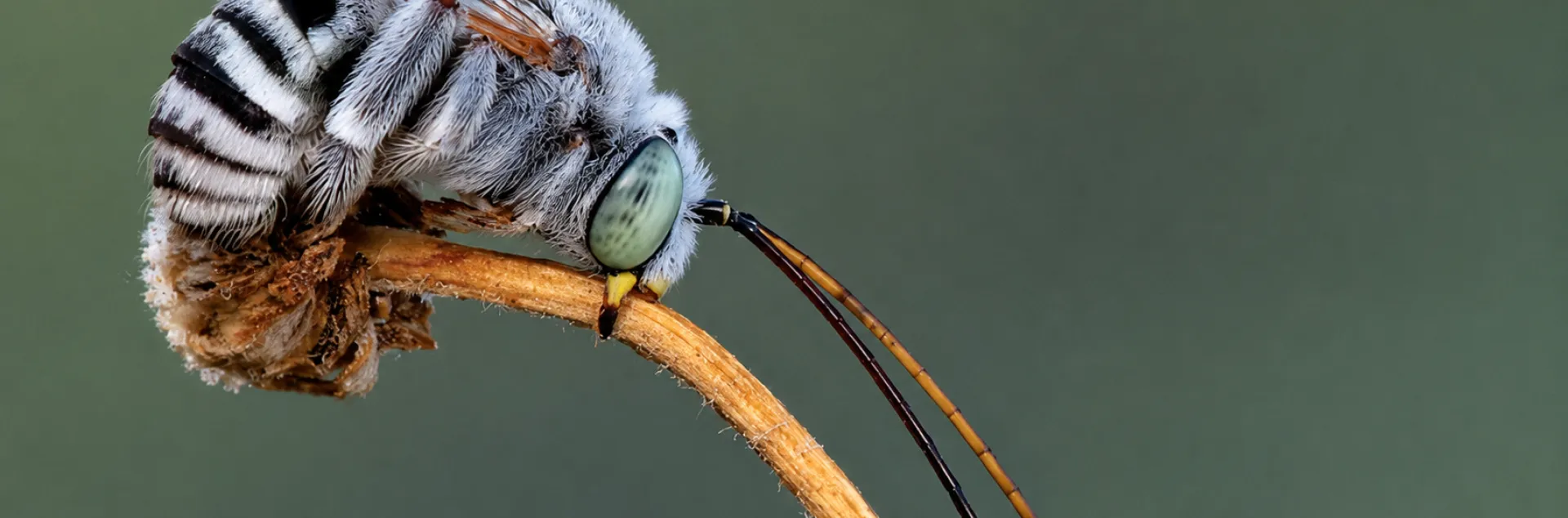
Cover image: A long-horned bee, Svastra duplocincta (also known as the barrel cactus longhorn), graces the cover of The Bee Genera of North and Central America (Hymenoptera: Apoidea): Second Edition. (Photo by Bruce Taubert)