
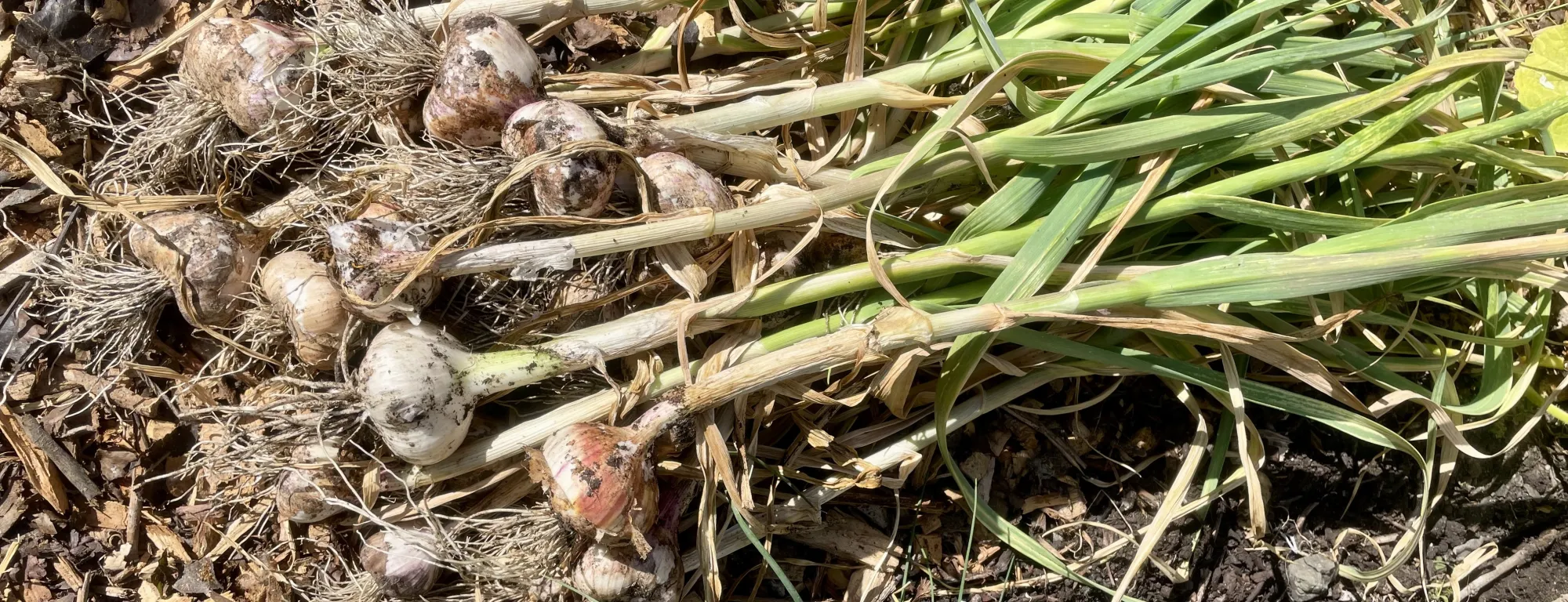
What bulb is prized across the world for its flavor and nutrition, not to mention its anti-fungal and anti-bacterial properties? If you guessed garlic, you are correct!
For the home gardener, garlic is a pleasure to grow. It is most commonly planted from cloves (bulblets) as clones of the original variety, since the flowers do not produce true or viable seeds. Garlic has a long growing season as a vegetable crop, usually being planted in late fall around October with a harvest usually in June, depending on the variety.
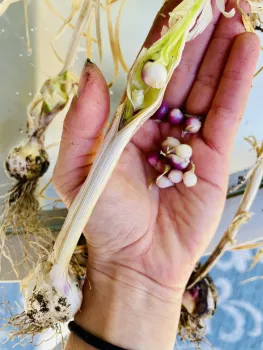
In the 2024 growing season, I planted both hardneck and softneck varieties of garlic successfully, leading to a decent harvest in 2025. This season, I planted my largest cloves from my previous harvest. But this past June, some of my garlic surprised me with something I had never seen before! Little tiny purple bulbs emerged from the stem of the garlic plants.
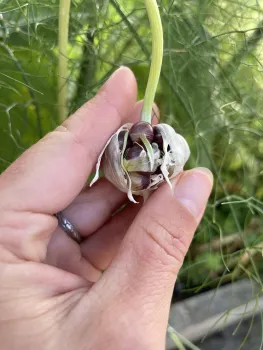
I documented the oddity, then donned my detective cap. After asking a number of people, allium aficionado Bruce Gravens at the Oregon Master Gardener Association Conference explained that these little bulbs are called garlic bulbils or topsets. They only grow on hardneck varieties of garlic via the garlic scape. These tiny bulbils also serve as clones of the original plant, and they can be planted in the garden. My garlic may have experienced stress, which prevented the scape from emerging from the top of the plant; hence, it emerged from the stem.
Bruce also explained that these bulbils, once planted, would grow into a single clove of garlic, rather than the typical bulbs with multiple cloves. That single clove could then be used to grow the typical bulb with multiple cloves in the next season. Ohio State University confirms this, explaining:
“The bulbils from the scape of hardneck types can also be planted, but will take two years to produce a head. Plant bulbils about one-half inch deep and spaced two to three inches apart in the fall. In the following year, the bulbils will produce a single, solid garlic bulb. These can be lifted when the other garlic is harvested for replanting later in season. In the second year, the bulbils will produce a mature multi-cloved head. These bulbils are not seeds, so they will produce the same variety of garlic as the parent plant” (College of Food, Agricultural, and Environmental Sciences, 2018).
While not the most efficient means of producing garlic cloves, I did end up planting the bulbils in my garden out of curiosity. Ohio State University warns that these bulbils can propagate unwanted garlic as weeds in the garden, so other curious gardeners like me should beware! But for me, garlic as a weed sounds rather delightful.
If you are interested in planting garlic in the upcoming autumn season, check out this handy guide for all the steps you need to take. And remember, if you plant hardneck garlic and let the garlic scapes grow, you may also grow your own curious garlic bulbils!
References
Growing Garlic in the Garden. (2018). In CFAES Knowledge Hub.
Growing Garlic: The Real Dirt. (2025). In UC Agriculture and Natural Resources.
Producing Garlic in Michigan. (2016). In MSU Extension Vegetables.
Photos by Mia Sasaki, adapted.