

Question: I want to grow a houseplant that will make a bold statement in a corner of my living room. The area gets bright, indirect light and the ceiling is vaulted. Any suggestions?
Answer: Houseplants do more than bring a touch of greenery indoors — they can transform a space. The right plant commands attention, adds personality, and becomes a living design feature, elevating a room from ordinary to unforgettable.
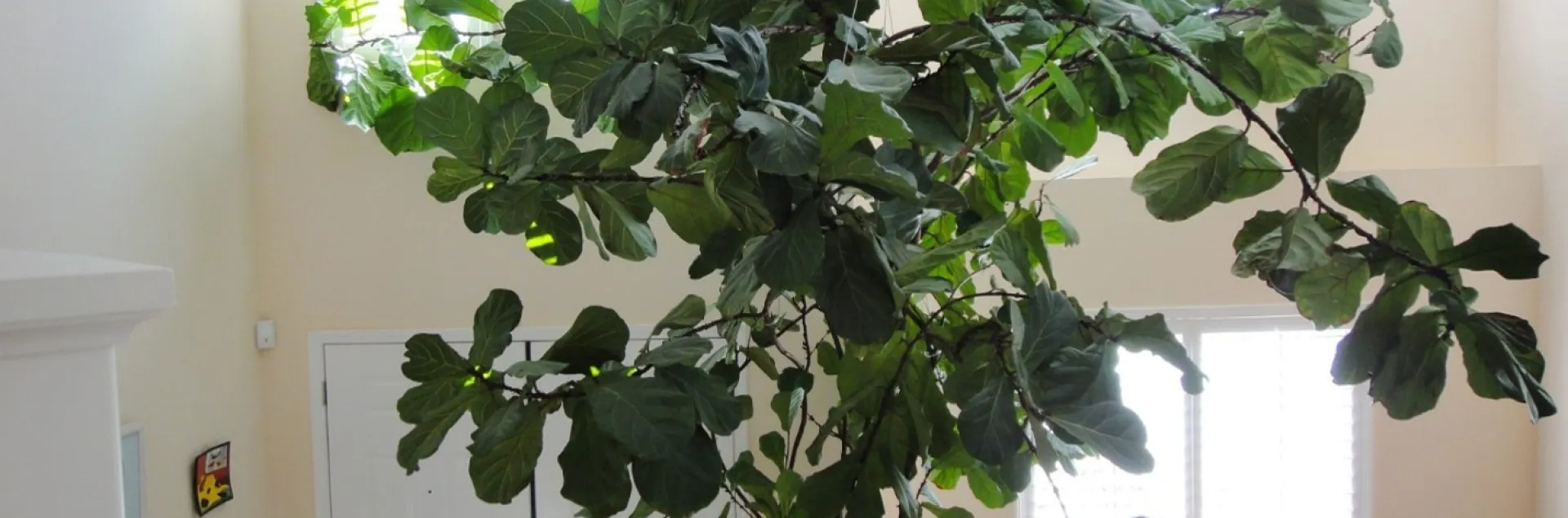
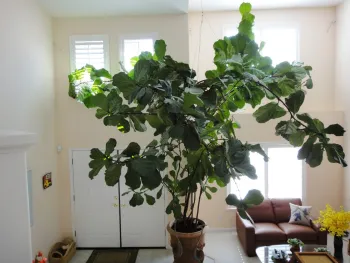
We recommend the fiddle leaf fig (Ficus lyrata), a houseplant native to tropical forests in Africa, with a tree-like appearance that’s a favorite of interior designers.
With proper nutrition and growing conditions, fiddle leaf figs can grow a foot or two each year, with most topping out at 10 feet tall indoors. With higher ceilings and enough light, they can exceed that height if not pruned to control their size.
Known for their large, violin-shaped leaves and preference for bright, indirect light it’s important to know fiddle leaf figs do not like drafts. Water only when the top two inches of soil are dry and fertilize once or twice a year in spring and summer.
A healthy fiddle leaf fig should put out new leaves and grow taller. If it gets leggy with lots of space between leaves or branches, the plant is stretching out in search of adequate light.
Sonoma County Master Gardener Sharon Morgan bought a fiddle leaf fig at a neighborhood market in San Francisco in 1974. She estimates it was 18 inches tall at the time. Nearly 53 years later and now in its second home in Sonoma, her fiddle leaf fig is 16 feet tall.
“It takes several years for the plant to reach this height and several more for it to really mature and fill out, but I definitely recommend the fiddle leaf fig plant,” said Morgan. “Mine has succeeded with very little care.”
She said the plant makes a huge impression. “Whenever people visit for the first time, they always notice it. They stop and stare and say, ‘Wow!’”
Morgan’s fiddle leaf fig is planted in a sturdy terra cotta pot and elevated high enough so her two terriers can’t reach it. Over the years, she’s pruned the plant back to control its size. For added stability, she’s anchored some of its vines to her 18-foot ceiling with thin wire.
Morgan has placed the plant in a spot that gets natural light most of the day, and waters it once a week.
“It soaks up tepid water better than cold because it prevents root shock, making it easier for the roots to absorb water,” she said.
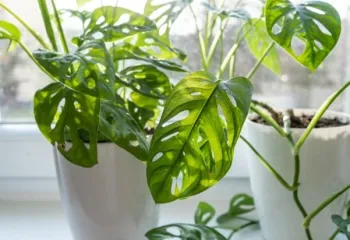
Two other dramatic house plants to consider are the Swiss cheese plant (Monstera deliciosa), with large, fenestrated leaves bringing a tropical feel, and the rubber plant (Ficus elastica), featuring glossy, thick leaves ranging in color from deep green to burgundy.
The Swiss cheese plant can reach a height of 8 feet indoors, grows roughly 1 to 2 feet per year and reaches full size in about three years. Like most indoor plants, it prefers bright indirect light. It’s a good idea to rotate the container a quarter turn at every watering to ensure all sides get equal light and the plant develops a pleasing shape.
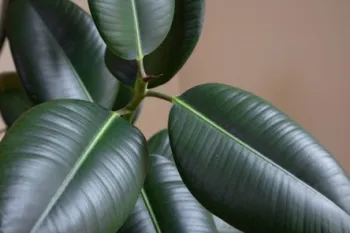
With the right care, rubber plants can grow quickly, sometimes reaching over 6 feet indoors. They prefer six to eight hours of bright, indirect light each day and do well in an east-facing window or several feet from a south-facing or west-facing window.
Rubber plants tolerate soft morning sunlight, but should be kept out of harsh, direct afternoon light, which can burn the leaves. Like the fiddle leaf fig, rubber plants and Swiss cheese plants can become leggy and lose their lower leaves without enough light.
In the right spot with a little attention these striking plants will act as conversation starters and provide years of beauty, bringing nature into your home.
Warning: Not all houseplants, including these three, are pet- or child-safe. Be sure to check toxicity information and place potentially dangerous plants in secure locations. A few houseplants that are considered non-toxic include the cast iron plant (Aspidistra elatior), Dracaena species and some Ficus species.
Contributors to this week’s column were Lisa Howard, Julie Hébert and Kimberly Nielsen-Glynn