

Question: I’d love to grow asparagus in my home garden. Is it hard to do?
Answer: There’s a little more preparation involved in growing asparagus than more commonly grown vegetables, but asparagus is certainly a vegetable you can manage as a home gardener. Most vegetables, such as tomatoes, peppers, eggplant, squash, and beans, are grown as annuals. Asparagus, however, is a hardy perennial that can produce for 12 to 15 years or more if the beds are properly prepared. It is a cool season vegetable that produces stalks in the spring.
Seeds versus crowns
Asparagus can be grown from seed, but it’s easier to start with crowns, which will produce a crop sooner than seeds. The crown is the dormant, underground root system of a young asparagus plant. We recommend you purchase one- to two-yearold crowns from a reputable nursery and plant them between January and March. Good varieties for our area are Mary Washington, UC 72, and UC 157.
Site selection and preparation
Choose a location for your asparagus bed with good drainage, eight to 10 hours of full sun, and where the 5-foot-tall ferny summer growth will not shade nearby plants. Asparagus is grown in rows of 12- to 18-inch-wide trenches, with a minimum of 3 feet between rows. The number of crowns you plant depends on how many people will eat it, but a general rule of thumb is to plant five to 10 plants per person. For a family of four plant 20 to 40 crowns, which requires a 20- to 40-foot trench, usually along the border of the garden.
Dig one or more trenches 12 inches deep and long enough to plant the number of crowns you need to grow. Set aside the removed soil, which should then be amended with compost. Loosen another 6 inches of soil at the base of the trench. Put 2 inches of amended soil back in the trench and place the crowns in the trench 12 inches apart. Mound the soil slightly under each crown so the crowns are higher than the roots and spread the roots out as far as possible. Cover each crown with 2 to 3 inches of amended soil. Continue to fill in the trench as the shoots start to appear, about 2 inches of soil every two weeks. Irrigate if it’s not raining, but don’t overwater: Check soil moisture at a depth of 4 to 6 inches before watering.
Care and maintenance
Once the trench is completely filled in with soil and spears have reached the surface, spread 2 to 4 inches of compost or organic mulch on both sides of the trench to provide nutrients, preserve moisture, and control weeds. Each spring you should supplement the bed with a balanced fertilizer and weed the bed before the first shoots come up. It is best to pull rather than hoe weeds to avoid damaging developing spears. In late winter remove dead foliage by cutting it down to 2-inch stubs and spread 2 to 4 inches of composted material over the bed.
When and how to harvest
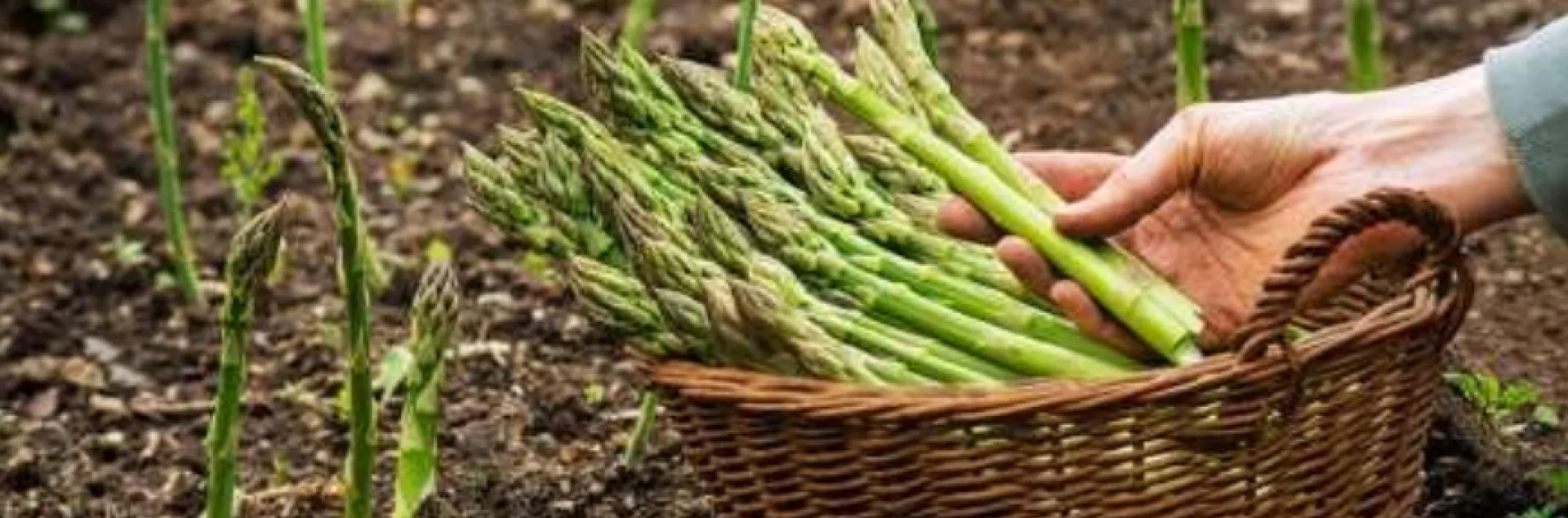
Asparagus, when grown from a crown, typically takes two to three years to mature and should not be harvested during the first year of growth. Let the emerging spears develop into fern-like foliage, which is tall and attractive and can make a nice garden border. You may need to stake foliage in high-wind areas. One-year-old crowns should not be harvested until the third year, but 2-year-old crowns may be harvested the second year.
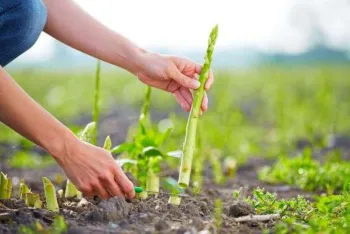
For your first harvest select only a few 6- to 8-inch-tall spears over a three-week period, cutting them with a sharp knife just below the soil surface, and letting the rest of the spears develop into foliage. If spears are allowed to grow taller than about 8 inches, the base of the spears will be tough. Spears should be tight and smooth at the tip. Refrigerate harvested spears immediately in a plastic bag. Increase the harvest each year but stop harvesting when new spears are less than ½ inch in diameter at the base. By the time the asparagus plants are in their fourth season, they may be harvested for six to 10 weeks per year.
When harvesting is over, allow the remaining spears to fully mature. This foliage nourishes the roots for next year’s harvest, so don’t cut them down until winter. With proper care your asparagus bed will last for many years.
Contributors to this week’s column were Wendy Stern, Julie Hébert and Lisa Howard.