
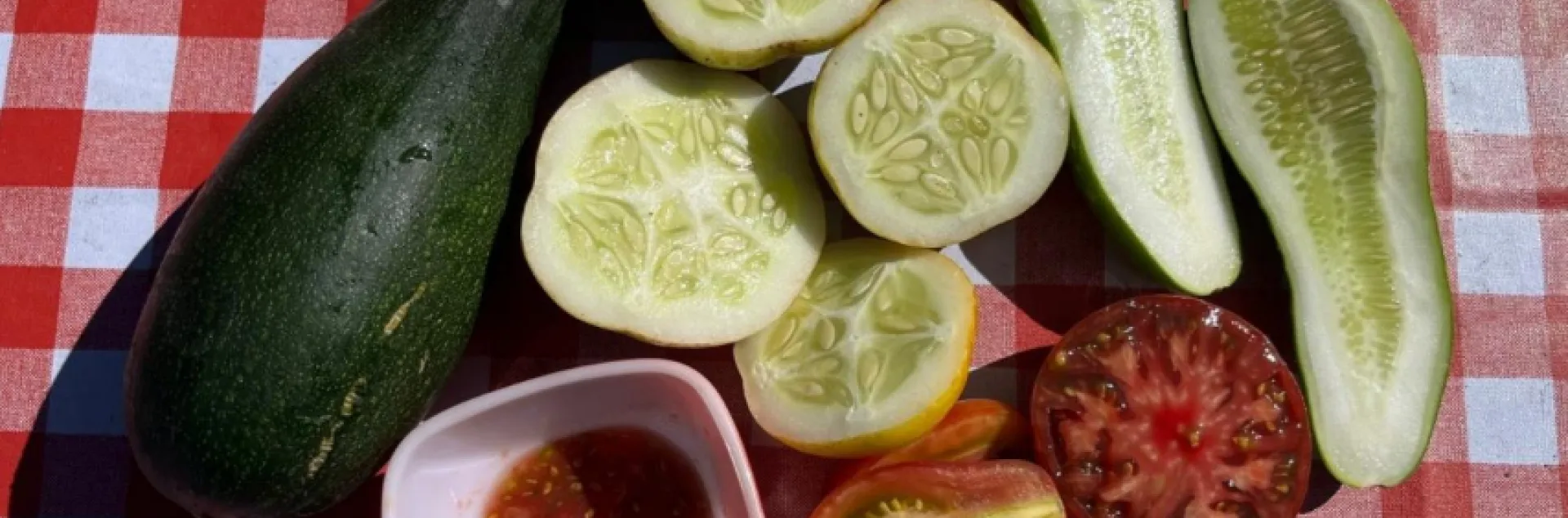

The practice of saving seeds is an important tradition
Question: I want to save seeds from some of my summer veggies. What are some tips for saving seeds — particularly from tomatoes?
Answer: With fall arriving soon, it’s an ideal time to collect seeds for your 2026 summer garden! The practice of seed saving is an important tradition that helps preserve heirloom varieties, maintains biodiversity, adapts plants to local conditions, reduces gardening costs, and strengthens community connections when gardeners share seeds and knowledge with each other. Best of all, there’s the joy of seeing plants sprout from seeds you saved. Here are some tips for successfully saving seeds:
Choose healthy plants
Seeds from unhealthy plants may produce weak seedlings, pass on genetic weaknesses, or harbor disease. For best results, save seeds from the healthiest plants in your garden.
Select open-pollinated plants
Open pollination refers to plants that are pollinated by insects, birds, wind or other natural means. Seeds produced by open-pollinated plants, when planted, will generally produce plants that are “true to type,” meaning they will closely resemble the parent plant in terms of traits and characteristics. In contrast, seeds from hybrid plants, which are created through controlled crosspollination by humans, might produce plants that are very different from the parent.
Understand self-pollination vs. cross-pollination
Self-pollinating plants, such as lettuce, beans, peas, tomatoes, eggplant and peppers, are often easier for seed saving because they are less prone to genetic variation from cross-pollination. Seeds from plants that can be easily cross-pollinated by insects or wind may give unexpected results. Examples include squash, pumpkins and gourds.
Collect mature seeds
Let seeds mature on the plant before collecting. For vegetables, this sometimes means leaving them on the plant longer than you would for best eating quality.
Properly store seeds
Cleaned, dry seeds should be stored in low humidity at 45 degrees or less. Storage in a refrigerator is ideal, but if not possible, store in the coolest, driest location in your house.
Label and date your container
Useful information to include on seed packets are the plant type, variety, any special growing conditions such as steps taken to prevent cross-pollination, and the date the seeds were collected.
Saving tomato seeds
When choosing tomatoes to save seeds from, it’s best to choose heirloom tomato varieties instead of hybrid varieties. Hybrid seeds are a cross-pollination between two different parent plants, and when they reproduce, the offspring can exhibit characteristics of either parent or a mix of both, leading to unpredictable results such as sterile seeds or plants that revert to a distant relative. Heirloom tomatoes are open-pollinated, meaning their seeds will reliably produce plants identical to the parent plant, preserving desired traits like flavor, color and size. To determine if a tomato plant is a hybrid, check the tag or see packet for an “F1” designation or the words “hybrid” or “cross.” Tomato seeds are ready to save when the tomato is ready to eat. Because tomato seeds have a gel-like covering, having them sit in water allows good bacteria to break down that covering.
Step 1: Cut the tomato open and squeeze the pulp juice and seeds into a clean cup or glass jar.
Step 2: Place the container in a spot that’s ideally between 72 to 86 degrees, but not in direct sunlight. Loosely cover the container with a paper towel or cheesecloth to prevent flies. Fermentation can take 24 to 96 hours. A mold layer may develop during this time. This is normal.
Step 3: Good seeds settle to the bottom of the container. Gently pour off mold, debris and any seeds that float (they are hollow). Pour the remaining seeds in a colander and wash thoroughly with clean, cool water.
Step 4: Spread the washed seeds on a paper plate, coffee filter, paper towel or any surface that will help them dry faster. Do not allow the seeds to clump together. Do not put the seeds in sunlight or the oven. Seeds may take up to four weeks to dry completely. Warning: Tomato seeds can germinate unless you dry them quickly.
Step 5: Store dried seeds in a glass jar, plastic container, or a plain white mailing envelope and store in a cool, dry place. Be sure to write the tomato name and date on the container. Tomato seeds are viable up to five years.
For additional information about saving tomato seeds, view the Sonoma County Master Gardener video September Veggie Happenings.
Contributors to this week’s column were Lisa Howard and Robert Williams.