

When I first planted my backyard, my husband called my garden Death Row. I wanted to grow flowers and vegetables as my grandmothers had done and trees as my mother had done, but my efforts fell under the category “survival of the fittest.” Some plants lived, some died, very few thrived.
I made classic mistakes:
- Chose the wrong plants.
- Planted in the wrong locations.
- Watered too much or too little.
- Paid zero attention to the soil.
I envisioned the lush gardens of my youth in humid south Louisiana, which isn’t possible in our dry California Mediterranean climate. Over time I’ve gotten better at not killing plants, but the greatest leap forward in my gardening success has been discovering the robustness of native plants.
For a lazy gardener like me (aka a busy, working woman), natives are a godsend, requiring less fertilizing, less water and less attention in general.
Although there’s no such thing as a maintenance-free garden, native plants come close. Adapted to our climate, soil and wildlife over thousands of years, they pretty much take care of themselves after a little help at the start.
Native plants produce gardens more beautiful than I could imagine, filled with unexpected blossoms, shapes and textures, populated with butterflies, birds, bees and more — a living biome regenerating and sustaining itself. A garden feeding my soul and teaching me a crucial lesson: Let nature lead.
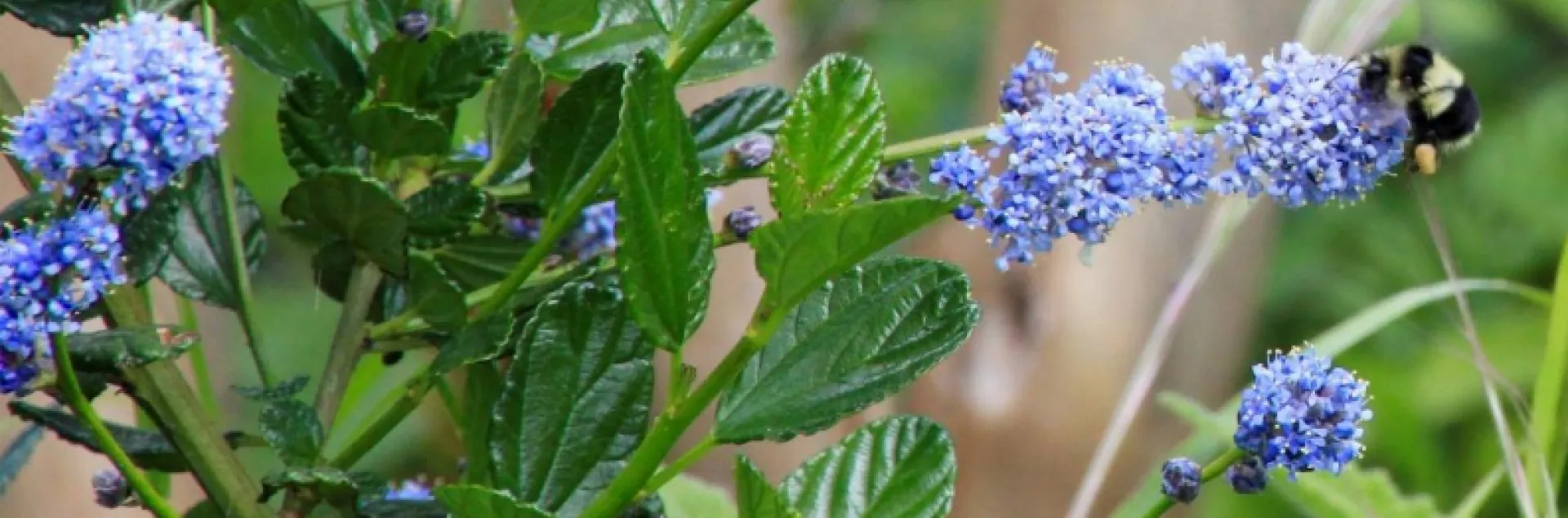
When I moved to Sonoma, I landed on an acre of weedy serpentine soil with a few struggling non-natives planted too close to the house. That first year I waited and watched to see what popped up from the ground. As non-natives withered and invasive grasses and burr clover ran rampant, I noticed native plants thriving on the edges of the property. Toyon, coffeeberry, ceanothus, yarrow, Pacific Coast irises, Matilija poppies, California wildrose, manzanitas, wildflowers and of course the majestic oaks, went about their lovely, natural cycles through the seasons.
Restoring a neglected property on a budget is a big job. I felt out of my depth. Fortunately, I joined the Sonoma County Master Gardener training program, which gave me loads of useful information and introduced me to the resilience and beauty of native plant gardens. I’ve started transforming my serpentine field of weeds into a healthy, native biome while using less water, eliminating synthetic fertilizer and avoiding tilling and soil amendments.
A few tips
Natives need watering the first year or two. It’s best to put them in the ground in autumn before the rains start. For the first two summers, water as needed. By the third summer, plants should be deeply rooted enough to survive on their own.
Consider location. Sun/shade, wetter/drier soil. Look up what your natives prefer and help them do well by planting them in a good spot.
Don’t till your soil. Don’t amend your soil. Dig as small a hole as needed to get the plant situated. These plants are adapted to our soil and will know what to do when you put them in the right place.
Mulch, which builds soil, feeds plants and preserves moisture, helping natives make it through our hot summers.
Have patience. Watch the natives, learn and adapt. Let nature lead.
My newly planted natives are flourishing and producing long-blooming flowers. The birds, bees and butterflies love them. As I’ve sheet-mulched weedy spots, some wild natives (California poppies) are shooting up on their own. Given half a chance, natives are brilliant collaborators in your garden.
Contributors to this week’s column were Julie Hébert, Diane Judd and Joy Lanzendorfer.