
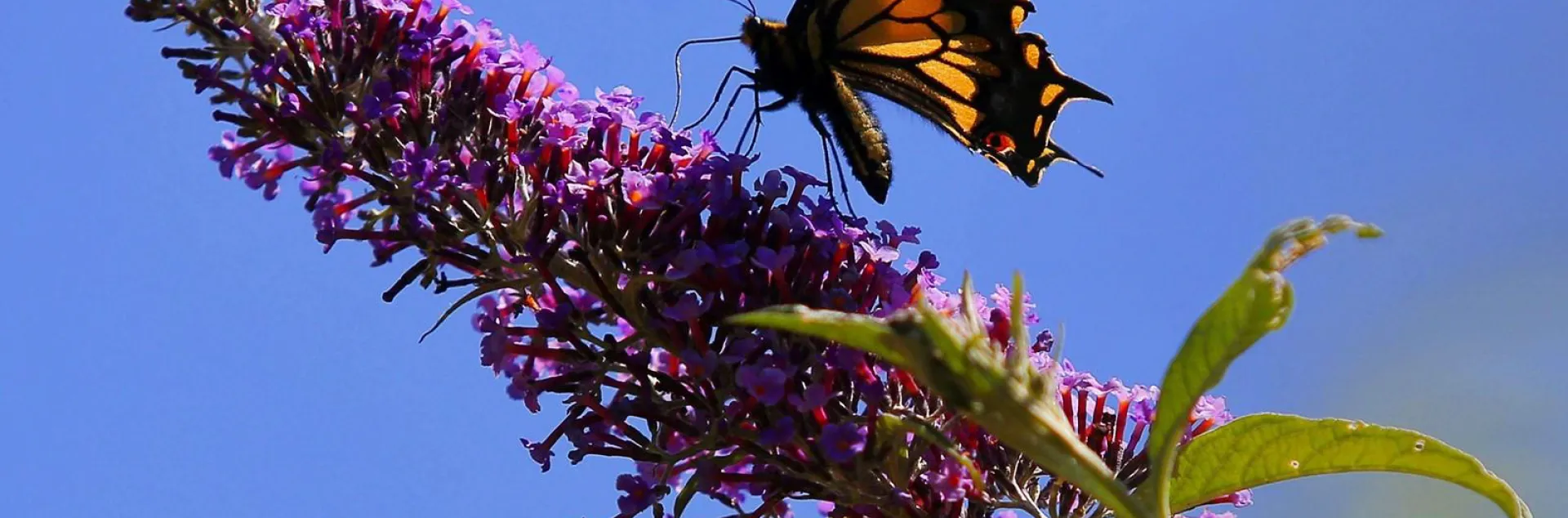

Pollinators are essential to the garden. Without them, we would lose about 75 percent of flowering plants and over one-third of the world’s food crops. To mark their importance, we celebrate Pollinator Week from June 22-28.
This annual international event supports and raises awareness of pollinator health. The 2026 theme is “Life on a Leaf: Celebrating Caterpillars and Host Plants,” focusing on native habitats. In 2026, the official Pollinator of the Year is the swallowtail butterfly. To support and attract swallowtails to your garden, we recommend providing nectar sources, like verbena, butterfly bush (Buddleja) and lilac, which feed adult butterflies. And, since butterflies lay their eggs on certain plants, putting in specific larval host plants will help turn your garden into a home for swallowtail caterpillars.
To attract:
• Pipevine Swallowtail, plant Pipevine, Aristolochia californica.
• Anise Swallowtail, grow dill, parsley and fennel.
• Western Tiger Swallowtail, plant willow, ash or sycamore trees.
You can also plant a pollinator garden to support bees, butterflies and other beneficial insects. Some native pollinator plants include:
Perennials and shrubs
- Gum Plant (Grindelia stricta): Yellow daisy-like flowers attracting bees/butterflies.
- Coast Aster (Aster chilensis ‘Point Saint George’): Lavender blooms, great for bees/moths.
- Manzanita (Arctostaphylos spp.): A vital winter-blooming, nectar-rich shrub.
- California Lilac (Ceanothus spp.): Fragrant, blue/white flowers.
- Sticky Monkey Flower (Mimulus aurantiacus): Drought-tolerant, loved by bees.
- Buckwheat (Eriogonum spp.): Attracts a high diversity of insects.
- Sage (Salvia spp.): Salvia “Bee’s Bliss” is recommended for groundcover.
- Toyon (Heteromeles arbutifolia): Provides summer flowers and winter berries.
Groundcovers
- Beach Strawberry (Fragaria chiloensis): Native, low-growing.
Annuals
- California Poppy (Eschscholzia californica): Orange flowers loved by people and insects alike.
Tips for a successful pollinator garden
- Plant in full sun: Most native pollinator plants prefer sunny spots with welldrained soil.
- “Foolproof Five” (Sonoma Beekeepers): Borage, Lavender, Salvia, Rosemary and Thyme are easy, long-blooming options.
- Structure: Use a mix of groundcovers like beach strawberry, perennials like asters and shrubs like California lilacs for a complete habitat.
- Avoid pesticides: To protect beneficial insects, avoid pesticide use in the garden.
- Watering: While many natives are drought-tolerant, they need regular supplemental irrigation during their first year to become established.
Food gardening in June
Tomatoes are having growth spurts now. To support their tender branches, stake them with staves and soft ties, or use wire cages. Remove most of the shoots growing at the intersections between the stem and the leaves to keep the plant more open, though this is a matter of choice. Don’t handle plants in the morning when they’re wet from dew — disease can spread, and you can bruise the plant. The stems will bend more easily in the afternoon. For more information on tomato staking techniques, go to: https://tinyurl.com/2n4m8m74.
When planning to grow tomatillos, be aware that they are only slightly self-fertile and you’ll need at least two plants for a good crop. As you finish your transition from a spring to summer garden, choose early vegetable varieties with shorter days-to-maturity that have high yields, and/or that are drought-tolerant or drought-resistant for the most efficient use of water.
In the veggie garden, use yellow sticky tape to control whiteflies or apply insecticidal soap to the undersides of leaves. Larger pests such as hornworms and squash bugs can be handpicked and dropped into a container of soapy water. When apple, pear, peach and nectarine trees have formed small fruit, thin them to about 4 to 6 inches apart, about the space between your thumb and pinky finger. Fewer fruits on the tree will grow bigger.
Roses
Deadhead roses and other summer blooming plants for continued bloom. Cut blossoms for bouquets early in the morning. The blooms stay fresh longer if you quickly put them in a vase of warm water. Consider having an old can or jar with water handy as you cut your stems. Continue to fertilize roses, along with other heavy feeders such as azaleas, rhododendrons and camellias. Check your roses for symptoms of disease, including powdery mildew, black spot, rust and Rose Mosaic Disease (RMD). Also check for environmental disorders, such as overwatering. You can find more information and images on the UC IPM website on Rose Diseases and Abiotic Disorders.
Monitor your roses for pests commonly found in Wine Country including aphids, spider mites, Western flower thrips, Fuller rose beetles, Hoplia beetles and more. While you’re examining your plants, look for rising populations of natural enemies to these pests, such as lady beetles, soldier beetles and spiders, which often rapidly control harmful pests and should be encouraged.
You can find information on rose pests and their common natural enemies on the UC IPM website on Rose Insects and Mites. For more information on Pollinator Week, go to the Pollinator Week website.
Contributors to this week’s column were Joy Lanzendorfer and Debbie Westrick.