UC ANR is committed to providing an accessible and inclusive web experience for all users. If you encounter an accessibility barrier or need content in an alternative or remediated accessible format, please contact anraccessibility@ucanr.edu.
Pests And Weeds
UC Master Gardener Program of Alameda County: Page
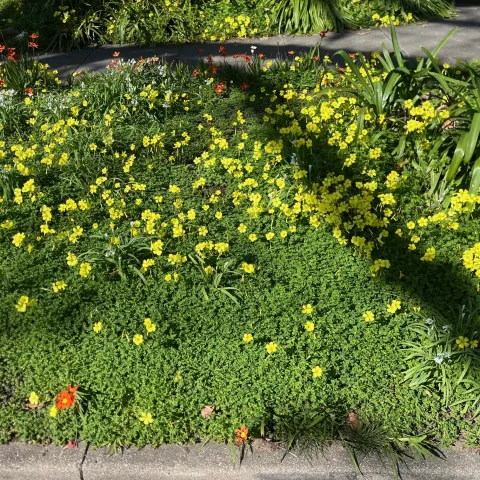
Learn about garden thugs—ornamental plants that become invasive under the right conditions and spread aggressively, disrupting your garden and your neighbor's.
UC Central Sierra programming includes virtual and on-line training as well as in-person classes and workshops in Amador, Calaveras, El Dorado, and Tuolumne Counties.
Invasive plants are one of the greatest threats to croplands, rangelands, aquatic areas, and wildlands in the United States; they degrade the productivity and biological diversity of all ecosystems. Below are the sixteen most harmful weeds in Humboldt County.
Acetic acid, also known as vinegar, is used in products for weed control. Many people choose it because it is natural. However, acetic acid can damage skin and eyes, especially at concentrations commonly found in weed killers.
Nutsedges are aggressive and persistent weeds that commonly infest lawns, vegetable and flower gardens, and landscapes. These perennial sedges are a problem in lawns because they grow faster than turfgrasses and result in non-uniform turf.
Pampasgrass (Cortaderia selloana) is a common ornamental landscape plant that readily naturalizes throughout California's coastal areas and some interior regions.
Hydrilla (Hydrilla verticillata) is an invasive, aquatic weed that can be found in many slow-moving fresh water bodies in California. The plant forms large mats that can crowd out native plants, restrict water flow, and interfere with boating and fishing.
After all the winter rains you may find yourself dealing with weeds and struggling to control them. The first step in successfully controlling weeds is knowing what weed you have.