
Kearns returns to CIWR as research and communications fellow

Faith Kearns returned to the California Institute for Water Resources on Oct. 12 as a research and communications fellow. She will be conducting public scholarship on water systems, wildfire and climate adaptation in the American West and enhancing disaster communications and capacity building with scientists and practitioners.
Over her career, Kearns has built and led science communication programs at the Ecological Society of America, UC Berkeley's Center for Fire Research and Outreach, the Pew Charitable Trusts, and most recently the Arizona Water Innovation Initiative at Arizona State University. She also served as an AAAS Science and Policy Fellow in the U.S. Department of State, negotiating international ocean and fisheries policy.
During her decade as UC ANR’s California Institute for Water Resources academic coordinator, she built water-related research communication infrastructure across the UC system during some of California's most severe drought, wildfire and climate crises. She now serves as a fellow with the institute with support from the Climate Science and Communications Fund.
Her award-winning book “Getting to the Heart of Science Communication: A Guide to Engagement” (Island Press) has become a foundational resource for science writers and scientists who do communications. She co-created and co-hosts Water Talk, an award-winning podcast now in its seventh season. She has written for High Country News, New Republic, On Being, and Bay Nature, and has been featured as an expert source in outlets including the Washington Post, Guardian, CNN, Mother Jones, Rolling Stone and National Geographic.
Kearns holds a Ph.D. in environmental science, policy and management from UC Berkeley and a bachelor’s degree in environmental science and political science from Northern Arizona University.
Kearns can be reached at fkearns@ucanr.edu, on Bluesky @fkearns.bsky.social and LinkedIn https://www.linkedin.com/in/fkearns123.
Zou to develop research and extension program in outdoor recreation, tourism

Sharon Zou is the new assistant UC Cooperative Extension specialist in outdoor recreation and tourism/community economic development. She began at UC ANR on Oct. 1. Zou will develop research and extension programs that enhance the economic and social benefits of outdoor recreation and tourism in California, while promoting environmental stewardship and sustainability.
“Outdoor recreation is a relatively new area at UC ANR, although several colleagues have been engaged in related work to varying degrees,” Zou said. “I hope to build on these existing efforts, identify needs and priorities across California, and help strengthen UC ANR’s research and extension capacity in outdoor recreation.”
Zou was born and raised in Guangzhou, China. She earned her bachelor’s degree in events and tourism management from Sun Yat-Sen University in Guangzhou, and then a master’s and Ph.D. in parks, recreation and tourism sciences from Texas A&M University. She was also a postdoctoral fellow in the U.S.-Asia Center for Tourism and Hospitality Research at Temple University.
After her postdoctoral training, Zou was a visiting professor in the Department of Recreation, Parks and Tourism at San Francisco State University for a year. She then served as an assistant professor in the Department of Recreation, Sport and Tourism at the University of Illinois, Urbana-Champaign, where she got tenured and promoted to associate professor. Before joining UC ANR, Zou spent her sabbatical as a visiting scholar at the Stone Center for Environmental Stewardship at UC Berkeley.
“It goes without saying that I love spending time outdoors, which motivates me in the mission of searching for solutions to improve outdoor experiences while protecting nature and promoting responsible environmental stewardship,” Zou said. “I also get energy from translating research into meaningful, real-world impacts, which is one of the main reasons I was drawn to UC ANR.”
Splitting her time between the UC Office of the President’s office in Oakland and UC ANR’s Second Street Building in Davis, Zou can be reached at sszou@ucanr.edu.
Nguyen joins Nutrition Policy Institute as research data analyst
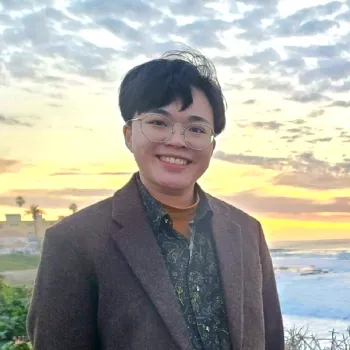
Caroline Nguyen started at UC ANR’s Nutrition Policy Institute on Oct. 1 as a research data analyst. Nguyen has worked as a survey worker for NPI since June 2026.
Nguyen will support data analysis and data collection for multiple NPI research projects, evaluating ultra-processed foods in school meals, the federal Special Supplemental Nutrition Program for Women, Infants and Children (WIC), and a clinical trial to understand the best type of milk for toddlers.
They earned a bachelor’s degree in global health from the University of California, San Diego, and a Master of Public Health degree from Johns Hopkins Bloomberg School of Public Health.
Nguyen also worked as a project policy analyst at the UC Berkeley School of Public Health from 2022 to 2024, where they supported a collaborative NPI research project evaluating school meals. Nguyen’s research interests include adolescent health, nutrition and LGBTQ+ health.
Based at the UC Office of the President in Oakland, Nguyen can be reached at cabnguyen@ucanr.edu.
Spalding joins Policy Institute as UCCE specialist in agriculture policy
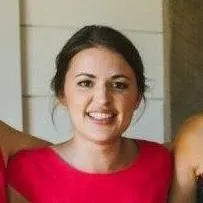
Ashley Spalding joined UC ANR on Oct. 1 as a UCCE specialist in agriculture policy in the UC ANR Policy Institute.
Before joining UC ANR, she was the lead researcher on local and regional food systems at the USDA's Economic Research Service.
Spalding earned her master’s degree and Ph.D. in agricultural and resource economics at UC Davis, then worked as a postdoctoral researcher in the same department. She has conducted research on food labeling, as well as the economic impacts of pesticide regulations and food safety incidents. She earned her bachelor’s degree in environmental economics and policy at UC Berkeley.
In her free time, Spalding can be found on the ice curling, playing card and board games, going to WNBA games, trying not to kill her garden, woodworking, or attempting to keep up with all the good TV and movies coming out.
Spalding is based at the Second Street building in Davis and can be reached at acspalding@ucanr.edu and on LinkedIn: https://www.linkedin.com/in/ashley-spalding-64265a25.
Rumbaugh joins UC ANR as UCCE enology specialist
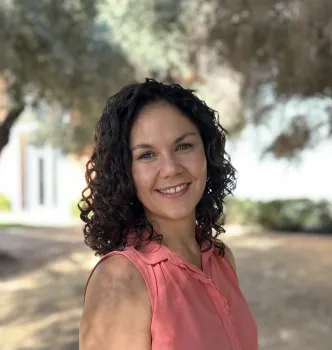
Arran Rumbaugh has joined UC ANR as an assistant professor of Cooperative Extension in enology in the Department of Viticulture and Enology at UC Davis.
Rumbaugh’s research addresses pressing industry concerns such as vineyard smoke exposure and grapevine red blotch virus. She centers her work on developing practical tools and protocols that support harvest and winemaking decisions for the industry.
Before joining UC Davis, she was a research chemist and lead scientist with USDA-Agricultural Research Service in Davis. There, she led a multidisciplinary research and extension program on wildfire smoke exposure in grapes and wine. Her research includes low-cost passive samplers that predict smoke impacts on grapes before harvest, developing rapid screening technologies for smoke exposure and understanding how grapevines respond to smoke at the molecular level.
During her doctoral work, Rumbaugh worked with the late UCCE specialist Anita Oberholster examining how grapevine red blotch virus affects grape composition and wine quality. Her work investigated ecological techniques to mitigate the impacts of red blotch virus on wine quality.
She earned her bachelor’s degree in chemistry from the University of Nevada, Reno and later her Ph.D. in agricultural and environmental chemistry at UC Davis.
Rumbaugh is based at UC Davis and can be reached at acrumbaugh@ucdavis.edu. She is on LinkedIn: https://www.linkedin.com/in/arran-rumbaugh-bb3b82159/.
Camargo Silva joins UCCE as North Bay weed science advisor
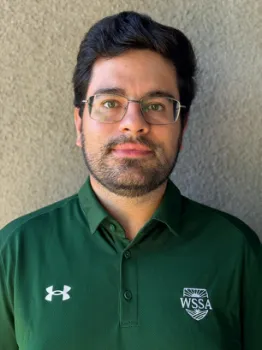
Gustavo Camargo Silva joined UC ANR on Sept. 10 as the weed science advisor for Sonoma, Napa and Marin counties.
Camargo Silva, who is fluent in Portuguese, became interested in plant sciences as a kid growing up in São Paulo, Brazil. From a young age, he was interested in growing, identifying and mapping fruit trees in his neighborhood.
He earned a bachelor’s degree in agronomy from Western Kentucky University. He became interested in integrated weed management after an internship with the weed science program at the University of Kentucky, where he helped with various research projects on integrating chemical and non-chemical strategies for herbicide resistance management. He also worked at the Baker Arboretum in Bowling Green, Kentucky, where he was responsible for weed management in the garden.
Camargo Silva earned his master’s degree and Ph.D. in weed science from Texas A&M University under Prof. Muthukumar Bagavathiannan and his dissertation studied the mechanisms of weed suppression by a cereal rye cover crop and cover crop management for sustainable weed control in cotton. Among other topics, he evaluated mowing as a non-chemical cover crop termination method alternative and the interactions between cereal rye and perennial johnsongrass.
His research and extension program will focus on sustainable weed management – both chemical and organic – across the diverse crop and non-crop systems in Sonoma, Marin and Napa counties, including vineyards, rangeland, dairy pastures, annual fruits and vegetables and orchards. He hopes to help producers increase productivity and sustainability on the farm by promoting the use of varied weed management strategies, ultimately reducing the need for excessive herbicide use.
Camargo Silva is based at the UCCE office in Santa Rosa and can be reached at gcamargosilva@ucanr.edu. He is on LinkedIn:linkedin.com/in/gustavo-camargo-silva-7b39b61a5.
Gonzalez-Maldonado joins UC ANR as specialist in computational data science
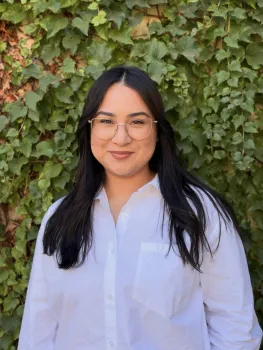
Noelymar Gonzalez-Maldonado began on Sept. 1 as assistant Cooperative Extension specialist and adjunct faculty in computational data science for agriculture and natural resources at UC San Diego. She also serves as director of agriculture in the Societal Computing and Innovation Lab (SCIL) at the San Diego Supercomputer Center.
Her research and extension work is grounded in collaboration with growers and combines soil science, agronomy, computational biology and data science – using both quantitative and qualitative approaches. She studies soil health and soil microbial function to provide practical, data-driven insights and develop tools that support grower decision-making and help build resilience in California agriculture.
“In this new position, my goal is to work with the SCIL team and collaborate with diverse scientists, organizations and growers to leverage advanced computing resources and cyberinfrastructure, such as the National Data Platform,” Gonzalez-Maldonado said. “My goal is to use AI tools to provide meaningful information and resources that help create solutions for growers.”
Gonzalez-Maldonado, who goes by the nickname Noely, added that she hopes to build an inclusive extension program that increases AI literacy among growers and creates opportunities for workforce development in data science, computational biology and ag tech – especially for youth.
Gonzalez-Maldonado was born and raised in Lares, Puerto Rico, a coffee-growing town in the western mountains of the island. In high school, she joined FFA, which sparked her interest in agriculture.
“Growing up in Puerto Rico, I saw how climate-driven challenges affected food security and farming, and that experience inspired me to pursue a career in soil and agricultural sciences,” said Gonzalez-Maldonado, who is fully bilingual in Spanish and English.
After earning a bachelor’s in agronomy from the University of Puerto Rico at Mayaguez, she attained a master’s in environment and natural resources from The Ohio State University and then a doctorate in soils and biogeochemistry from UC Davis.
“Working with growers during my Ph.D. and learning about their diverse perspectives from semi-structured interviews inspired me to become a Cooperative Extension specialist,” Gonzalez-Maldonado explained. “Many growers were curious about the role of the soil microbiome in biologically based soil management, with goals that go beyond production to building vineyard resilience; their interest guided my direction toward soil microbiome research.”
Throughout her training in sustainable soil management, Gonzalez-Maldonado kept running into the same challenge: making sense of complex, large and variable soil health data – especially the biological component – and relating it to practical outcomes for growers. Thus, for her postdoctoral training with the USDA Agricultural Research Service’s SCINet initiative, she studied data science tools such as machine learning and multi-omics computational biology (bioinformatics).
“California’s growers face many challenges like wildfires, floods and droughts; in addition to climate-related challenges, there is a strong interest in reducing the use of synthetic inputs and transitioning towards more organic and regenerative agriculture, so we need a better understanding of soil biology under different sustainable management practices, along with clear guidance on next steps,” said Gonzalez-Maldonado. “My goal is not only to better understand processes through research, but also to co-develop open-source, AI-driven tools and create an extension program that helps growers make better management decisions.”
Currently working remotely from Davis, Gonzalez-Maldonado will be based at the San Diego Supercomputer Center in La Jolla starting in spring 2027. She can be reached at ngonzalezmaldonado@ucanr.edu and on LinkedIn: linkedin.com/in/ngonzalezmaldonado.
Mesias moves to UC Master Gardener Program
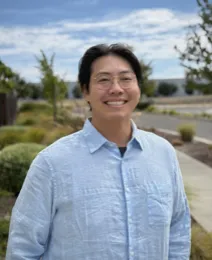
Jordan Mesias joined the UC Master Gardener Program statewide office as a training specialist 3.
Previously, Mesias served as an instructional designer for the UC ANR Forest Stewardship Program, where he developed the Post-Fire Forest Stewardship Course, a self-paced online course designed to support private forest landowners in post-fire recovery and stewardship. Through his work with the forestry team, Mesias gained an appreciation for California’s diverse forest ecosystems and rekindled his love of hiking and spending time outdoors.
Prior to joining UC ANR, Mesias worked as an instructional designer for 2U, where he helped develop user experience and user interface (UX/UI) design boot camps that taught learners the fundamentals of UX design. This experience strengthened his expertise in instructional design and course development, while also deepening his appreciation for creating learning experiences that help people build new skills, pursue their goals and transition into new careers.
Mesias grew up on a citrus farm in the small town of Orosi, in Tulare County, where his grandfather taught him the value of hard work. In his free time, he enjoys watching movies and walking his dog, Chimmy.
Mesias is based in the Second Street building in Davis and can be reached at jtmesias@ucanr.edu.
[PK1]They go by just FFA.