
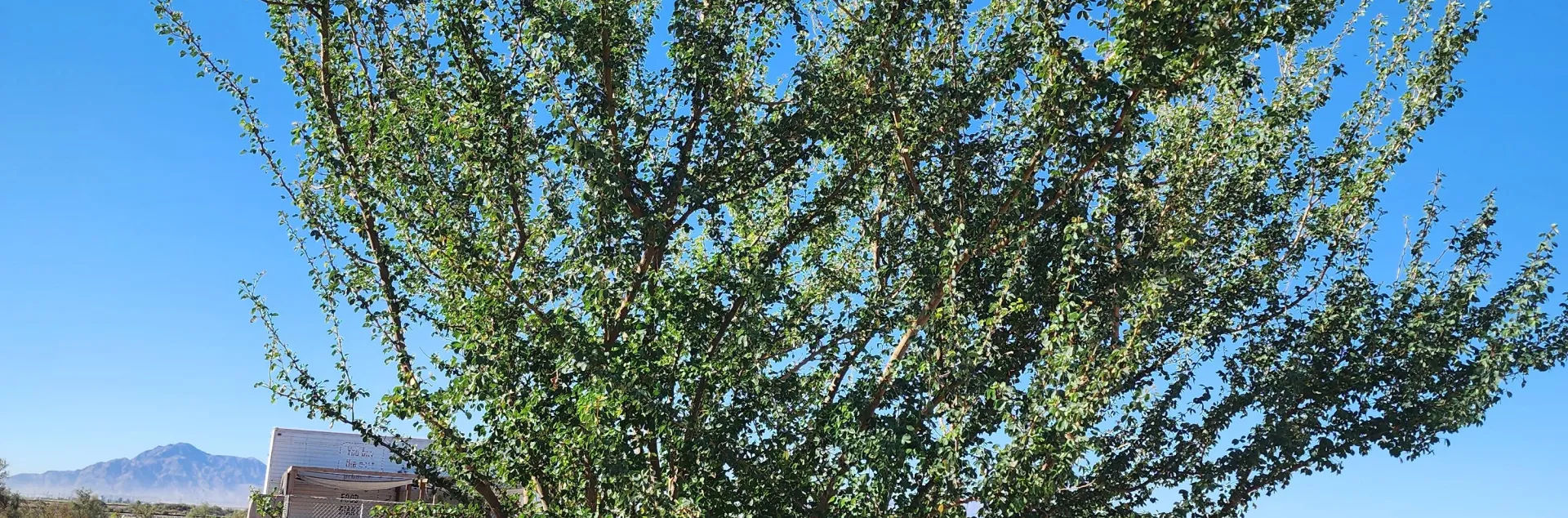
Agroforestry is the intentional integration of trees and shrubs with crops and forage. This practice serves multiple purposes, including acting as windbreaks, living fences, and contour buffer strips. Additionally, incorporating these plants offers multiple benefits: it creates wildlife habitats, enhances landscape diversity, produces extra products such as firewood and fruit, and improves soil health. (1)
The Guamúchil (Pithecellobium dulce), also known as Manila tamarind, Madras thorn, monkeypod tree, or sweet monkey pod, can tolerate a wide range of soil types, including nutrient-poor, saline, and eroded soils. It is drought-tolerant and grows quickly (2). Similarly, the Mesquite (Prosopis) tree attracts pollinators with its small flowers. Like Guamúchil, it thrives in arid environments and is often used for reforestation in conservation areas (3).
Both trees belong to the legume family, which allows them to play a vital role in the ecosystem by fixing atmospheric nitrogen in the soil through a symbiotic relationship with soil bacteria in their root nodules. These trees help fertilize poor or dry soils without the need for chemicals. They thrive in high temperatures and drought conditions, making them an excellent option for the Imperial Valley.
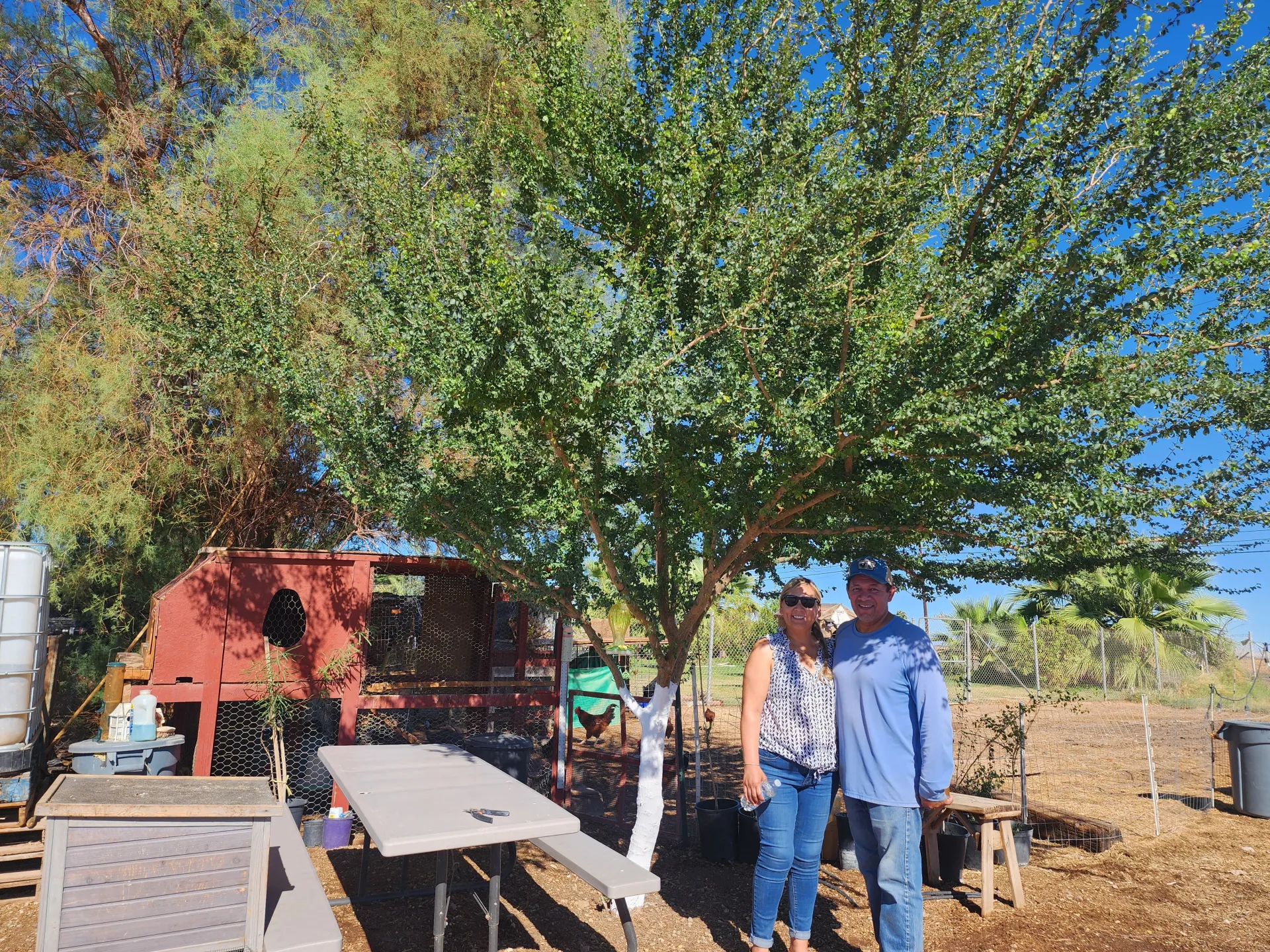
Picture of Israel and Mary at their "Rancho La Paz" in the Imperial Valley.
Israel and Mary, beginner farmers in Imperial County, are interested in incorporating these two trees into their farming system. They believe that variety and diversity will enhance their organic farm. One of their primary goals is to improve soil health, as their soil currently has low organic matter content. They plan to intentionally integrate Mesquite and Guamúchil trees among their crops and use them as living fences to define areas and provide shade for recreation and in the zones where they keep animals.
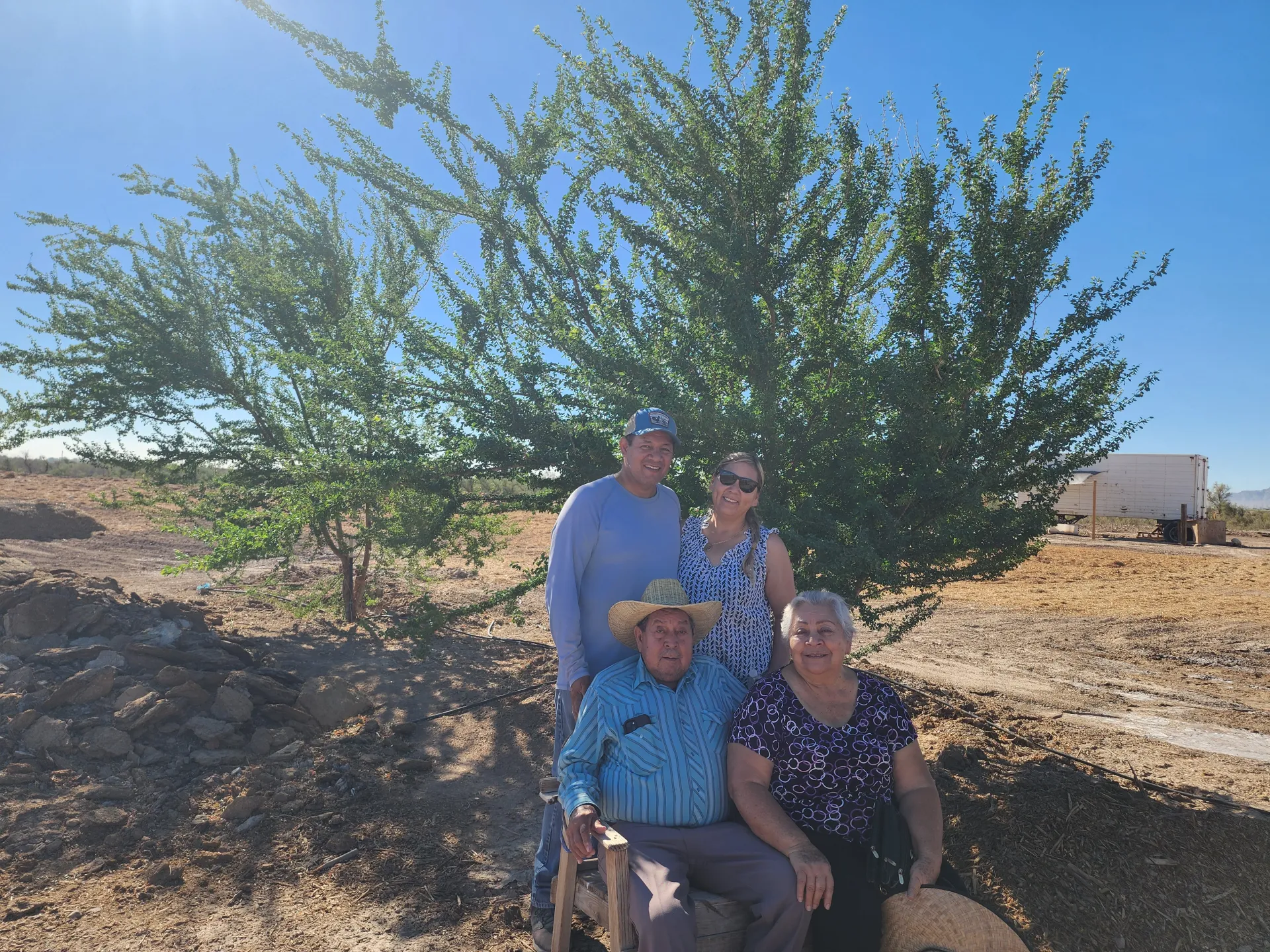
Picture of Israel and Mary, along with Israel's parents, enjoying the shade of one of their young Guamúchil trees at their Rancho La Paz.
They are currently collaborating with the NRCS on a conservation project that includes the construction of a reservoir and the installation of living fences. They are also working with the University of California’s Climate Smart Agriculture program in Imperial Valley to implement additional practices and connect with specialists who can help them navigate the challenges of running a diverse, organic family farm.
In addition to their goal of improving the soil, they have a passion for animals and fostering a community-friendly atmosphere. One of their main motivation is to open the farm to the community, allowing people to access fresh produce, spend time surrounded by trees and animals, and enjoy the fruit of the Guamúchil tree, which is a personal favorite of theirs.
For assistance or more information about climate-smart agricultural practices, contact your nearest technical assistance provider: https://ucanr.edu/site/california-institute-water-resources/climate-smart-agriculture-team
Sources:
- Usda.gov. Sep 15, 2026, https://www.nrcs.usda.gov/conservation-basics/land/forests/agroforestry-systems
- Francis, J. K., Lowe, C. A., & Trabanino, S. (2000, June 15). Bioecología de Arboles Nativos y Exóticos de Puerto Rico y las Indias Occidentales Silvics of Native and Exotic Trees of Puerto Rico and the Caribbean Islands. Usda.gov. https://research.fs.usda.gov/download/treesearch/2862.pdf#page=23
- El mezquite, una lucha por evitar su erosión cultural y ambiental. (s/f). Unam.mx. September 15, https://www.fciencias.unam.mx/noticias/el-mezquite-lucha-por-evitar-erosion-cultural-y-ambiental