
A group of University of California Agriculture and Natural Resources scientists will meet with leaders of Chile and Argentina agriculture on June 23-26 in Río Negro province of Argentina to discuss crop production systems and practices.
Farmers in these areas produce similar crops – such as forage, fruits, nuts and vegetables – and share similar challenges, such as increasing climate variability, water scarcity and extreme weather.
“Río Negro Province has a dynamic and diverse agricultural sector that is increasingly challenged by weather uncertainty and resource constraints, similar to what we are seeing in California,” said Daniele Zaccaria, professor of agricultural water management for Cooperative Extension at UC Davis, who is leading the California expert delegation.
“One of the most valuable aspects of this collaboration is the opportunity to bring together experts, producers, water managers and agricultural professionals from Argentina, Chile and California,” Zaccaria added. “By exchanging experiences across regions that face similar water and climate challenges, we can identify innovative solutions and adaptive management practices that strengthen agricultural resilience while improving the efficiency and sustainability of water resources.”
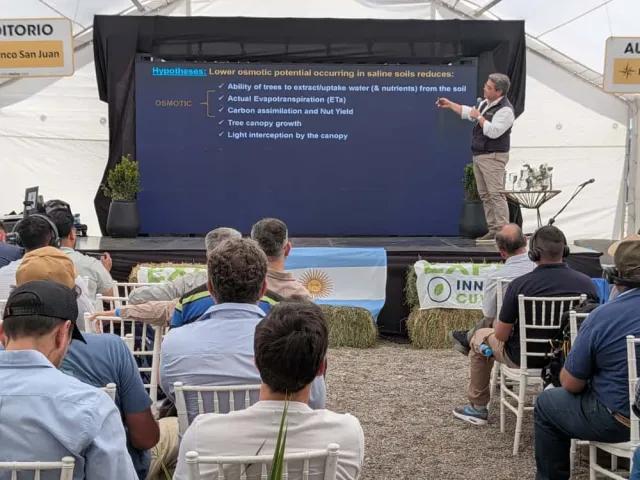
At their first stop in Viedma on June 23, the international experts will meet with members of the Ministry of Economic Development and Production, then take farm tours on June 23 and 24 to learn about Río Negro agriculture and share their research-based knowledge.
The tours will include stops in the Lower Valley to see a hazelnut orchard and district water delivery systems and services. Then the group will visit the Middle Valley to view forage and horticulture production and on-farm irrigation systems and management practices for nuts and other horticultural crops.
“Through this collaboration, we hope to contribute knowledge, technologies and management approaches that support informed decision-making and help growers adapt to future conditions while maintaining the long-term viability and resource-efficiency of their farming operations,” Zaccaria said.
On June 25, from 8 a.m. to 2:30 p.m., farmers, agricultural professionals, students, representatives of government agencies and other interested community members are invited to attend the workshop “Building Resilient Forage, Fruit, Nut, and Vegetable Crop Production Systems for Increasing Weather Variability in Río Negro Province” in General Roca.
The workshop, co-organized by Zaccaria and experts from the Inter-American Development Bank and hosted by the Government of Río Negro Province, will feature a series of thematic sessions highlighting innovative approaches to climate resilience in agriculture.
Presentations will be delivered by water and agricultural experts from the University of California and the Chilean Water Technology Innovation Consortium (CoTH2O), with discussions focused on strategies and technologies to help crop production systems adapt to increasing weather variability and water-related challenges.
“Producers throughout the world are facing increasing weather variability, from more frequent frost events to prolonged heat waves and periods of drought and water scarcity, as well as greater uncertainty in seasonal conditions,” Zaccaria said. “This workshop is designed to share practical, science-based strategies and decision-support tools that can help growers of forage, fruit, nut, and vegetable crops of the Río Negro Province improve resilience, manage risks more effectively and sustain productivity under changing environmental conditions.”
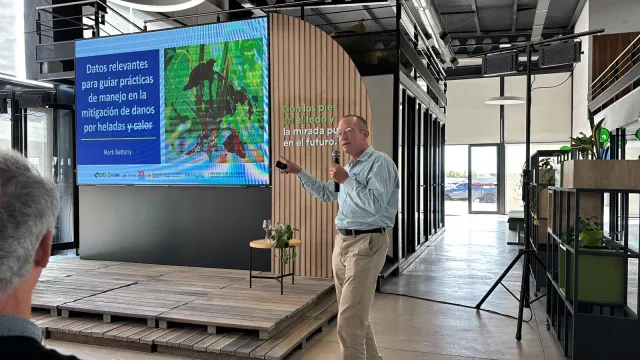
In addition to Zaccaria, workshop presenters include Mark Battany, independent consultant and retired University of California Cooperative Extension water management and biometeorology advisor; Khaled Bali, UC Cooperative Extension irrigation water management specialist; Michael Cahn, UC Cooperative Extension irrigation and water resources advisor; Philippe Dye, Division of Agricultural Irrigation, VITAL Servicios in Río Negro Province, Argentina; and Octavio Luis Lagos, University of Concepción and CoTH2O in Chile.
The speakers will present the latest research on weather-related challenges across diverse cropping systems, resource-efficient irrigation management, strategies to reduce frost damage, and adaptive field management practices to enhance crop resilience. The scientists will also introduce decision-support tools designed to help farmers better manage their resources and mitigate production risks.
The workshop is free, but registration is required. Registration includes participation in all technical sessions, workshop materials, coffee breaks, lunch and post-event presentation resources. To register, visit https://bit.ly/4en0w6t.
After the workshop, the scientists will visit Kleppe to meet an apple and pear grower.
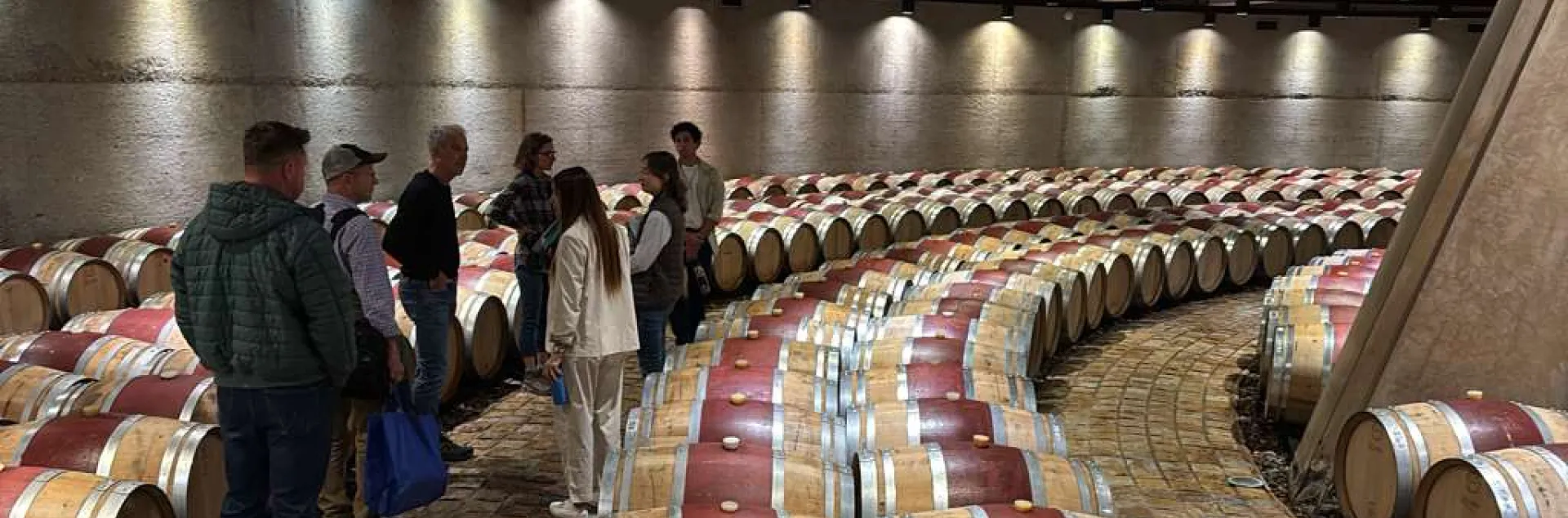
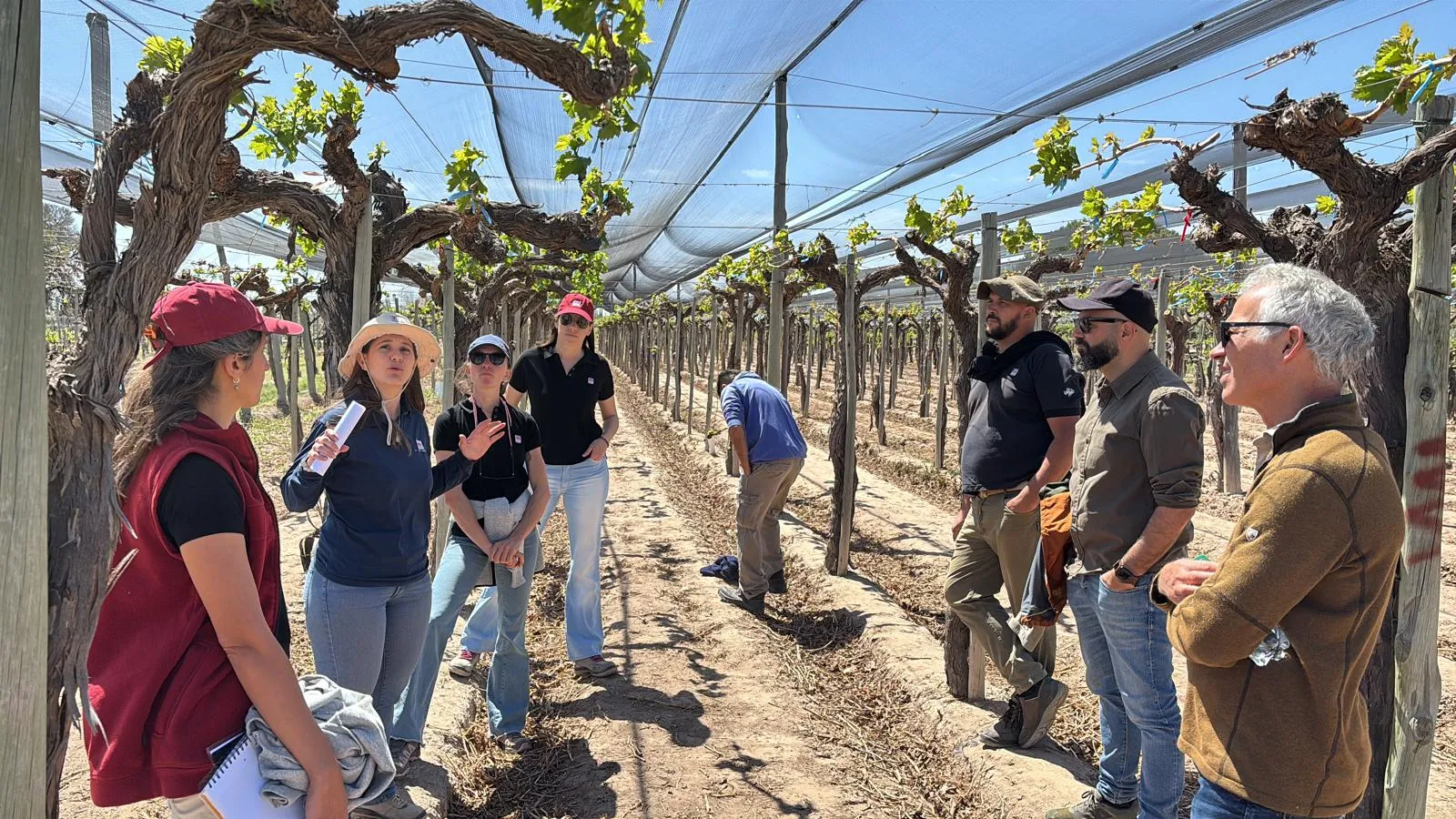
The visit follows up on two workshops organized by the Interamerican Development Bank and University of California last autumn. The 2025 workshops focused on advanced irrigation practices for agricultural production in Mendoza and San Juan, with specific attention to grapes, high-value vegetables and pistachios.
Beyond this training, there may be opportunities for longer-term collaboration between the Government of Río Negro and the University of California in agricultural innovation, water management, irrigation modernization, capacity building, applied research and sustainable rural development, Zaccaria noted.