
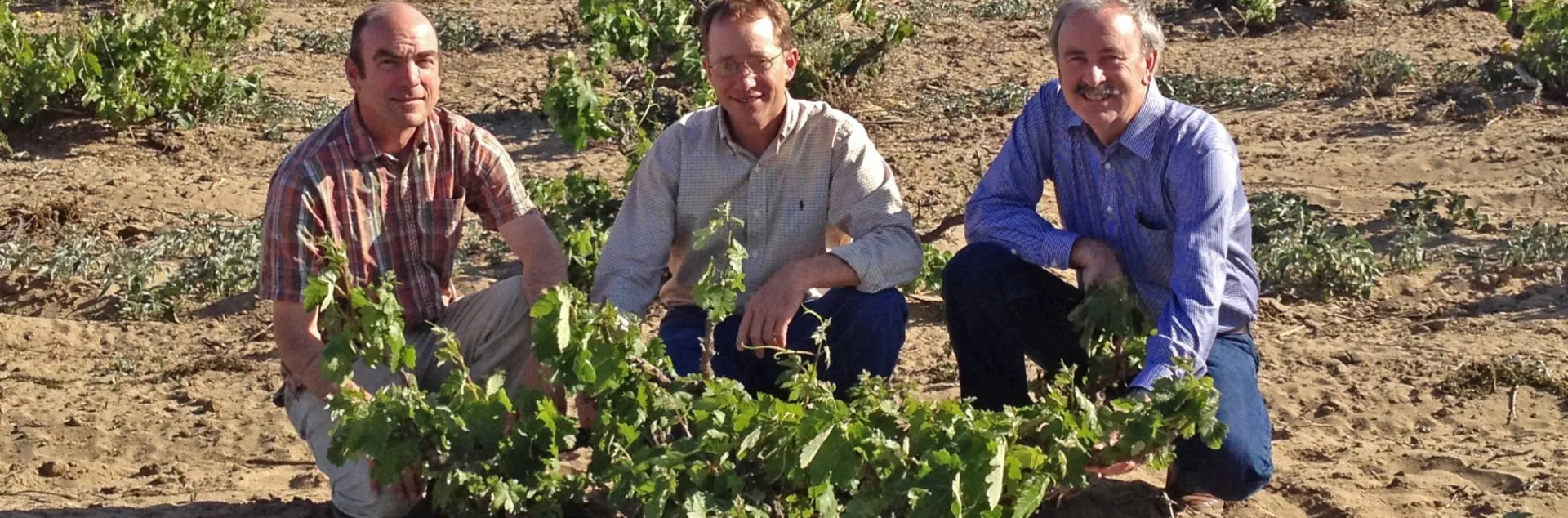
Larry Bettiga guided transformation of wine grape industry in Monterey region, California
One of the crowning achievements of Larry Bettiga’s nearly half-century academic career can be found – creased, cut up and dog-eared – in the trucks of grape growers all across California.
Bettiga, the University of California Cooperative Extension viticulture advisor for Monterey, San Benito and Santa Cruz counties, was the driving force behind the third edition of Grape Pest Management. Published in 2013 by University of California Agriculture and Natural Resources, the book is widely regarded as the definitive reference on the subject.
“I can probably contact a dozen grape growers here in the Central Valley and probably at least 10 of them have that book in their truck,” said Stephen Vasquez, a former UCCE viticulture advisor for Fresno and Madera counties.
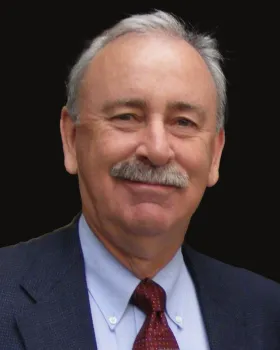
Aside from distilling Bettiga’s own knowledge, the book includes the expertise of more than 60 experts. The enthusiastic contributions of so many experts across academia and industry are testament to Bettiga’s standing in the field.
“There is so much valuable information that went into that, and it would have only come together under someone like Larry Bettiga,” said Vasquez, who currently serves as the executive director of the Administrative Committee for Pistachios and the California Pistachio Research Board.
Bettiga, set to retire from UC ANR on July 1, regards the book as a highlight of his long and influential career because it represents an aspect of extension he has always cherished – the teamwork.
“I think what I’m most proud of is I’ve had the ability to work with a lot of people over the course of my career,” Bettiga explained. “And some of most satisfying projects have been where I developed a team to address a problem.”
Bettiga’s academic journey from pest management to grape research
The importance of working together is in Bettiga’s blood. He is descended from a closeknit clan of dairymen in Italy’s Lake Como region who had grazed their herds in the Alps and emigrated to Monterey County in the early 1900s. Bettiga grew up on his great-uncle’s dairy farm north of Salinas, where his father worked in the family business.
After graduating from UC Berkeley in 1978 with a bachelor’s degree in agricultural pest management, he landed an internship in Tulare County, where he was supervised by UCCE advisors Steve Sibbitt and Donald Flaherty, a pioneer in grape pest management.
“I had the opportunity at the time to work with all the advisors in the office,” Bettiga recalled, “and so I was also exposed to field crops and the whole range of what they were working on; they were very impressive in their approaches to solving grower problems, and they included me in all the things they were doing.”
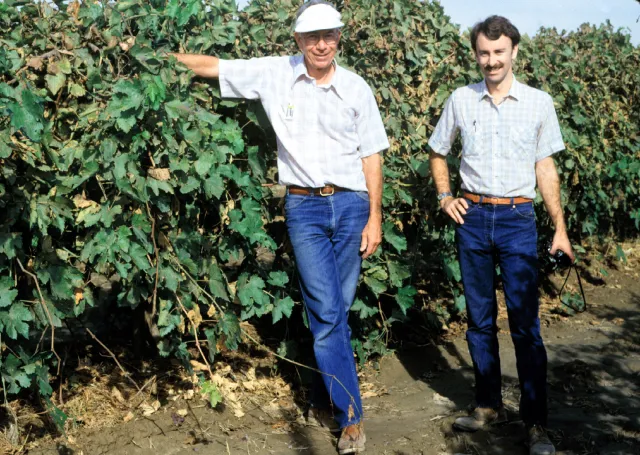
Bettiga then worked as a staff research associate (SRA) on various projects, such as monitoring lepidopterous pests of grapes like omnivorous leaf roller and validating the codling moth model for walnuts.
By that time, he was singularly focused on becoming a UCCE farm advisor so he leaped at the chance to become an SRA in the lab of Fred Jensen, the UCCE viticulture specialist at UC Kearney Research and Extension Center in Parlier.
“He had a history where everybody who became his SRA later became a farm advisor,” said Bettiga, citing his close friend, the late George Leavitt, as just one example.
Unsurprisingly, after four years of learning from Jensen the cultural practices for table grapes and also completing his master’s degree in viticulture at California State University, Fresno, Bettiga was hired in 1985 as the UCCE viticulture advisor in Monterey County. Fortunate to “come home” to work in his chosen profession, Bettiga has served in that position ever since.
Phylloxera control, rootstock and clonal trials among Bettiga’s contributions
When Bettiga started as a UCCE advisor in his home region, many vineyards were infested with phylloxera, an insect that feeds and lays eggs on the roots of grapevines. At that time, most of the plants were “own rooted” (for example, a Chardonnay variety would be on Chardonnay roots), making them susceptible to the devastating pest. Therefore, the solution was grafting the wine grapevines to the resistant rootstocks of related species.
But the scale of replanting an entire industry was daunting – and the farmers had no idea what rootstocks to plant. So Bettiga began a thorough program of rootstock trials to identify the best choices.
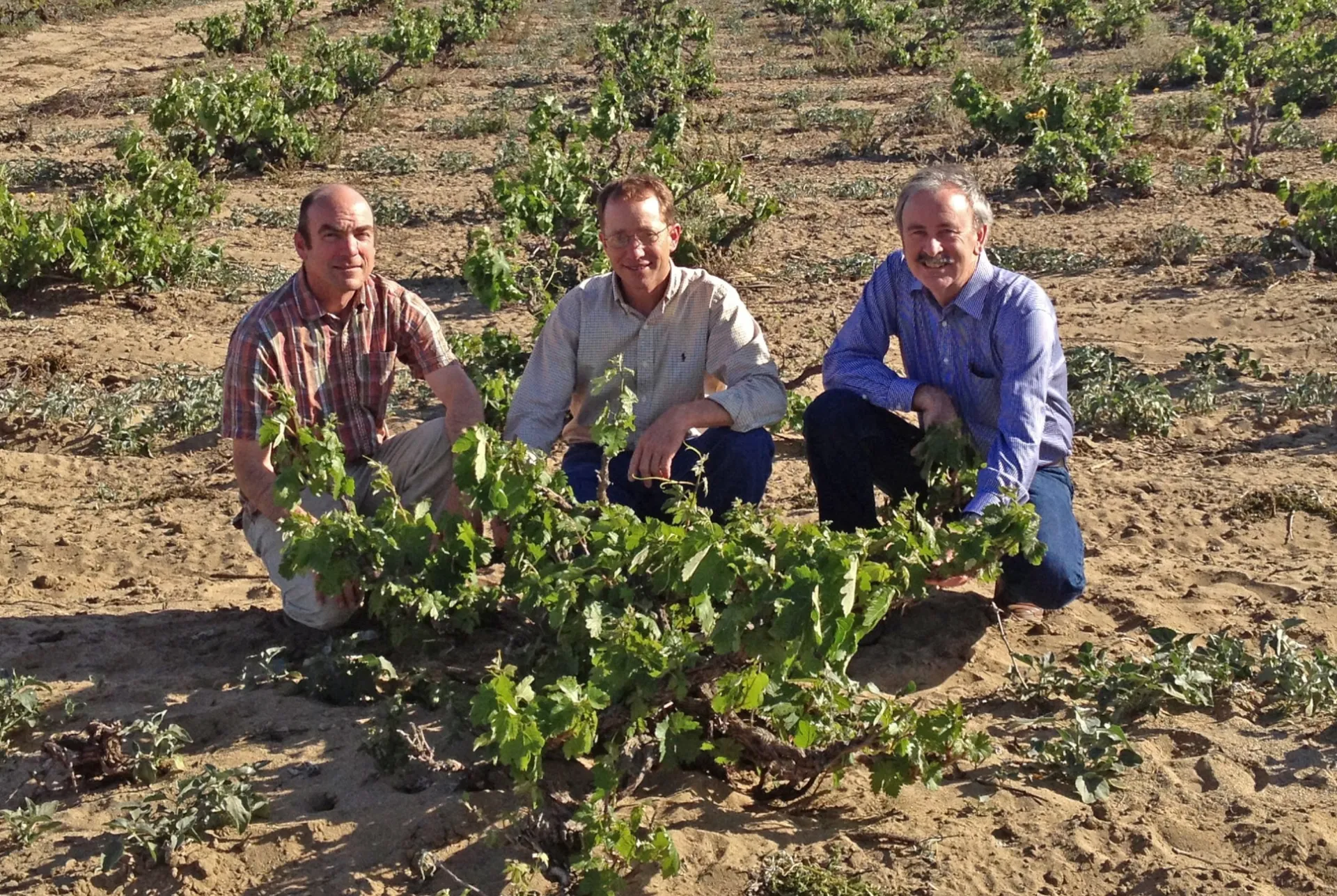
“Over the course of the 10 to 15 years that it took to replant all these properties as they got infested, there was a lot of change,” Bettiga recalled.
Bettiga and his collaborators were at the forefront of much of that change. They conducted studies to help growers optimize trellising, vineyard spacing, pest management, canopy management and the broad transition from sprinklers to drip irrigation in the region.
“Larry conducted groundbreaking research on many aspects of wine grape production such as control of powdery mildew, vine training, rootstock evaluations, mealy bug control and many, many other production issues,” said Richard Smith, UCCE emeritus farm advisor for Monterey County. “Larry has been very practical in his approach to research and extension.”
Another major contribution has been Bettiga’s systematic evaluation of clones of different varieties to improve productivity and fruit quality.
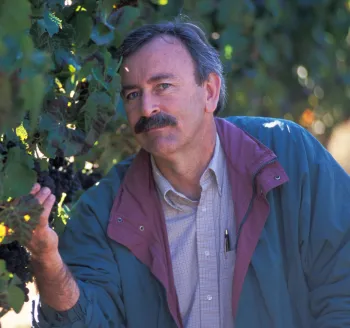
“When we plan a vineyard now, we know a lot more than we did 40 years ago,” Bettiga said. “Forty years ago, people just said, ‘Give me whatever.’ And now everybody wants to have a clone that produces the type of wines they’re looking for, or the flavors they’re looking for; they want certain root stocks that are really matched to the site.”
“Hopefully a lot of the work I did has helped those growers, at least locally, fine-tune and make decisions based on science,” Bettiga continued, “rather than on what they hear at coffee shops or see on the internet.”
Bettiga, who also served as a UC Cooperative Extension county director during his career, has been a role model for other advisors. Just as he learned from iconic UCCE researchers such Fred Jensen and Pete Christensen, Bettiga passed forward the techniques of “forensic viticulturalists” who sleuth out the causes of growers’ most vexing challenges.
Stephen Vasquez said the example of Bettiga and his colleagues served as a guide when he became the new advisor succeeding Christensen.
“After year one, it was really like year three for me, and after year three, it was like year seven; being around them really accelerated my knowledge in viticulture and my ability to approach problems,” said Vasquez, who added that he, Bettiga and George Leavitt regularly lunched with Fred Jensen to talk shop until Jensen’s passing in 2012.

Growers valued Bettiga’s calm demeanor, tireless search for solutions
Countless farmers in the Monterey region and beyond have relied on Bettiga’s advice over the decades.
“He had this ability to work with people who had thousands of acres, down to people who had two acres – he does his best for all of them, and that’s a trait that some people just don’t have,” said W.B. “Butch” Lindley, a longtime grower of wine grapes and other crops in the area.
Since starting in the wine business in the 1970s, Lindley said he has looked to Bettiga for guidance on everything from the best variety to plant in a specific location to the best type of plastic netting for protecting a vineyard.
“I don’t think I ever presented him with a problem where he would say, ‘Oh, well, I don’t know anything about it. You have to talk to somebody else.’ That just wasn’t his style,” said Lindley. “He was always ready to roll up his sleeves and dig into it.”
Lindley also praised Bettiga’s calm confidence – a steadying influence needed more than ever. Noting that he has taken out 1,000 acres of grapevines in the last six months, Lindley said the wine industry is currently a “full-blown wreck” as demand plummets and production costs skyrocket.
While holding hope that consumers will eventually return to wine in the future, Bettiga observed that rapid advances in mechanization should help with the labor issue. He said machines can now thin shoots and pull leaves just as well as human hands.
"We’re able to do things mechanically that one could not have even dreamt of 40 years ago,” Bettiga explained. “So now it’s a question of how you adapt all this new technology to improve the overall farm and make it more efficient.”
Bettiga awarded highest honor by viticulture and enology professional organization
Bettiga is also placing faith in the next generation of farm advisors and viticulturalists to meet the persistent challenges of emerging pests and fungal diseases and water scarcity in the region. He chuckled remembering how he was once the “young guy” in the Cooperative Extension office, and now he is the senior member of the team amid a generational transition.
“We’ve got a lot of young advisors, especially here in Monterey County,” he said. “Hopefully my position will be refilled at some point and there’ll be another advisor here and they will thrive.”
He also expects his successor will update Grape Pest Management book for its fourth edition. Bettiga noted that a “high point” of his career was contributing to all three editions. As an intern, he had “minor input” in the first edition that came out in 1981. As a UCCE farm advisor, he wrote extensively for the second edition of 1992. And for the latest edition, published in 2013, he served as technical editor, following in the footsteps of Don Flaherty – one of his first mentors in the field.
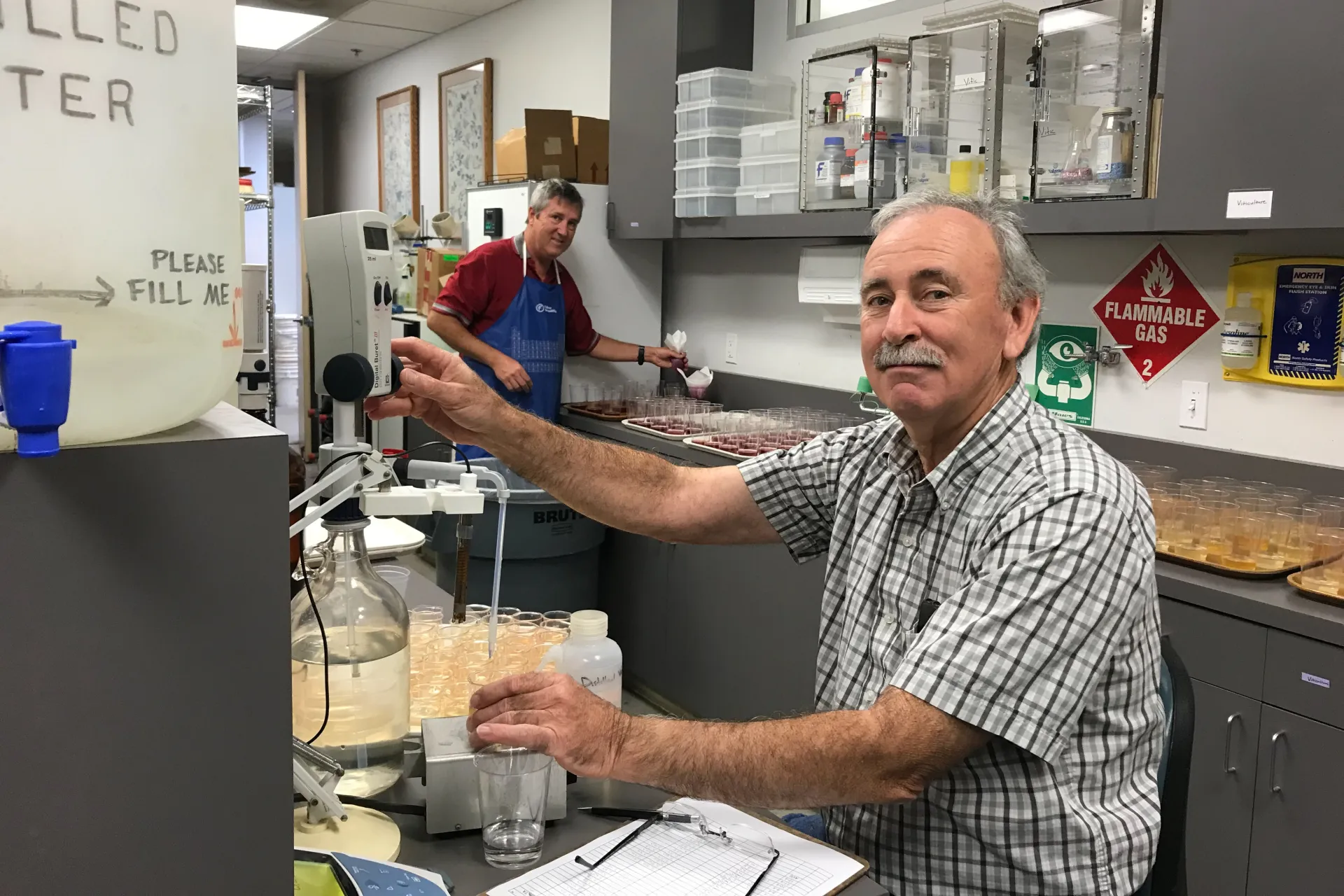
Another full circle moment came last year, when he was honored with the Merit Award by the American Society for Enology and Viticulture at ASEV’s conference, held on his home turf in Monterey. It is the same award that was bestowed in 2001 on Fred Jensen, the influential researcher who helped launch his career.
The award recognizes Bettiga’s lifetime of achievement in the field and his legacy of groundbreaking research and innovative extension program. Bettiga has been instrumental in promoting integrated pest management approaches, encouraging growers to consider the broader environmental impacts of their operations, and championing sustainability in all aspects of Central Coast agriculture from soil health to people management.
“It’s not just one thing, it’s the whole system that you look at,” Bettiga said. “That’s been a big change; if you jump back 40 years and told people about sustainability they’d probably kick you off the ranch – but now it’s just common, and everybody is trying to achieve that.”
Aiming to continue his life’s work, Bettiga has applied for emeritus status with UC ANR. Lindley was glad to hear Bettiga will remain involved in the industry, as he will continue to call on him for advice.
“Larry will be very difficult to replace,” Lindley said. “There are not very many Larry Bettigas in the world.”