

Nutrition Policy Institute researchers studying which type of milk is best for toddlers
Two-year-old children who drink cow’s milk are being sought to participate in a 12-month study by UC Nutrition Policy Institute, a part of University of California Agriculture and Natural Resources. Milk will be provided for free to participants in Northern California, the San Francisco Bay Area and the Central Valley.
“I enrolled my child in the Milk TOT study because we need more data-driven evidence to help us make informed decisions,” said one participant. “I feel good about my family making this contribution to pediatricians and families – and we get free milk!”
Milk provides children with calcium, protein and vitamin D, which are essential for health and brain development. In the U.S., the American Academy of Pediatrics recommends that children switch from whole milk to low-fat or nonfat milk after age 2 to reduce their intake of saturated fat and calories.
However, the latest Dietary Guidelines for Americans have changed. The guidelines – issued by the U.S. Department of Health and Human Services and U.S. Department of Agriculture –emphasize whole milk for children of all ages.
“The truth is that we need more research to understand which milk type is best for young children,” said Kassandra Bacon, NPI project policy analyst. “The purpose of this UC study is to see how the type of milk toddlers drink affects their health, growth and development.”
Researchers with the Nutrition Policy Institute are recruiting children ages 23 to 30 months old. Approximately 500 toddlers will be randomly assigned to drink either whole fat or 1% fat milk starting at age 2. The scientists will assess the toddlers’ diet, health and developmental outcomes.
“We will follow each participant for one year, collecting baseline and follow-up data,” said Ryan Williams, a NPI project policy analyst and registered dietitian who is involved in the research.
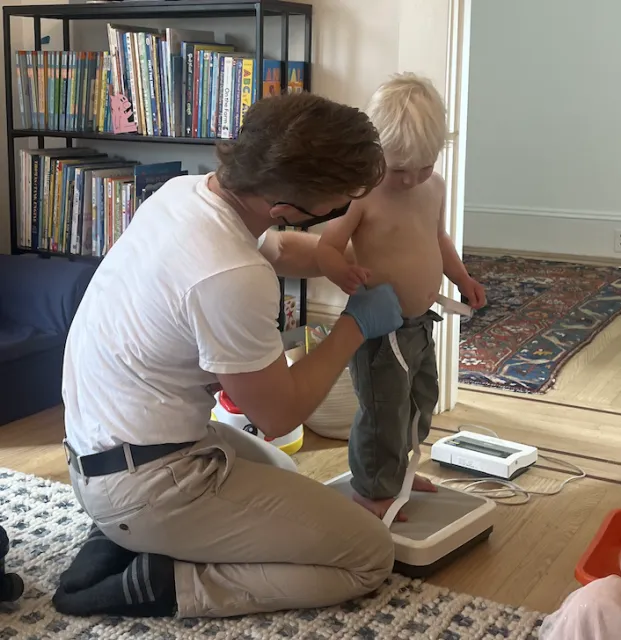
For 12 months, the scientists will measure each child’s height, weight, waist and head circumference. They will ask the parents what else the toddlers eat. They also will ask parents to visit a designated lab to check their child’s blood profile – lipids, cholesterol, insulin resistance and vitamin D – cognitive development and gut microbiome diversity.
“I was a bit nervous as toddlers usually did not like the (blood) draws, but the study booked an appointment for me and the process was quick and easy,” said a participating parent.
Benefits to participants
The assigned milk type will be delivered to participants free of charge via a grocery delivery service. Parents will receive advice from a registered dietitian to support healthy milk consumption as part of a balanced diet. Participants will also receive monthly newsletters with general health tips and earn up to $275 in gift cards by completing the study.
“It has been very swift and easy,” said a participating parent in the San Francisco Bay Area. “The milk comes regularly, and you can even choose a delivery window that works for you.”
Another parent said, “Very simple, easy, and added bonus of having a nutritionist to ask questions to, plus monthly handouts.”
Requirements to participate
Participants for the milk study must meet these requirements:
- Child must be 23 to 30 months old and have public or private medical insurance
- Child’s parent/legal guardian must be 18 years or older
- Child must live with the participating parent/legal guardian in one of the 21 designated counties (see list below) for the next year
- Child’s parent or guardian must speak English or Spanish
Children are ineligible for the study if they are:
- lactose intolerant
- allergic to milk protein
Lorrene Ritchie, emeritus UC Cooperative Extension nutrition specialist and former NPI director, and Anisha Patel, pediatrician at Stanford Medicine Children’s Health and professor in the Division of General Pediatrics at Stanford University, are the principal investigators for the study. The research is primarily funded by a grant from the National Institutes for Health with additional support from the California Dairy Research Foundation.
The study is recruiting participants in the 21 counties below:
- Alameda
- Butte
- Contra Costa
- El Dorado
- Lassen
- Marin
- Monterey
- Placer
- Sacramento
- San Benito
- San Francisco
- San Joaquin
- San Mateo
- Santa Clara
- Santa Cruz
- Shasta
- Solano
- Sonoma
- Sutter
- Yolo
- Yuba
For more information about the research and to sign up for the study, visit https://npi.ucanr.edu/milk.