
UC experts saved burned trees alongside community members, build baseline research in the field of urban wildfire science
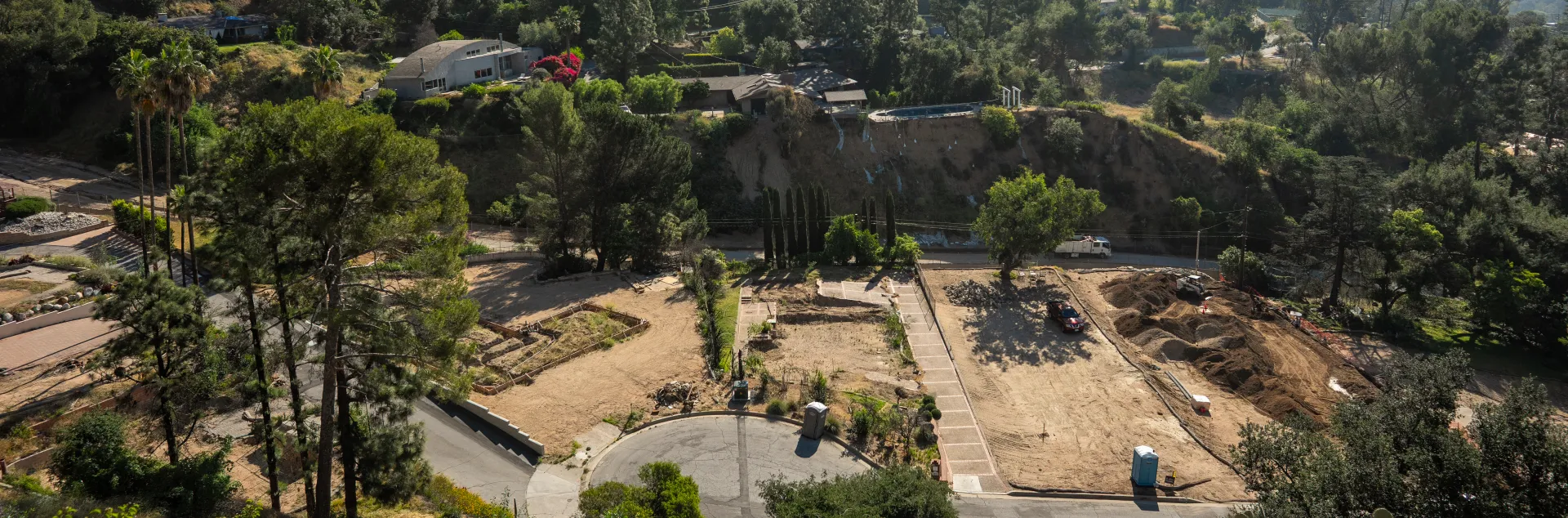
Signs are strung from buildings and staked into the ground across the Los Angeles burn zones: Altadena Not For Sale. Pali Strong. Remediation Complete. We Will Rebuild.
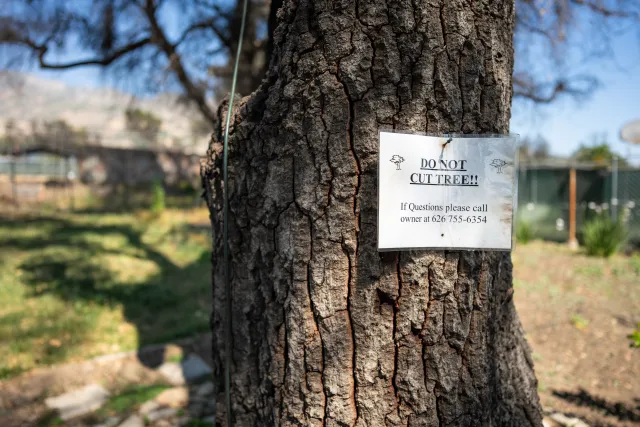
Jeff Henderson’s property on Altadena Drive has its own signage. Beside the dirt pit where his home used to be are four huge oak trees. On each, little placards are tied on with yellow ribbon, drawing your attention to their message:
“Do not cut tree!! If Questions, please call owner...”
Following the 2025 fires, trees – and tree removal – became a point of contention. As the Army Corps of Engineers cleared rubble and vegetation from thousands of burned lots, residents grew concerned that some damaged trees were being removed prematurely, without allowing them adequate time to show signs of recovery.
“ Unfortunately, some of the opinions in the beginning weren’t good, and we’ve lost a lot of trees,” said Henderson, gesturing to his neighbor’s empty yards. “It breaks my heart when I see all the trees back there are gone.”
Henderson and his wife lived in Altadena for 35 years before their home burned down last January. The oaks were a focal point of the property, serving as a centerpiece for both of his daughters’ weddings in this backyard.
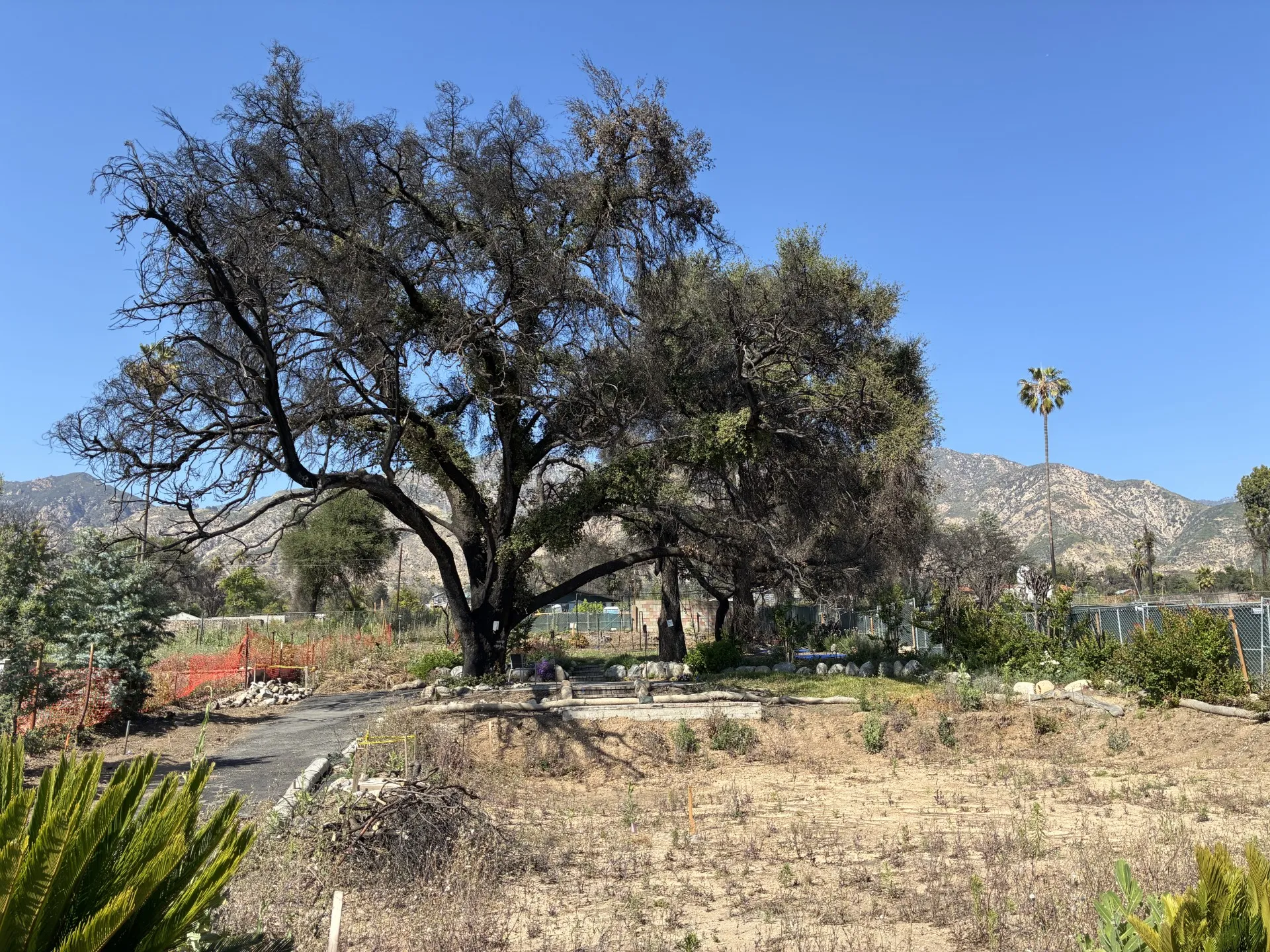
Now, the trees are blackened, severely charred from trunk to crown. Eerie as they may look to first-time visitors, Henderson sees them as a precious reminder of his family’s previous life. He’s willing to wait as long as it takes to see if the trees will survive their wounds.
“One of the things that made this our home was the trees,” Henderson said. “When we first came up after the fire, I just prayed for them.”
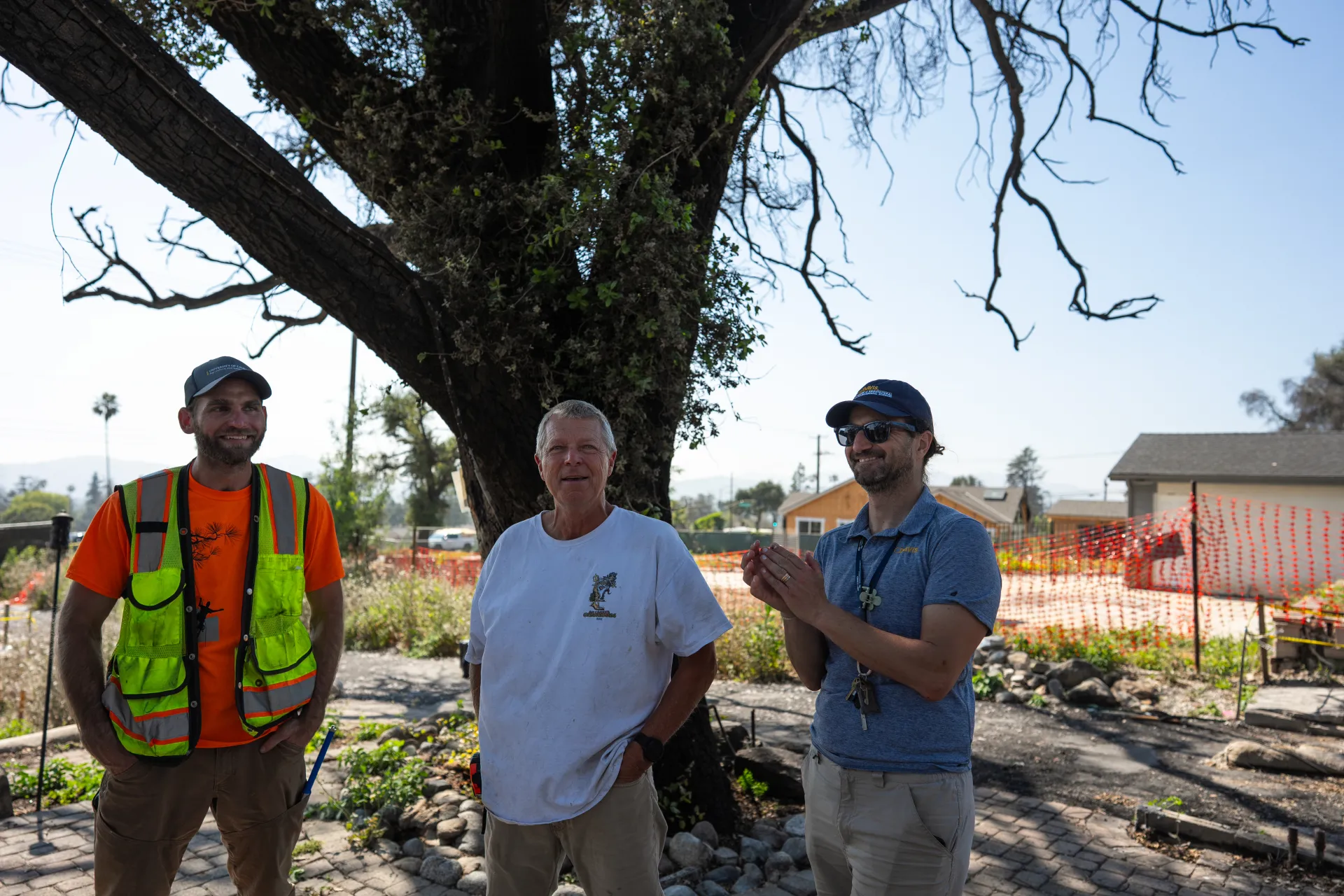
Throughout the clean-up phase, the University of California Agriculture and Natural Resources team was inundated with requests from fire survivors and other residents concerned about the future of the tree canopy in Altadena and the Palisades, neighborhoods once known for their exceptional greenery.
Those calls found their way to a local tree expert, UC Cooperative Extension environmental horticulture advisor Chris Shogren. People wanted to know – could their trees make a comeback?
“You have to at least wait one growing season before you can make any decision,” Shogren advised. But, upon surveying the burn zones, Shogren’s observations confirmed residents’ fears: some removals were happening faster than he would recommend.
“ I can’t tell you how many trees I’ve seen where I thought, ‘This tree’s going to recover nicely.’ Then you come back, and it’s been either cut down, or it’s been pruned so terribly that you might as well take it out,” Shogren said.
Witnessing those losses, he got to work. In the spirit of Cooperative Extension, Shogren launched an interdisciplinary response, working alongside members of the public, government agencies and fellow scientists to protect valuable natural resources.
Tree savers and waivers: Army Corps of Engineers makes a historic decision
The Army Corps of Engineers faced an unprecedented tragedy in Los Angeles and acted with remarkable speed. Trees weren’t removed out of carelessness – the responders just weren't versed in California’s local tree species. Plus, determining whether damaged trees could survive for more than five years is a tough judgment call for even the most experienced arborist.
That’s where Shogren saw room for his expertise. He formed a connection with Altadena Green, a local advocacy group that organized after the fire, united by a mission to protect the remaining urban canopy.
“The trees of Altadena are so essential to the identity of Altadena Green,” said Stephanie Landregan, director of the organization. “And, so many trees were still viable.”
So, Shogren and professional arborists with Altadena Green reached out to the Army Corps, offering their guidance on properly assessing the health of L.A.’s trees. The coalition acted quickly and trained every Army Corps arborist working in the burn zones.
Then, the team went a step further.
“This is our claim to fame, and we’re very proud of it – we got the Army Corps to issue their very first tree waiver,” Landregan said. By submitting sketches of yards and listing the species depicted, residents could apply to have their trees exempted from removal.
That process changed the fate of thousands of trees, including one of Henderson’s oaks. The Army Corps had spray-painted the trunk with three blue dots, code for removal.
“That tree had the dots of death on it,” Shogren said, using the local nomenclature. Luckily, the waiver came through in the nick of time. Now, a year later, Henderson is watching as the gnarled, blackened tree sprouts fuzzy green growth.
“Now it’s got great character,” Henderson said, laughing. “I am serious. I am not going to cut it down.”
Burn zones serve as study sites for research by UCs, collaborators
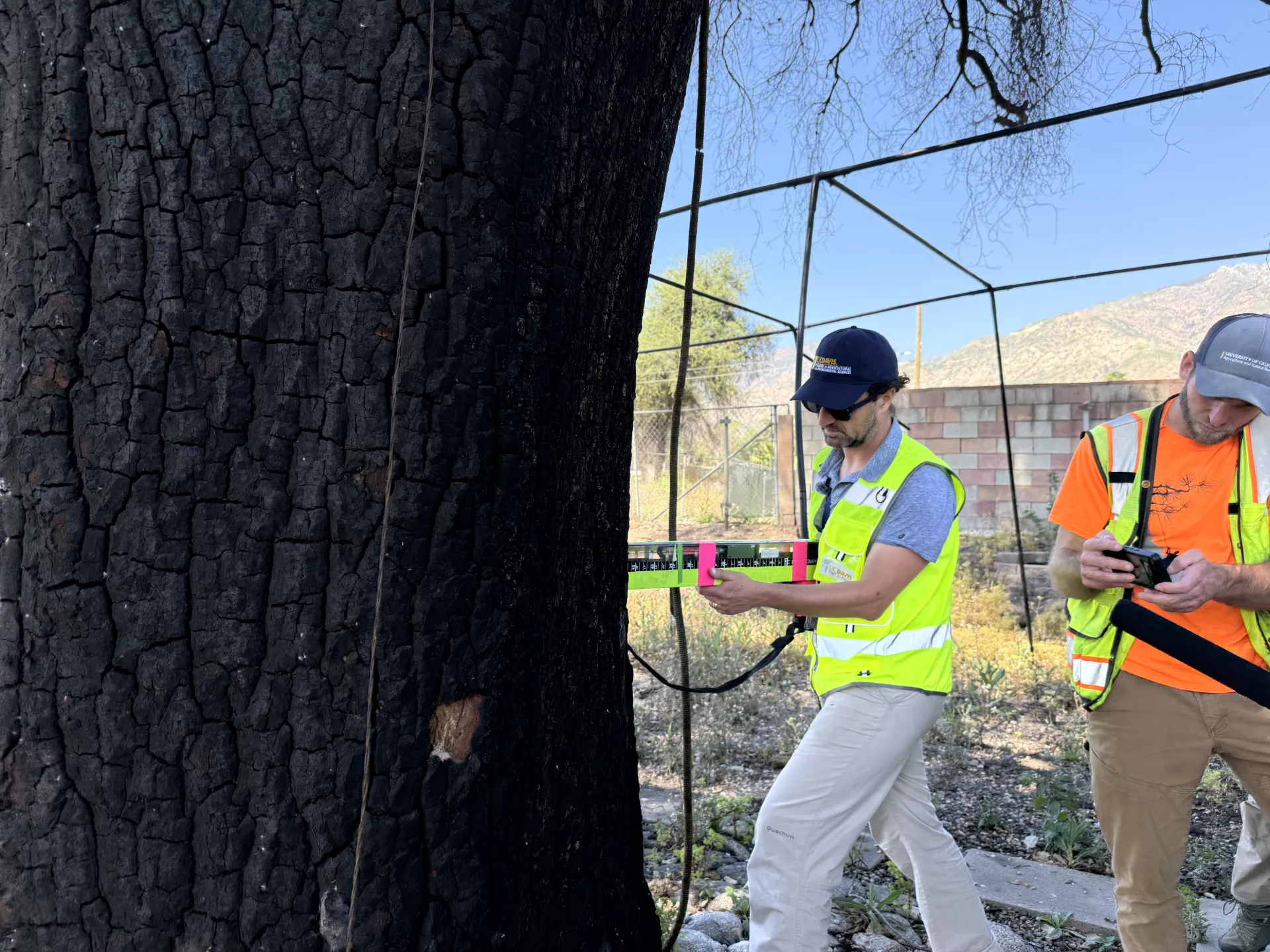
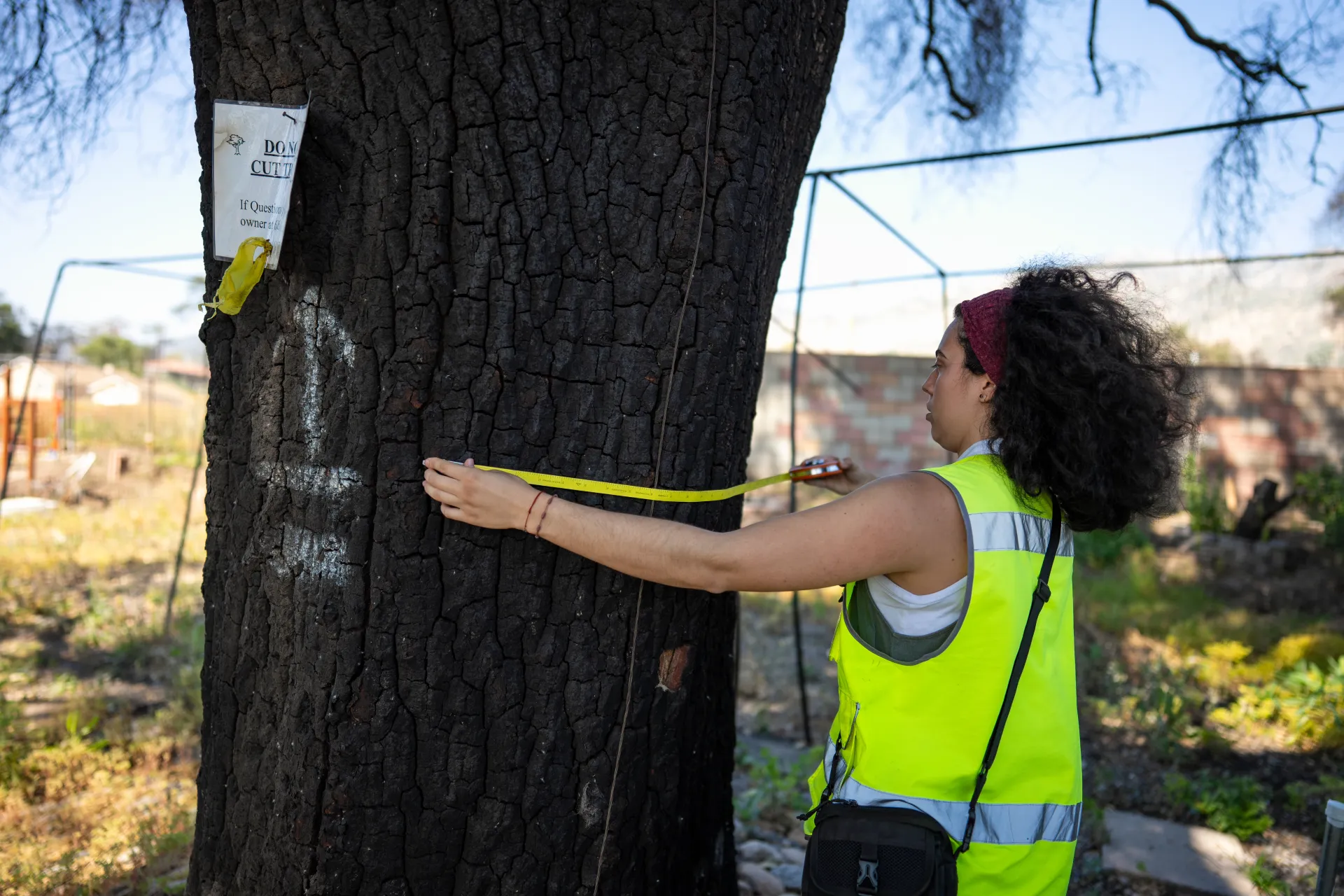
The recovery of Henderson’s oaks fits into a larger research project being conducted by Shogren and a team of scientists from UC Davis, UCLA, the U.S. Forest Service and the University of Florida. To understand how urban trees respond to climate-driven blazes like those that ravaged Los Angeles, they’re studying the burn zones.
“You can never replicate what happened in a scientific experiment,” Shogren said. “We don’t want these devastating events, but when they do happen, you want to get as much data as you can so that you can use that moving forward.”
The team got to work immediately following the fire, surveying quadrants in Altadena and the Palisades. In addition to assessing the health of individual trees, they’re taking 3D LiDAR scans of burned neighborhoods, an effort that will yield some of the most detailed maps of urban burn zones ever produced from the ground.
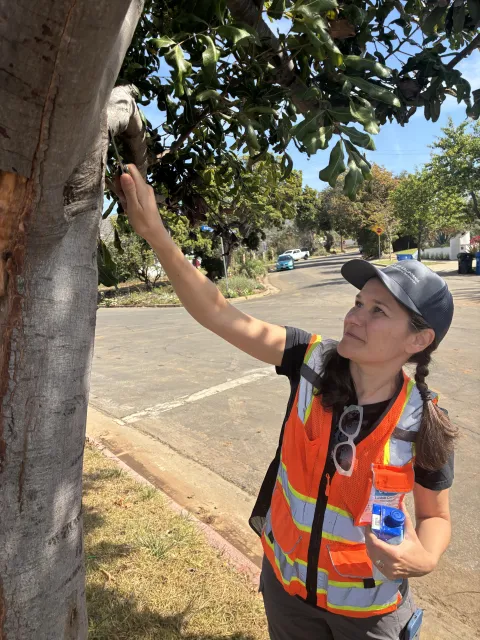
Edith de Guzman, a member of this research team, is a Cooperative Extension water equity and adaptation policy specialist with UC ANR, based at UCLA. She works to raise awareness about the climate-mitigation and public health benefits of urban forests. But, according to de Guzman, it isn’t easy being green in L.A.
“In wetter climates, you’ll have trees that voluntarily sprout up. That doesn’t happen here for the most part,” de Guzman said. "Having a significant amount of canopy loss in a couple of neighborhoods... it hurts."
The stakes are only getting higher, as climate change alters the conditions certain trees need to thrive. That adds urgency to the research, motivating them to develop the guidance needed to protect urban areas from future fires.
“We don’t know what trees to replant now because we don’t know how urban trees react to fire,” Shogren said. “There haven’t been these kinds of long-term studies on tree survival and tree health, post-fire in urban environments. We’re building all that baseline research.”
The team is tracking which trees fared well in the fires and which may have exacerbated the disaster. Those results will inform replanting efforts and guide public policy around wildfire preparedness.
Despite the pressure on the researchers, arboriculture requires patience – it can take years for trees to recover from burns. This team is in it for the long run, with plans to return for the next several years, even after rubble is removed, houses are rebuilt and people come home.
“We’re just trying to do our best as tree doctors,” Shogren said. “It takes time for those trees to tell us how they’re going to recover. So we just have to be out there and listen to them.”