
Qualified workers needed to achieve the state’s forest management goals
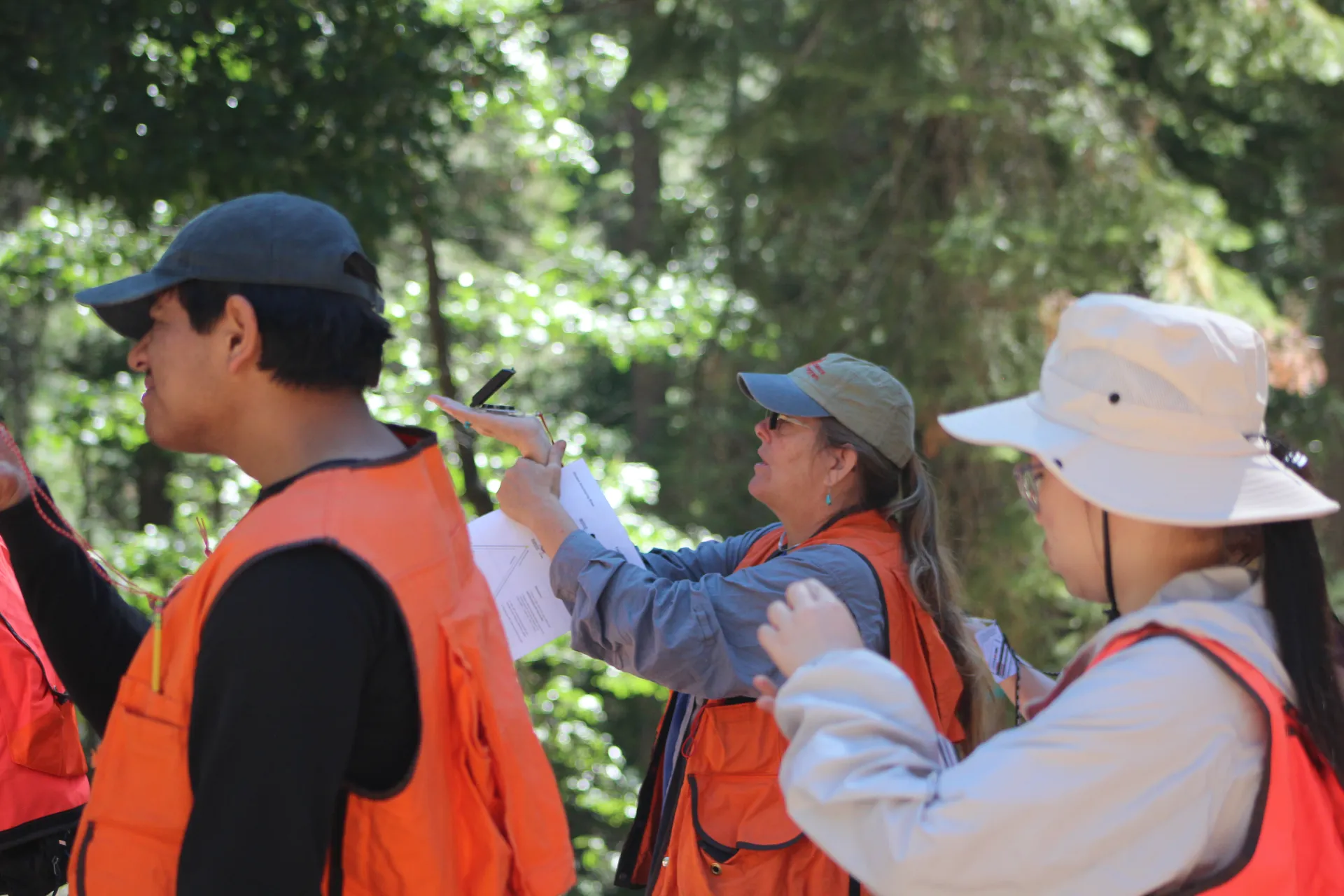
The morning started with an exciting scramble over fluorescent orange outerwear. College students reached into plastic bins to grab and pass out sturdy vests identical to the ones used by forestry professionals, down to the tools sitting in each velcroed pocket.
But this group didn’t travel all the way to Plumas National Forest to only dress like a forestry professional: they were at a University of California “mini camp” so they could learn how to become one.
Though progress has been made to increase the pace and scale of forest management in California, a shrinking forestry workforce may stall the state’s progress, according to a 2023 Nature Conservancy policy brief (PDF).
Its authors point out that both public and private employers worry about the future of the workforce; between 2023 and 2028, it was estimated that retirement rates could reach up to 50%. Increased concern stems from a lack of qualified workers to fill the empty forester, forestry technician, and other restoration positions necessary for achieving the state’s forest management goals.
Susie Kocher, a Registered Professional Forester and forest advisor for UC Cooperative Extension, is helping to bridge this divide. In 2022, Kocher joined a federally funded collaborative that encourages community college students to enter the forestry field and equips them with the skills necessary to find a career after graduation.
As a part of the Resilient Careers in Forestry (RCF) collaborative, Kocher works closely with educational institutions to train students in tree measurement, forest navigation, mapping and other skills that students will need for entry-level forestry positions. A highlight of the skills training is a week-long forestry summer camp, provided free of charge for students interested in forestry.
Forestry “Mini Camp” is offered in partnership with UC Berkeley’s Berkeley Forests team. When RCF funding was introduced in 2023, Berkeley Forests hosted a session of Mini Camp in Plumas County’s Meadow Valley specifically for community college students. The program covered room, board and transportation costs for participants.
At the most recent session of Mini Camp, community college students from all around California gathered to learn about forest ecology, forest management and forestry careers. This July, the fourth cohort of participants made their way to Plumas County for a week of learning in the woods.
In addition to hiking, swimming and networking with UC Berkeley alumni, participants attended skills sessions led by Kocher and Katie Reidy, another UCCE forestry educator. They helped participants get comfortable with using compasses, Biltmore sticks (used for measuring tree height and diameter), diameter tapes and other tools of forestry field work. As Mini Camp instructors and forestry professionals, Kocher and Reidy also helped participants visualize how a passion for forests and the outdoors can translate directly into a career.
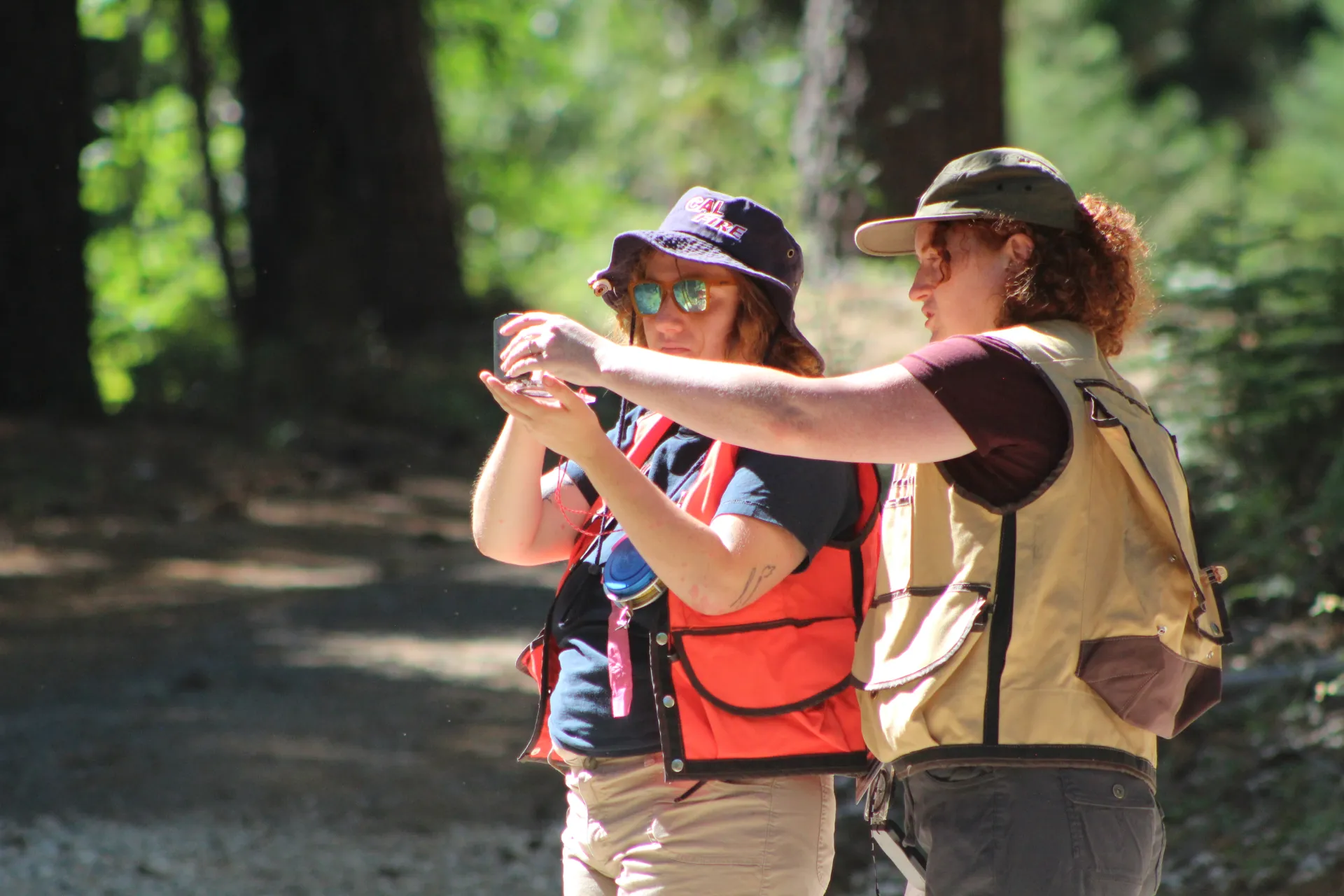
“Generally, I’d say the students I work with know a lot more than I did at their age about forestry,” Kocher said. “Current students are also thinking a lot about how to save forests for the future. It’s a burden for them to have to worry about something that I wasn’t necessarily worried about at their age. But it’s also very motivating and can help people be focused and dedicated. I’m really impressed by so many students I meet who are thinking of those things.”
Post-Mini Camp survey responses highlight the program’s efficacy. The 2023-2025 participant survey data show that after attending camp, the number of students who indicated they “Agree” or “Strongly Agree” with having a future in forestry and/or a desire to become a Registered Professional Forester jumped by 76% and 193%, respectively.
Mini Camp programming, including the skills activities with Kocher and Reidy, also had a significant influence on participant understanding. After a week spent learning and measuring in the forest, 157% more participants “Agree” or “Strongly Agree” that they understood basic concepts of forestry and forest management.
When asked about their favorite part of Mini Camp, one 2025 student wrote: “The actual forestry fieldwork with Susie and Katie.”