
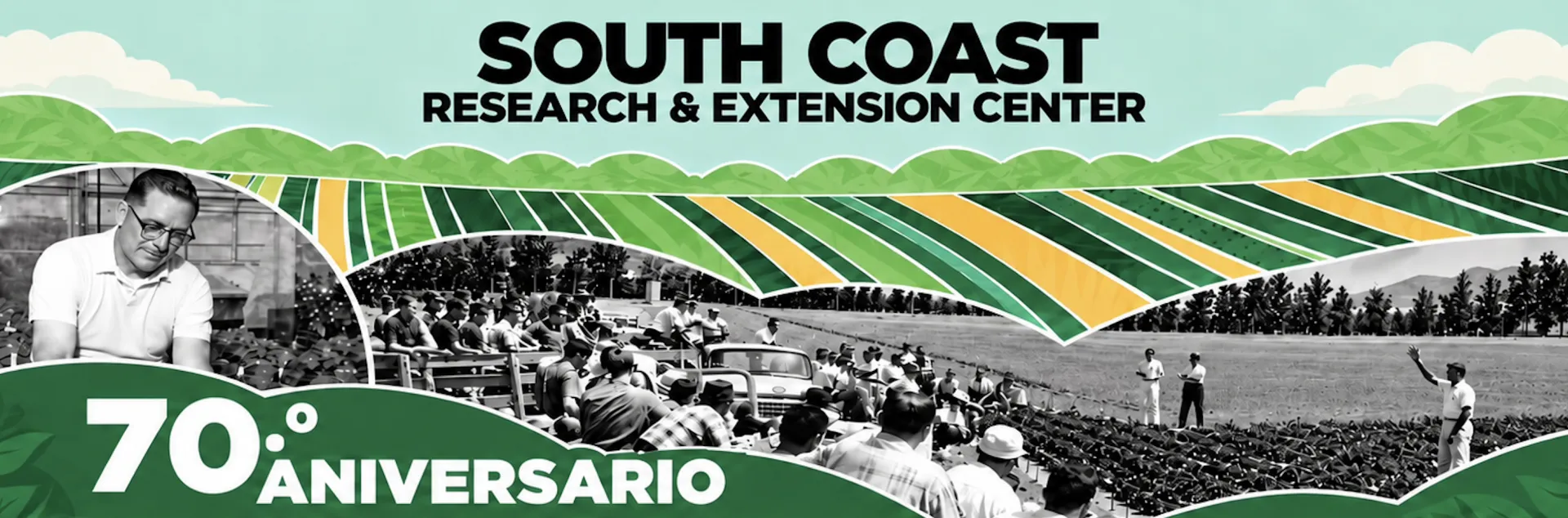
Since 1956, the University of California South Coast Research and Extension Center has been a site of agricultural research in the Golden State. Today, surrounded by one of Orange County’s most urbanized areas, it remains a living laboratory where science, education and community come together.
Amid Orange County’s urban landscape, all it takes is walking through the gates of the South Coast Research and Extension Center (SCREC) to encounter an unexpected scene.
In the distance, tractors can be seen among the fields, rows of plants and fruit trees. There are avocados, persimmons, cherimoyas, pumpkins, grapes and various crops that change according to the research projects. There are also greenhouses, hydroponics projects, beehives and spaces dedicated to agriculture and education. Freshly harvested fruits and vegetables are placed on a yellow shelf, while mobile units wait their turn to head out for research. At least once a week, a school bus filled with students arrives at the center as part of the activities that now connect this space with the community.
And in this open-air laboratory, there is also room for the unexpected: a mouse or a coyote can become part of the work of specialists who study the interaction among wildlife, agriculture, and urban environments.
It is difficult to imagine that this place, now surrounded by a highly urbanized region, began seven decades ago with a mission focused primarily on agricultural research.
UC Agriculture and Natural Resources established SCREC in 1956 as a representative site for agricultural and horticultural research in the climate zone of Southern California’s coastal plain. On its nearly 200 acres, research has been conducted on strawberries, subtropical crops, ornamental plants, irrigation and many other topics related to agriculture and natural resources.
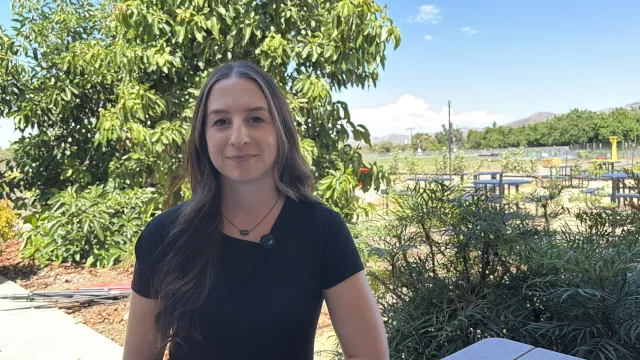
“We are celebrating our 70th anniversary, which is very exciting,” said Lindsey R. Pedroncelli, interim director of the South Coast Research and Extension Center. “We have gone through many decades and many changes in the agricultural industry, and we are celebrating all the findings achieved over the years.”
Seven Decades of Research
SCREC continues to operate as a regional living laboratory for University of California scientists. Its current projects range from variety and rootstock development to pest management, plant diseases, irrigation, and alternative weed-control methods. The center also offers opportunities to study recycled-water management and the effects of climate change on agricultural and urban ecosystems.
“We have been part of many research projects, whether developing new fruit varieties, such as strawberries and avocados, or developing new production practices for different crops,” Pedroncelli explained.
Over the years, researchers who worked at SCREC have contributed to the development of strawberry and avocado varieties for which the University of California holds several patents. The center’s research and extension activities also include fruits and vegetables such as citrus, apples, stone fruit, strawberries, cherimoyas, persimmons, blueberries and dragon fruit, as well as agronomic crops, turfgrass, trees, shrubs and ornamental plants.
“We have participated in many research studies that have had a major impact on the agricultural industry,” Pedroncelli added. “It is exciting to look back and celebrate everything in which we have been able to do our small part.”
From a “Well-Kept Secret” to a Center Open to the Community
But as Orange County grew and became more urbanized, South Coast also began to change. Marie Hernandez-Vega, Administrative Assistant, arrived at the center in 1989 and has witnessed nearly four decades of change. Her current title appears in SCREC’s official directory.
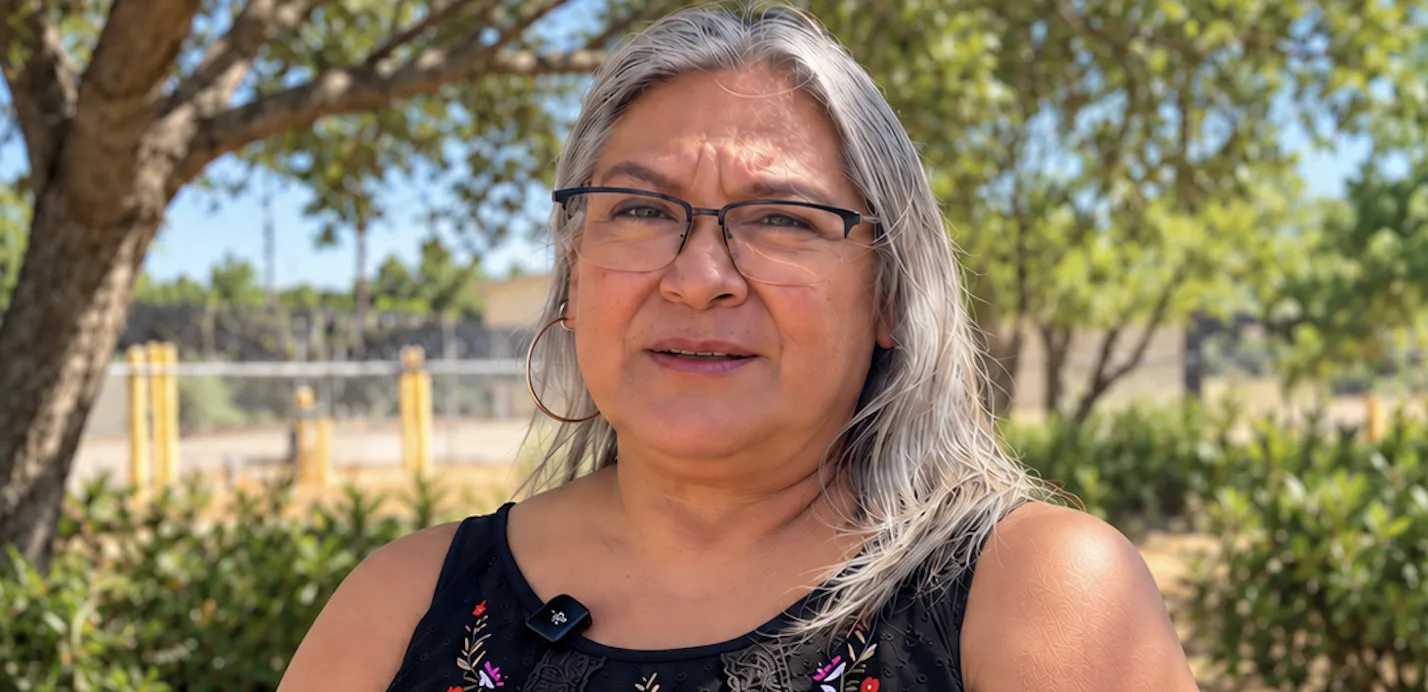
“There have been so many changes, both in the area and right here at the center,” Hernandez-Vega recalled. “Before, we were much more closed off from our neighbors and other organizations. Many people did not even know we were here or that we had existed since 1956. We were like a well-kept secret.”
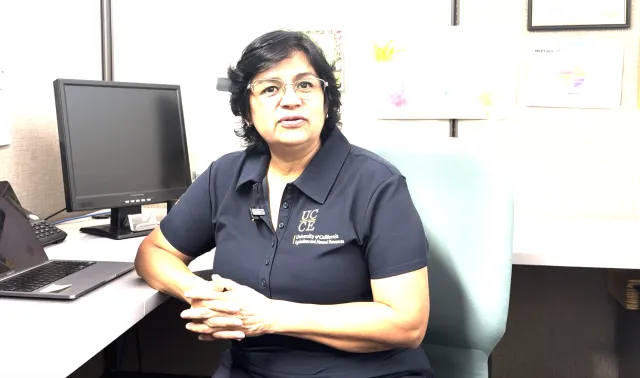
Today, she said, the story is different.
“Now we are much more open to the public and we do more things in the community.”
The center’s own official history notes that South Coast REC continues to be an essential site for research, but over time it has also opened its doors to the public through educational and extension activities.
That transition has also shaped the experience of Jason Suppes, South Coast REC Community Education Specialist, who arrived 14 years ago.
“I have had the opportunity to grow along with South Coast. When I arrived here 14 years ago, South Coast was just beginning the transition from being a closed facility dedicated solely to research to making the most of its potential as a community resource open to the public,” Suppes said.
For him, one of the most important changes has been strengthening relationships with schools and local organizations.
“Being there from the beginning of that growth has been incredibly rewarding: creating meaningful partnerships with local school districts and community organizations, and having the freedom to strengthen those collaborations and see how they have become some of the excellent programs we have today.”
When Research Moves Beyond the Plots
Today, South Coast REC does more than host researchers. It also houses and connects the community with Cooperative Extension programs such as UC Master Gardeners, Master Food Preservers, 4-H Youth Development and EFNEP (Expanded Food and Nutrition Education Program), as well as teams dedicated to water resources, urban forestry, nutrition and human-wildlife interactions.
For Andrea Arellano, South Coast REC Administrative Assistant,
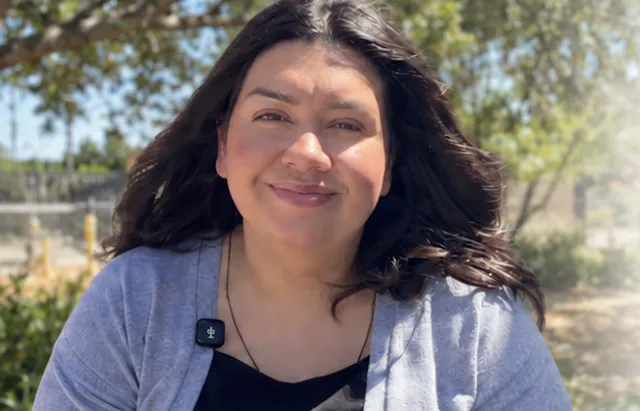
that work is especially reflected in the programs that reach children, youth and families.
“There are many things the center does, many programs they have to help young people as well, and it is very helpful to the community,” Arellano said.
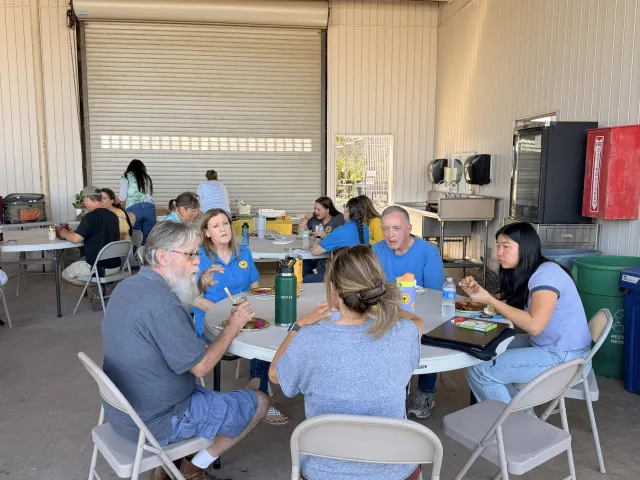
For volunteer Sam Chen, who has participated in the UC Master Gardener program for 25 years, the center represents, above all, access to knowledge.
“It is a source of information and a great deal of knowledge,” Chen said. “I also enjoy having access to research-based information. For me, it is a continuous learning process.”
Chen recalls that 25 years ago he was one of the youngest participants in his group. Today, he considers himself one of the veterans, but he says one thing has not changed: the enthusiasm.
“All the members love growing plants and are passionate about horticulture,” he said.
A Space for the Next Generation
While some can tell South Coast REC’s story in decades, others are only beginning to write theirs.
Brandon Su, SCREC Student Intern, is part of a younger generation that finds an opportunity at the center to participate directly in scientific projects.
“There are so many projects being developed here, and it is very rewarding to be part of them, researching topics that can help answer questions and solve many of the problems we face in agriculture, including issues related to climate change and urban challenges,” Su said.
For him, learning goes far beyond the plots.
“I have met many people from different specialties, companies, cities, and other interested groups,” he explained. “I have learned a great deal working here and participating in these projects.”
Su also believes that the skills and connections he has gained at South Coast REC could serve him in a future career in research.
A Living Laboratory in the Middle of the City
The contrast between agriculture and urbanization is precisely part of what distinguishes South Coast REC.
The center is home to the Hub for Urban Living, a multidisciplinary space that seeks to connect universities, nonprofit organizations, government agencies and industry to develop sustainable solutions to the challenges facing urban communities.
Its facilities include experimental fields, six greenhouses and demonstration landscapes used for research related to urban environments and efficient water use.
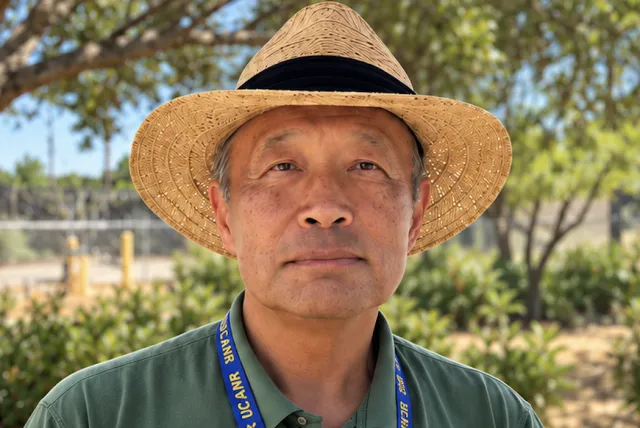
Thus, the center that was once little known even to many of its own neighbors has become a place where researchers, students, volunteers, farmers, families and children from nearby schools come together.
Seventy years later, among tractors, fruit trees, experiments, beehives and school visits, South Coast continues doing what it has done since 1956: generating knowledge. The difference is that today, that knowledge increasingly moves beyond the plots and reaches the community directly.
For Chen, the anniversary is also an invitation to look ahead.
“I think this needs to continue,” he said. “It needs to keep going for the next 70 years.”
More information: South Coast Research and Extension Center