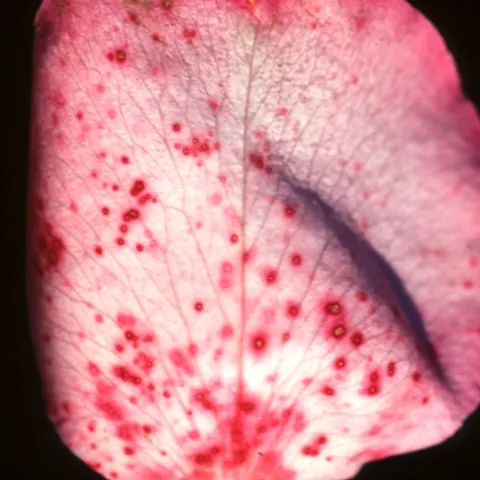
Gray mold caused by the fungus Botrytis cinerea is one of the more destructive plant pathogens, and it attacks a wide variety of plants. It is a common springtime disease, favored by cool rainy periods and high humidity. Conditions just like we have seen in California recently.
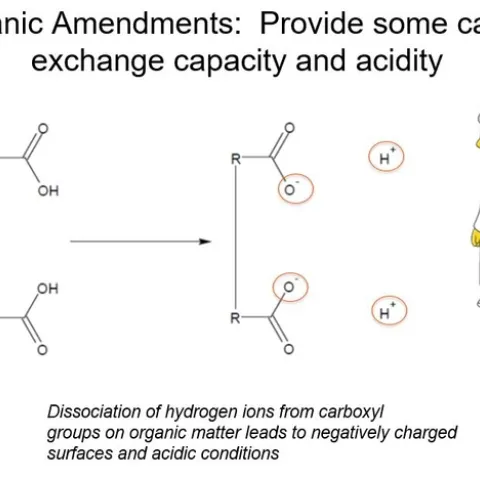
The previous blog demonstrated that container organic and inorganic physical components have limited nutrient holding capacity, and therefore the soil mixes they compose must be supplemented with nutrients during crop growth.
Since a plant has a limited volume of soil to find and absorb nutrients, special attention has to be taken to make sure container soils have adequate nutrient concentrations through the entire crop cycle.
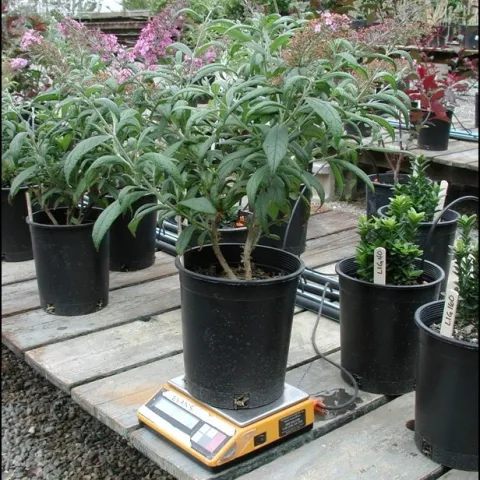
In the last post, I showed that irrigation should occur when half of the available water in the container is used. That amount of water is what evaporated from the soil surface and the plant extracted (transpiration), collectively called evapotranspiration (ET).
When should container plants be irrigated? How much water should be applied? In this post, I describe the first step of irrigation scheduling, when, and the next post covers how much. First some background describing soil tension, available water, and the moisture release curve.