
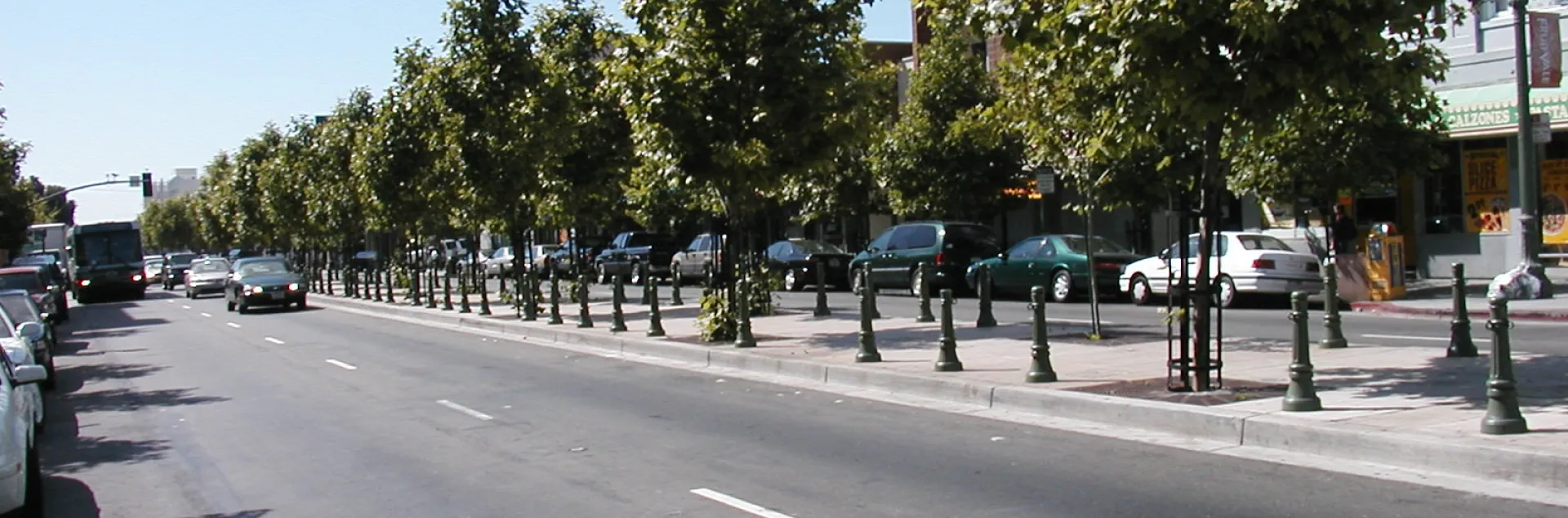
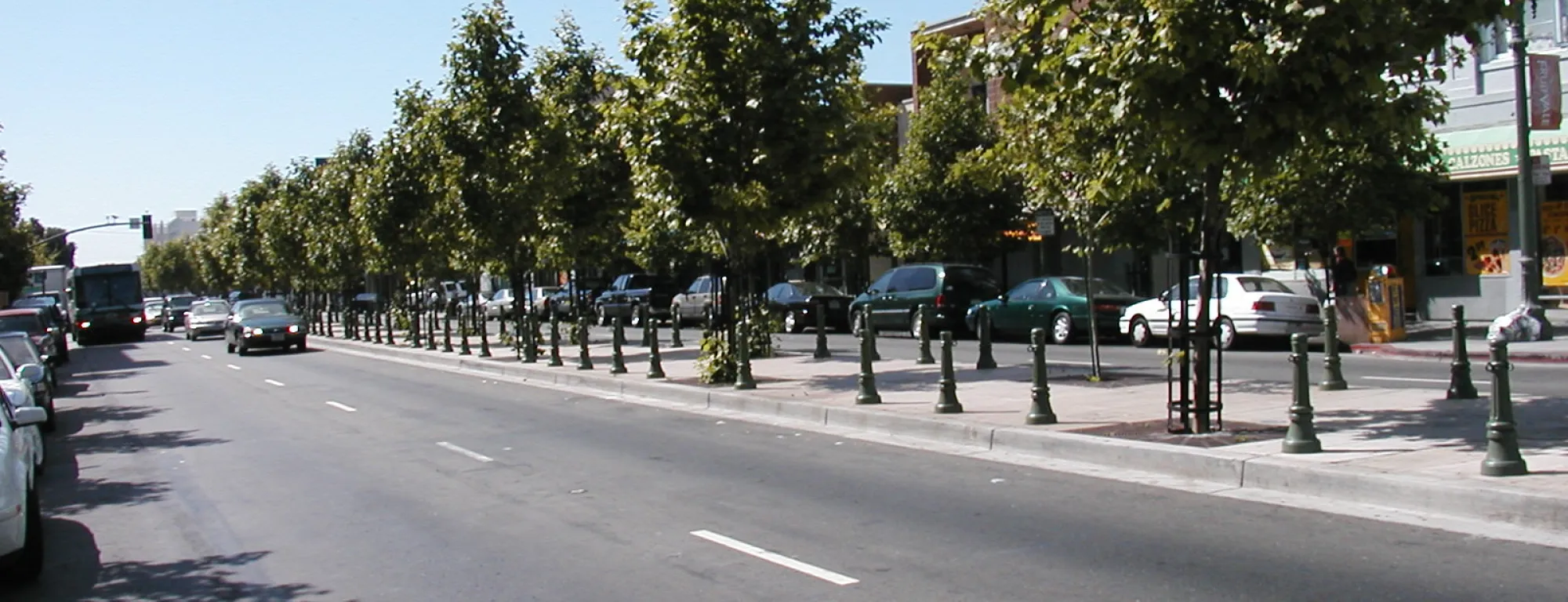
Climate change (which means a long-term change in average temperature, humidity and rainfall patterns) already impacts California, including Alameda County and its landscape trees. This post focuses on climate change and the urban forest, defined for this article as all of the trees and woods in the urban and suburban areas of Alameda County. Many other aspects of plant life are also impacted by climate change, including vegetable gardens and insects.
Driven by global warming (the gradual rise in the Earth’s average land temperature), the impacts that can affect our landscape trees include:
- Changes in the annual amounts and patterns of rainfall, snowfall and fog - increases in some areas, decreases in others. This can shift the patterns of droughts and flooding experienced in different places.
- Increased risk of wildfires. These can be particularly severe when a wet period causing high levels of plant growth is followed by a very dry period.
- Increased temperatures experienced by plants.
The urban forest can lessen the impact of climate change on people and on the rest of the environment, but urban trees are also threatened by climate change. There are actions we can take to support our urban forest in the changing climate.
Benefits of Urban Trees
The urban forest helps lessen the impact of climate change in these and other ways:
Cooling urban heat islands: Trees and other vegetation lower surface and air temperature by providing shade and through their biological processes. Trees absorb water through their roots and evaporate it through their leaves (this is called evapotranspiration). The tree cools the air by using heat from the air to evaporate this water. The impact of trees and other vegetation is significant; a 2021 review of 308 studies found that on average, urban forests were 3 degrees F cooler than non-green urban areas. Where there are buildings, urban forests and trees provide shade during the summer and protection from wind in the winter (in temperate climates), thereby reducing cooling and heating costs. In the United States, this accounts for an estimated 7% reduction in residential energy use.
Storing carbon: Trees take in carbon dioxide from the air, helping lower the greenhouse gases in the atmosphere that are causing climate change. Urban trees can’t sequester (capture and store) the amount of carbon that other forests do, but they are helpful. In the United States, urban forests are estimated to sequester 150 million metric tons of CO2 from the atmosphere annually, representing approximately 3% of total US emissions. But the calculation is complex, and the amount sequestered differs due to many factors. A number of studies have estimated that urban tree growth offsets annual city emissions by 0%- 3%. That may be an understatement. A recent publication by USC Dornsife College found that in a section of central LA, trees and other vegetation offset a surprising 60% of CO2 emissions, particularly during daylight in the growing season.
Managing rainwater: Trees help water soak into the ground and reduce runoff, which lowers the risk of flooding and keeps water cleaner. When it rains, trees “intercept” rain because their leaves and stems provide increased surface area to catch the water. This slows the water down and gives it more time to be used by the tree or to sink into the soil. Tree roots also loosen the soil, which increases its capacity to absorb water.
Supporting wildlife: Urban trees provide food and shelter for birds, insects and other wildlife, helping keep ecosystems healthy.
Improving air quality: Trees directly remove pollutants from the area, including ozone, sulfur dioxide, nitrogen dioxide. Trees absorb gaseous molecules in the air through the stomata (tiny pores) on the tree leaf, converting them within the leaf. (Note, though, that ground-level ozone also can damage trees). Trees also remove small particulate matter by temporarily “catching” it. With rain or other precipitation, these particulates can be redissolved in the stormwater or sink into the soil. Unfortunately, these particulates can also become re-suspended in the air. When this happens, the tree is only a temporary retention site for particulates.
Climate Change has a Negative Impact on Trees
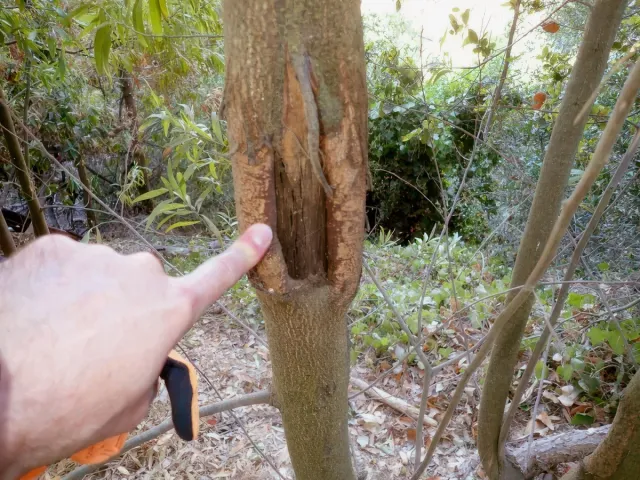
Negative impacts on trees resulting from climate change have been shown at global and local scales. Locally, a recent study on 51 sites in the Greater San Francisco Bay Area explored the reasons for significant and unusual tree dieback. Latent pathogens (in this study, pre-existing fungi in the tree) likely triggered by climate change were determined to be the primary cause. Climate change stresses our landscape trees in many ways:
More heat stress:
Hotter summers make plants lose more water through their leaves, and urban areas experience higher temperatures than their surrounding rural areas. Heat can stress trees and slow their growth or even kill them. Some trees may not be able to adjust to these changes.
Changing rain patterns:
Rainfall is becoming less predictable. Droughts can happen more often and more severely, leaving trees without enough water. When trees are dry for too long, they become weaker and more likely to get pests or diseases. Drought is one of the climate changes believed to have triggered the latent fungal diseases and tree death found in the study described above.
Fog:
Coastal fog in the SF Bay area is an important and long-standing factor in our summer weather. Some studies have suggested that coastal fog along the California coast is less frequent than before. However, the extent of future fog decline and its implications for climate change impact are not yet well understood because coastal fog formation results from the interactions between heat and humidity from three different sources: ocean, air and land. To the extent that fog lessens, our climate will become less suitable for redwood and Douglas fir trees.
Extreme weather:
Stronger storms, wildfires, excessive rain and floods can damage trees and disturb the environments they need to live in. During floods and strong storms, the soil around trees can become waterlogged or eroded, increasing the risk of the tree uprooting. Strong winds can break branches, and especially when combined with soggy soil, can make it easier for trees to fall.
Recycled water:
To the extent that communities use recycled water in response to water shortages, some species of trees may become less suitable than before. Recycled water contains more salts than potable fresh water. Trees that are sensitive to salt include liquidambar, red maple, ginkgo, and crape myrtle. Prior to planting new trees, if your water district uses or plans to use recycled water, it’s a good idea to check whether the species is salt-tolerant.
Care for your Existing Trees in a Changing Climate
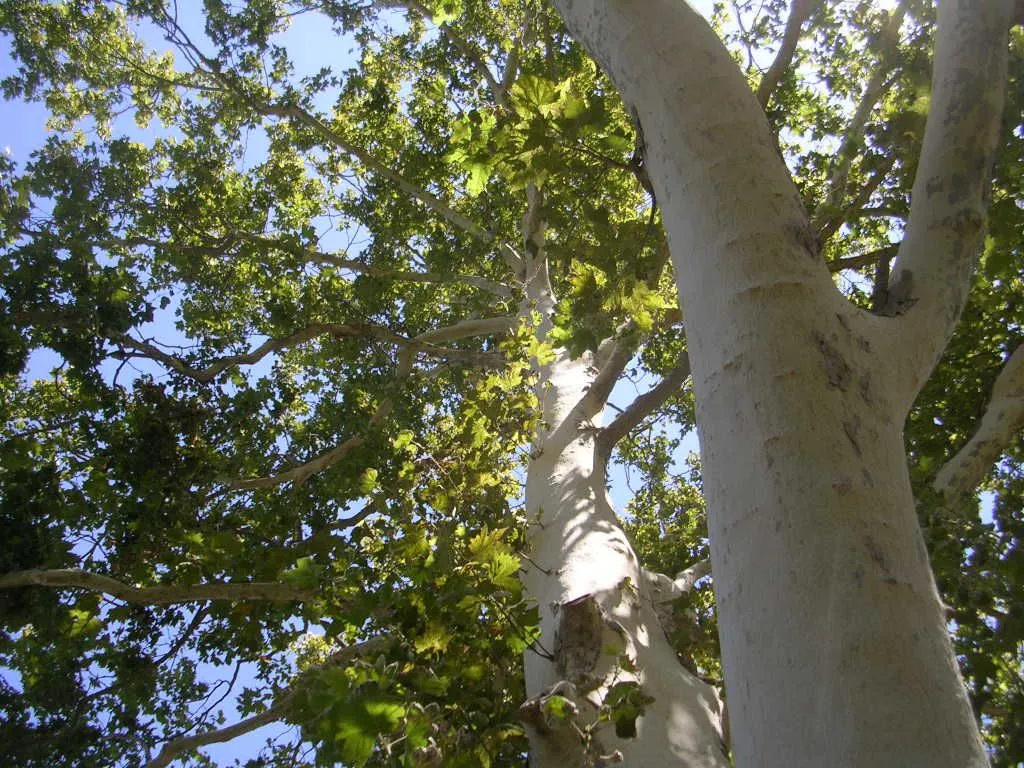
Keeping your current trees thriving is a priority and, as the climate changes, may require adjustments in care. Probably the most important area of care is watering, because both over and underwatering can harm the tree.
Particularly in areas of Alameda County nearer the Bay, watering has not always been needed for mature trees that are well-adapted to the current conditions. As the weather warms, mature trees may start to need new or additional irrigation. Drought symptoms include leaves yellowing prematurely or the canopy showing wilting. To determine the soil moisture, you can use a soil probe to see if your watering is meeting the target of irrigation reaching the soil one to 2 feet down (less deep if the tree is young).
Trees need slow deep watering. You can achieve that most effectively by using soaker hoses. Small oscillating sprinklers also work. The water should be applied around the edge of the canopy, and should not hit the trunk.
For established trees, irrigating once a month is a good place to start. But the temperature, the texture of the soil and the age of the tree impacts how much and how often to water, so adjustments are likely to be needed.
- Heavier clay-based soils hold water longer and drain more slowly than sandier soils, which need to be watered more often for shorter periods of time. You can estimate your soil texture using the feel test.
- Trees planted in the last three years generally need more irrigation than mature trees.
- For clay soil, you may need 3 to 4 hours of slow irrigation for water to thoroughly wet the root zone. For sandy soil, you may need shorter periods of irrigation more frequently.
- If a heat wave is predicted, additional irrigation starting at least one day before temperatures are projected to spike can help protect your trees from extreme heat.
Periodic monitoring to see whether the irrigation is wetting the soil deep enough is important as temperature, wind conditions and tree size and age change.
Applying mulch helps your irrigation stay in the ground rather than evaporating and helps protect the roots from heat. As wood chip mulches decay into the ground, they improve the soil structure by adding organic material, helping the soil store water. Mulches also prevent many weeds that compete with the tree roots.
How we can help our urban trees multiply and thrive?
Plant more and different trees.
A study from the University of California, Davis and the US Forest Service found that urban areas in California have a tree canopy of 109 square yards per person, amounting to 15% of the urban area. This is the lowest among the United States. More trees would provide more of the critical benefits that are outlined above.
But simply planting more of the trees being planted now may not be the best strategy. New and replacement trees should be carefully selected, as many trees now planted in our urban areas are struggling to adapt to climate change.
Climate and horticultural scientists are providing more and more information on what trees are expected to be suitable for our projected future climates:
- SelecTree Tree Selection Guide. This tree selection guide from the Urban Forest Ecosystems Institute at Cal Poly is an amazing tool for finding a tree that meets your needs. Along with more common plant database filters (like tree height, width, and shape, leaf characteristics, CA native or not, tree shape, wind resistance, and water need) it also includes two characteristics important to climate change. One is the extent to which the tree is salt tolerant, which is important if your area uses or may in the future use recycled water. The other is a checkmark indicating that the tree is climate resilient, which indicates that the species has been modeled by this Institute and is projected to perform well in the specified location in the future. (Checking the box restricts the results to the species for which the Institute has climate suitability data. There may be other suitable species that have not yet been analyzed by UFEI.)
- Future Urban Climates App: Climate scientists analyzed 540 urban areas and for each, mapped the similarity between the future climate expected for it by the 2080s and the current climate in a city in the Western Hemisphere. The interactive Future Urban Climates app for your city allows you to enter a city name into the app and then matches your city with another that presently has a climate most similar to the expected climate in your city in the 2080s. You can select a high emissions scenario or a reduced emissions scenario. For the city of Oakland, in a high emissions scenario, Pomona in Southern California is the best match. In a reduced emissions scenario, the best climate matched city for Oakland is Milpitas, in the southern San Francisco Bay area. Trees now thriving in the matched city give you an idea of what to plant for the future.
- Climate Ready Trees study. UC Davis and the US Forest Service are collaborating on a study, started in 2015, to evaluate the ability of promising but underused tree species to tolerate the stressors of future climates. The goal is to shift the palette of trees planted to species that will make urban forests healthier and more resilient in a changed climate This long-term study focuses on three climate zones: Northern California Central Valley, Southern California Inland Empire and Southern California Coastal Trees. None of these zones include Alameda County, but the results in the Northern California Central Valley may be relevant to Alameda County’s Tri Valley area (Livermore, Pleasanton, etc.) Trees were selected for testing based on an assessment of the potential of the tree species to tolerate and adapt to climate change. Preliminary results (2 years into a 20-year study) for the Northern Central Valley zone (test plots in Sacramento and Davis) suggest that Shoestring acacia (Acacia stenophylla), Bubba desert willow (Chilopsis linearis ‘Bubba’) and Canby’s oak (Quercus canby) are particularly promising for that hot-summer area.
What about Natives? Many gardeners prefer native species because of studies finding that native plants support native wildlife particularly well. And natives that are planted in places like those where they evolved are well-adapted to the conditions in those places. The pace of current climate change, however, may be too fast for the trees now present in a place to evolve to thrive in the expected future circumstances. Unlike many other plants, trees live for 20 to 50 years, long enough to experience more severe climate change impacts than we have to date. California’s major cities tend to be in arid or semi-arid climates where expansive forests and woodlands are not naturally found; in addition, many of California’s native trees that have been commonly selected for cities require more irrigation that will be preferred in a drier climate. Diversity of tree species is also critically important. A high diversity of tree species increases resiliency by minimizing overall tree loss to threats that attack particular species: high or low temperatures, specific pests or storms. California as a whole has 95 species of native trees. Oakland has 17 species native to its area; Livermore has 6. In both cities, some of these native trees (willows in particular) require substantial amounts of water, so there are a limited number of native-to-the-area drought-tolerant trees for many of our cities.
Planting a Landscape Tree
Other Factors to Consider When Choosing a Tree
When selecting a tree to plant in your yard, there are many factors to consider, in addition to the tree’s adaptability to future climate. To select a tree that will meet your needs and preferences, you might think about:
- What do you want the tree for? Shade, privacy, aesthetics, food and shelter for wildlife?
- The kind of soil you have - trees differ as to what soils they do best in.
- How much room do you have for the tree - which will determine how tall and wide a tree will fit. Not all trees will fit in all spaces.
- Are there utilities above or below ground?
- How much sun does the site provide, and where will the new tree’s shade fall.
- If you want to plant a tree in the parking strip in front of your house, there are additional considerations that may involve city rules.
More details on selection and planting (and graphics!) are available in the resources
Nursery Tree Selection
When selecting your new tree from the nursery, the quality of the sapling is important to the health of the future tree:
- Root structure is particularly important, as circling roots can impair the tree’s later growth.
- The tree should taper and have an appropriate trunk diameter for the size of the pot.
- The foliage, trunk and branches of the tree should be free of pests, diseases, wounds, lesions, etc.
- The branch structure should be balanced.
More detail on all of these aspects of tree selection is here.
Planting Tips
If you are going to plant a tree, a critical thing to consider in placing the tree is fire risk. If you live in a high or very high fire risk zone, new trees will likely need to be placed in accordance with your jurisdiction's rules meant to mitigate fire risk. These rules are quickly evolving, so the best place to check is to contact your fire department. Here's a general overview.
Here is a brief overall summary of how to actually plant a tree:
- Plant the tree in the native soil only, with no amendments or compost.
- Dig a hole for the tree the same depth as the container and at least 2-1/2 times wider.
- Look at the roots. Straighten or cut off circling or kinked roots.
- Gently place the tree in the hole, make sure the flare of the trunk is above the ground, fill with the original soil and pat it down. Water in. Check to make sure that the tree flare (where the roots start to come off) is at or just above soil level.
- Check the tree ties or stakes. If they are too tight and cut into the tree, they need to be removed.
- Apply mulch (2 to 4 inches deep) around the tree, but keep the mulch several inches away from the trunk.
- Newly planted trees (even drought tolerant trees) must receive regular water for two to three years.
For more information on tree care, see the resources below.
Climate change challenges the urban forest, but you can mitigate that impact.
Our urban forests help mitigate climate change, and they can adapt to it. Planting more trees, broadening the palette of trees planted, carefully choosing the species, and caring properly for our urban trees can help them survive and thrive.
Resources
Benefits of Urban Forests
US Environmental Protection Agency, Benefits of Trees and Vegetation
Hallet, et al (USDA Forest Service), Future Forests, Chapter 12, Climate change and urban forests
Environmental Science and Technology, Observing Anthropogenic and Biogenic CO2 Emissions in Los Angeles Using a Dense Sensor Network, summarized in L.A.’s urban trees absorb more carbon than expected
National Park Service, Air Pollution Removal by Urban Forests
Climate Change has a Negative Impact on Trees
Plant Pathology, In California's Changing Climate, Latent Pathogens Drive Novel Woody Plant Diebacks on a Large Geographic Scale
California’s Fourth Climate Change Assessment, San Francisco Bay Region Report, Fog
California Office of Emergency Services, Trees Can Still Be Hazardous Following Severe Storms
UC Master Gardeners of Alameda County, Using Recycled Water – What You Should Know
How We Can Help Our Urban Forests
McPherson, et al, The structure, function and value of urban forests in California communities
Urban Forest Ecosystems Institute at Cal Poly San Luis Obispo, SelecTree
Climate Ready Trees Study https://climatereadytrees.ucdavis.edu/updates
Pawlak, et al, California’s native trees and their use in the urban forest
Tree Care and Planting
UC Master Gardeners of Alameda County, Street Trees -- Selecting, Planting, Caring for Trees
Win and Dodge, UC Davis, Tree sensitivity to saline soil. https://www.scribd.com/document/326471852/Landscape-plant-salt-tolerance-selection-guide-for-recycled-water-irrigation-pdf
Garden Professors, Linda Chalker-Scott, Save the Planet, (Learn How to) Plant a Tree
Selected work from Janet Hartin:
Trees for Tomorrow Start Today
How to Avoid Common Ailments of Landscape Plants
A. James Downer, UCANR, Saving Your Trees from Dought,
UC Master Gardeners of Fresno County, When there are summer heat spikes, trees need more water
UC Master Gardener Program, Quality Nursery Tree Selection
Want to learn more?
This blog post is brought to you by the Help Desk of the UC Master Gardeners of Alameda County. Subscribe to our blog!
Have a Gardening Question? We'll Help.
Visit our Help Desk page to submit your question and see additional ways you can reach us.