
Climate Change and Weather in the Bay Area
March 2026 was one of the driest and warmest Marches in recorded history in the Bay Area. The March heat wave pushed temperatures across much of the West 3 to 9 degrees Fahrenheit above average, according to the Climate Prediction Center. In the greater Bay Area, March rainfall totals ranged from zero to around 0.20 inches — more than two inches below normal for the month, according to the National Oceanic and Atmospheric Administration.
In contrast, April 2026 was the wettest April in the Bay Area in almost a decade. The average rainfall for April in downtown San Francisco is 1.60 inches, according to the National Weather Service. In April 2026 3.65 inches fell — the most since 3.91 inches fell in April 2018. (Downtown San Francisco is commonly used as an indicator of Bay Area weather because that location has the most consistent set of records going back to 1849.)
The extreme weather of March and April exemplifies two major aspects of climate change: temperature and precipitation. Our ecosystem is being thrown off balance as the result of warming temperatures, drought, volatility of weather extremes, increasing atmospheric carbon dioxide, and more.
It seems that our garden calendar is changing – even if we haven’t changed what we plant. Climate change is impacting our plants and the insects that live in our gardens.
The Ecosystem and Insect Pests and Beneficials in Our Garden
Beneficials, an essential part of ecosystems, include insects, arachnids (e.g., spiders, predatory mites), microorganisms (beneficial bacteria and fungi) and nematodes as well as other invertebrates such as earthworms and millipedes. They maintain healthy soil, recycle nutrients, pollinate flowers and crops and control pests. Beneficials are often divided into two main groups: (1) natural enemies that reduce pests and (2) pollinators that are essential for plant reproduction and the growth of many crops – seeds and fruits. These divisions are broad and sometimes overlapping.
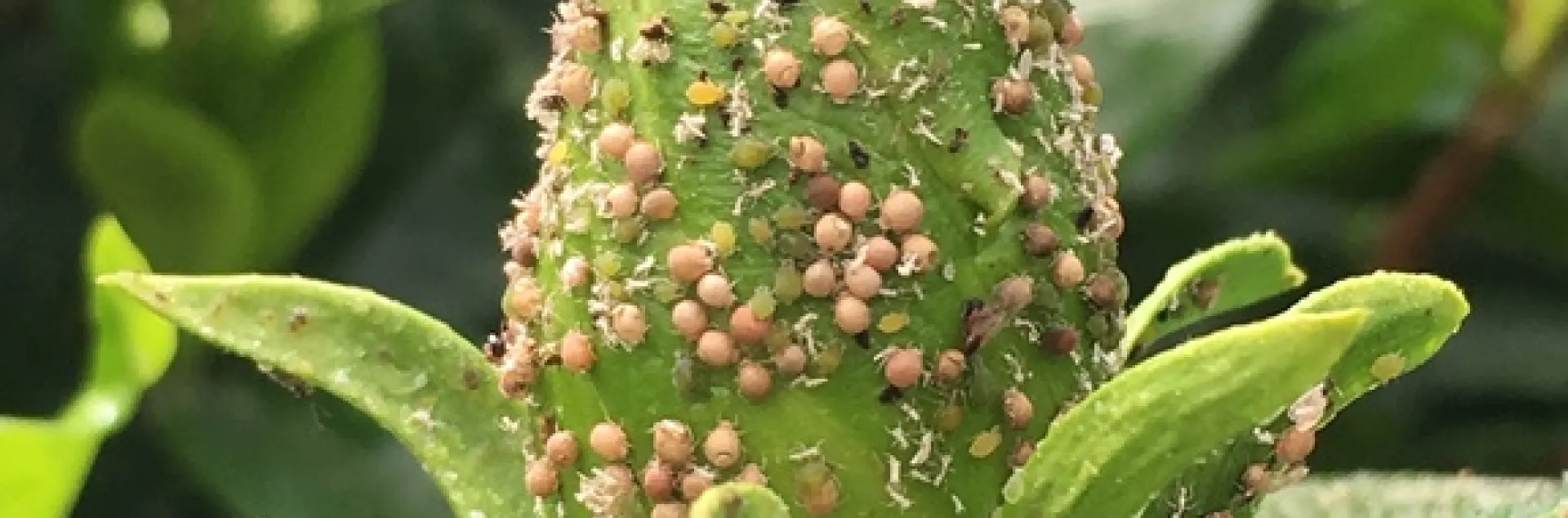
🐛 Insect Pests Aphids, thrips, mealybugs, scale, mites, caterpillars all are commonly found in our gardens. Insect pests play an critical, often overlooked, role in ecosystems, serving as a food source (e.g., aphids, caterpillars), contributing to breaking down dead organic matter. The UC Statewide IPM Program (UC IPM) provides practical information on pest management solutions and identification for a broad range of California pests.
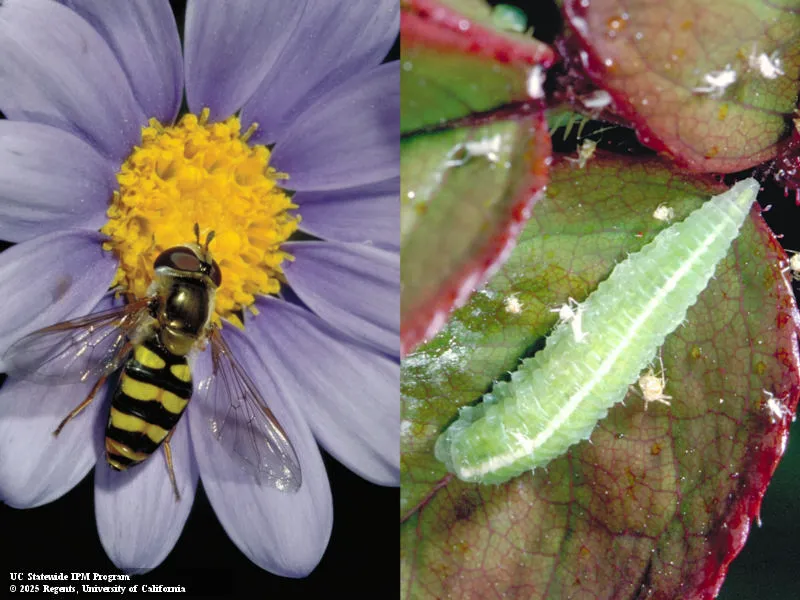
🐞 Beneficials: Natural Enemies Natural enemies include parasitoids (parasites), pathogens, and predators; often natural enemies usually refers to insects that feed on or reduce the number of other organisms, often pests. They can be predators, killing and eating insects and mites for food. One kind of predator is the generalist; they consume a wide range of prey and can be omnivorous. They include the lacewings, mantids, and most ladybeetles. There are specialists that consume a narrow range of prey: some feed on a single type of prey, like these ladybeetles – Mealybug Destroyer, Spider Mite Destroyer, Vedalia beetle (which was introduced in the 1880’s to control cottony cushion scale).
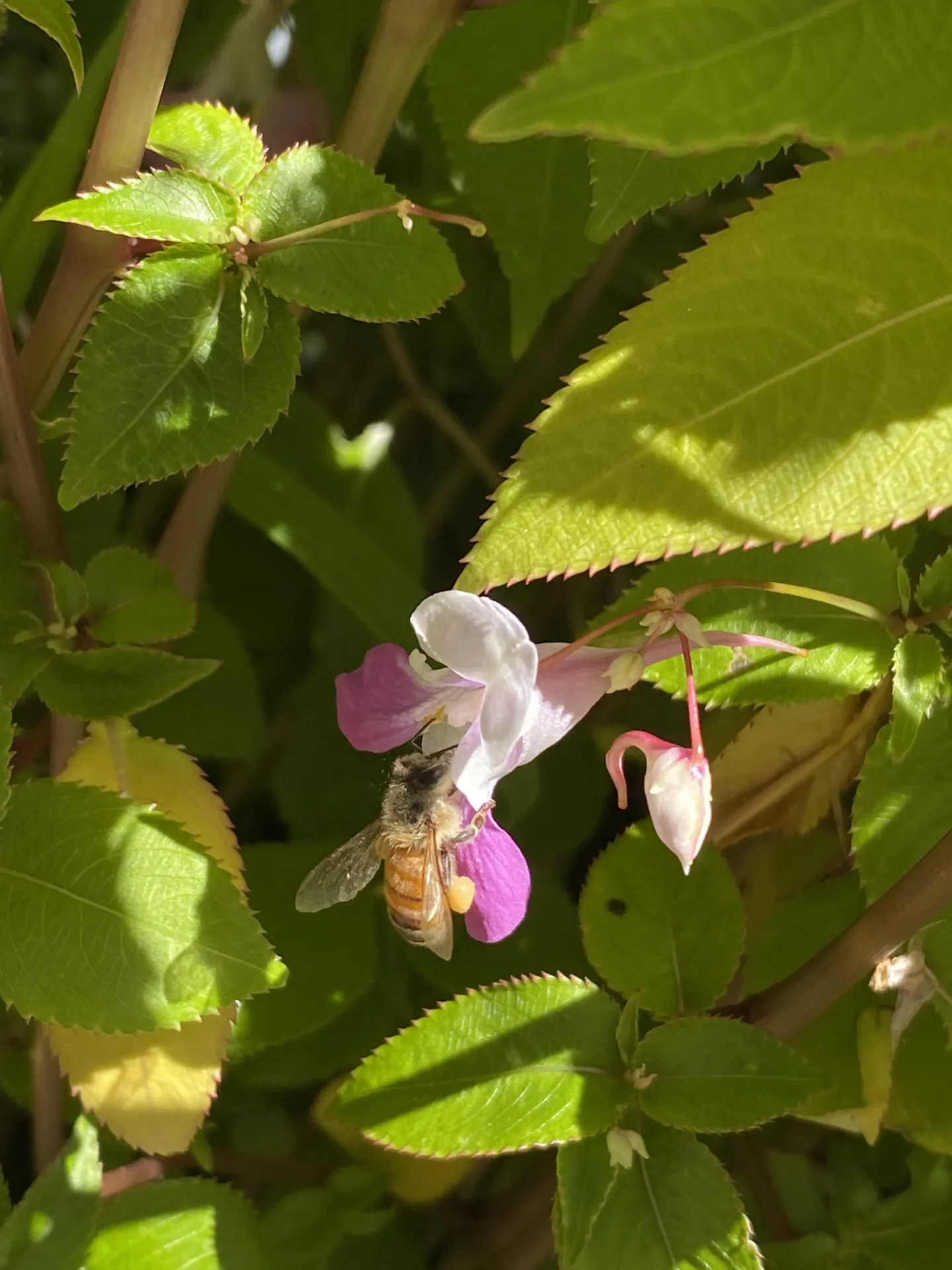
🦋 Beneficials: Pollinators Among the important pollinators are, not only domesticated honey bees, but also wild bees, butterflies, moths, flies, beetles and various other insects, such as flower flies, or syrphids.
We have the pollinators, the natural enemies and the insect pests themselves, all linked together in what was a stable situation but now in a changing ecosystem. Climate change is affecting insect pests, their natural enemies and pollinating species important for agriculture and home gardeners.
What are some of the impacts on insects that gardeners may see in their gardens?
Climate Change and Its Impact on the Bugs in Our Garden
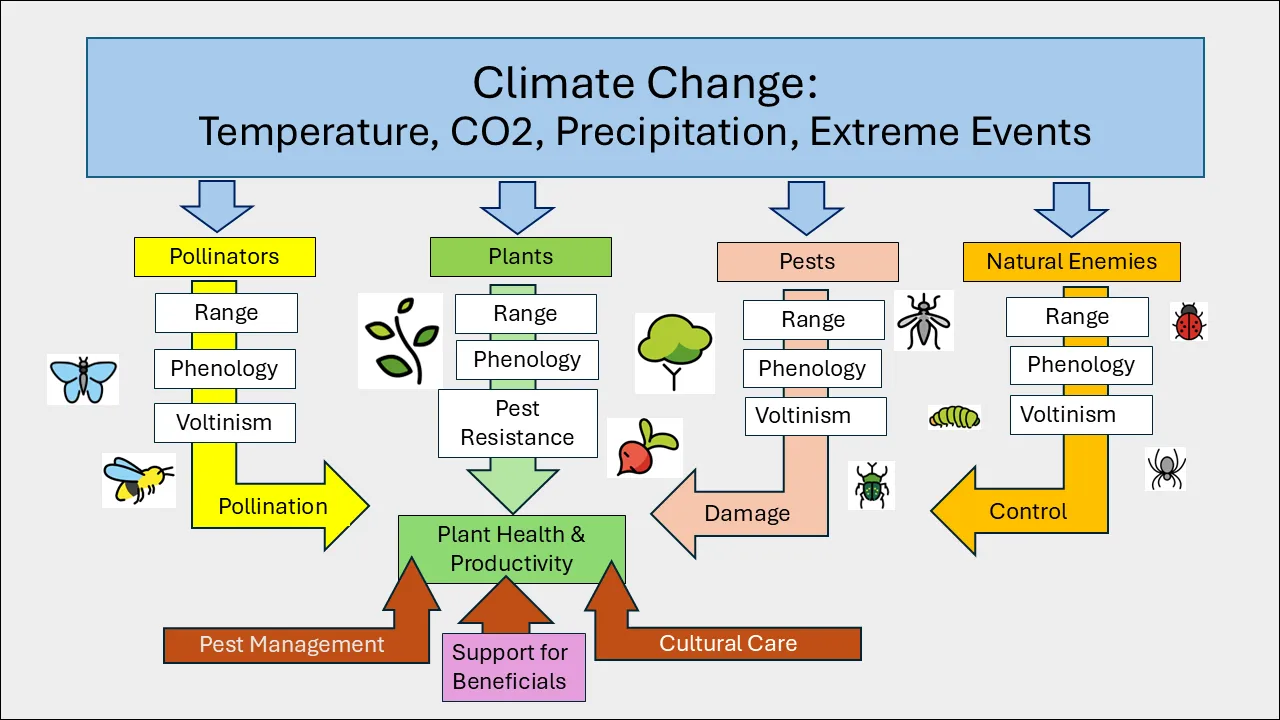
Lifecycle Disruptions for Pests, Natural Enemies and Pollinators
Climate change can lead to shifts in the timing of seasons, including warmer winters, earlier springs and hotter summers. These conditions can disrupt the natural life cycles of pests, natural enemies, and pollinators. These disruptions can include earlier emergence and more generations per year (voltinism) and timing mismatches for pollination or biological controls (phenology shifts).
1. More generations per year (Voltinism)
Many common garden pests—like aphids, whiteflies, and codling moth—are now appearing earlier in spring and accelerating their life cycles as temperatures warm, meaning that the number of generations per season are increasing. At the same time, beneficial insects (natural enemies) don’t always stay in sync with the pests, which can make infestations feel more sudden or alarming.
One UC study, recently published in the journal “Science of the Total Environment” , predicts three major pests affecting walnut, almond and peach crops will emerge earlier and produce more generations. Due to higher temperatures, Codling Moth (Cydia pomonella) , Peach Twig Borer (Anarsia lineatella), and Oriental Fruit Moth (Grapholita molesta) are expected to gradually over years to shift timing, appearing earlier in the spring (up to 28 days) and shortening the time between generations (up to 19 days).
For some insects like the Western pine beetle, increases in generations were driven by summer and fall temperatures, rather than winter warming which was not sufficient for an additional generation over winter.
More generations per year lead to more frequent pest outbreaks within a single season.
👉 Gardening takeaway:
- Timing sprays or controls becomes harder since it is harder to know when the pests will emerge.
- Monitoring is critical.
- Observation in the garden becomes more important than the typical garden calendar times used to predict when plants bloom or pests appear.
2. Timing mismatches – “Out of Sync Pollinators” (Phenology shifts)
For many bees and other pollinators, such as butterflies, moths, wasps, flies and beetles, their emergence in spring or summer is timed to match the flowering of preferred plants. Climate change is affecting phenology, which is the timing of biological events like flowering, leafing, emergence of insects, and more. Warming climate may push flowering of some plants to be earlier but the pollinators the plant depends upon may not emerge at the same time, reducing seed set and limiting the food sources necessary for pollinator survival. Climate change doesn’t just move everything earlier; it often jumbles the timing relationships.
Whiplash weather, with its rapid swings between opposite weather extremes, can disrupt timing of events by creating false starts and resetting the growth cycle, as in an early warm spell and then a cold snap, causing the early bloom to be shortened or stopped entirely. It can cause insects to emerge off-schedule or not all. The timing of insects and their host plants can go from being minimally affected to being totally disconnected during extreme events.
👉 Gardening takeaway:
Help reduce the damage caused when the timing between plants and pollinators get out of sync.
- Spread resources across time by diversifying flowering times from late winter to fall.
- Use a wide variety of plants to have blooms year-round.
- Include plants native to your region. Native plants are adapted to your local climate, soil and native pollinators.
- Plant more densely and leave things more wild to provide more habitat.
3. Timing mismatches – Disruption of biological control (Phenology shifts)
Biological control is the use of natural enemies to manage and suppress pests. It offers a way to manage insect pests while minimizing or avoiding the use of chemical pesticides. Biological control relies on predictable biological timing where pest lifecycles sync with their natural enemies.
Before, with a stable climate, in a healthy ecosystem, pests would emerge, with beneficials closely following, maintaining a balance. Now, in a warming climate, pests, such as aphids, whiteflies, mites, may emerge earlier and faster, and beneficials, such as the parasitoid wasps, may arrive later and develop more slowly, or even die.
Natural enemies (predators, parasitoids) and pollinators are also driven by temperature—but they don’t always speed up at the same rate or in the same way as pests. Beneficial insects often have lower maximum heat tolerance than the pests they prey upon. For instance, one study indicated that parasitoid wasps might die from extreme heat while the aphids they manage continue to multiply. The result is a temporary imbalance resulting in noticeable outbreaks. Pest insects emerge earlier, but plants or predators may not, causing pests to get ahead of controls.
Biological controls may not work as well. Climate affects both pests and beneficial insects, but not equally. Fast-reproducing pests (aphids, whiteflies, mites) respond quickly, but beneficial insects may lag behind or die.
👉 Gardening takeaway:
We tend to think of insects as pollinators like bees, butterflies or as pests such as ants or wasps, but there are a wide range of insects helping out in our gardens that are beneficial predators or parasites of insect and mite pests.
- Protect these beneficial predators/parasites or “natural enemies” by avoiding pesticides that kill them.
- Choose plants that provide beneficials with pollen, nectar, and shelter.
- Keep ants out of pest-infested plants. Control ants since ants protect pests from predators and parasites that might otherwise control them.
- Be tolerant of some pests in the garden, allowing beneficials to catch up.
Step-By-Step Details – How Gardeners Can Help Beneficial Insects
Many pests have an advantage over the beneficial insects in that they can adapt and deal better with the heat, the whiplash, the volatility of weather events and other aspects of climate change. We need to help our beneficial insects, especially our under-recognized natural enemies. A first step is to know that helpful insects live in your garden but they need a friendly gardener who recognizes them and nurtures them.
1. Recognize the Beneficials, “natural enemies of pests”
Learn to recognize your friends, Natural Enemies in each of their life stages (egg, larva, and adult) so you can harness the help of beneficial insects.
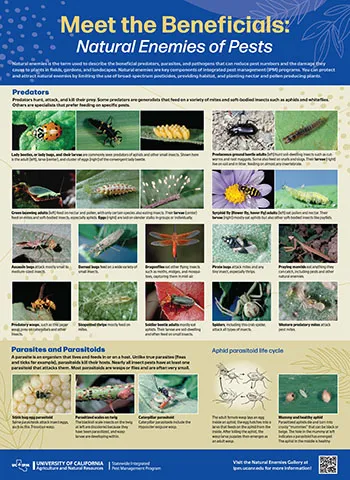
This UC IPM poster shows some of the beneficial insects, mites and spiders that prey on garden pests.
Illustrated on the poster are:
EXTERNAL IMAGE
- Convergent lady beetle
(adult, larva, eggs) - Green lacewing
(adult, larva, eggs) - Predaceous ground beetle
(adult, larva) - Assassin bug
- Pirate bug
- Damsel bug
- Soldier beetle
- Spiders
- Syrphid fly
(adult, larva) - Sixspotted thrips
- Western predatory mites
- Predatory wasps
- Praying mantids
- Examples of parasites (including a typical life cycle)
The natural enemies below are some of the more common predators and parasitoids in your garden. (Technically, “parasitoids” is the correct term, rather than parasite because the parasitoids kill the host versus parasites that co-exist with the host, but in this blog, parasitoid and parasite has been used interchangeably.)
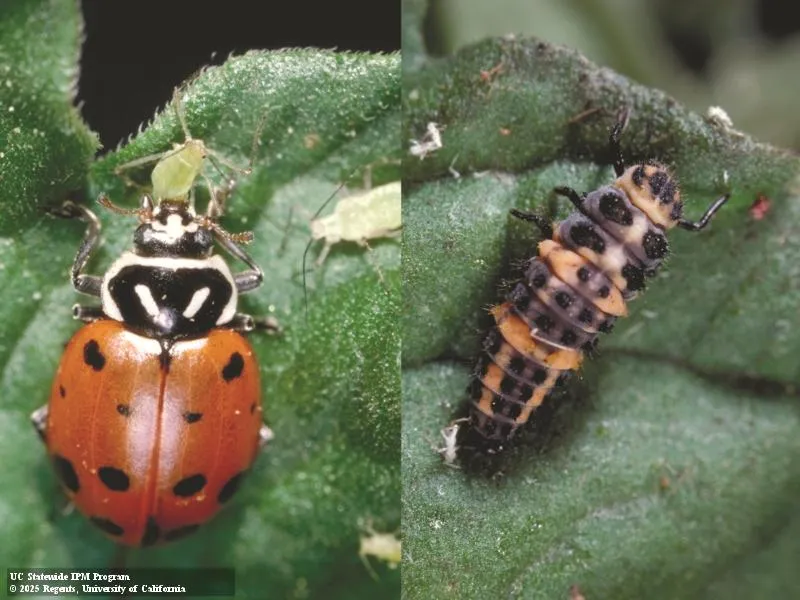
🐞 Lady beetles (ladybugs) feed on small, soft-bodied insects and mites like aphids, mealybugs, scales, whiteflies and insect eggs. Most species are predators both as adults and larvae. They also feed on pollen and nectar. They may emerge earlier, but not always in sync with aphid outbreaks. If aphids surge first, damage happens before control kicks in. Knowing that, avoid spraying early aphids and give lady beetles time to catch up.
🐛 Green lacewings larvae are major aphid predators. They are sensitive to temperature extremes and may be less effective during heat spikes. They may provide good early control but fade away in hot periods. The lacewing adults feed on honeydew, plant nectar, and yeast, with only some species being predaceous. Provide nectar sources (alyssum, dill) to support adults.
🪰 Syrphid Flies, another common predator, have many species in California; the immatures are important predators, feeding on aphids, psyllids, and other soft-bodied insects. The adults are important pollinators, and the adults consume honeydew, nectar, pollen, and water.
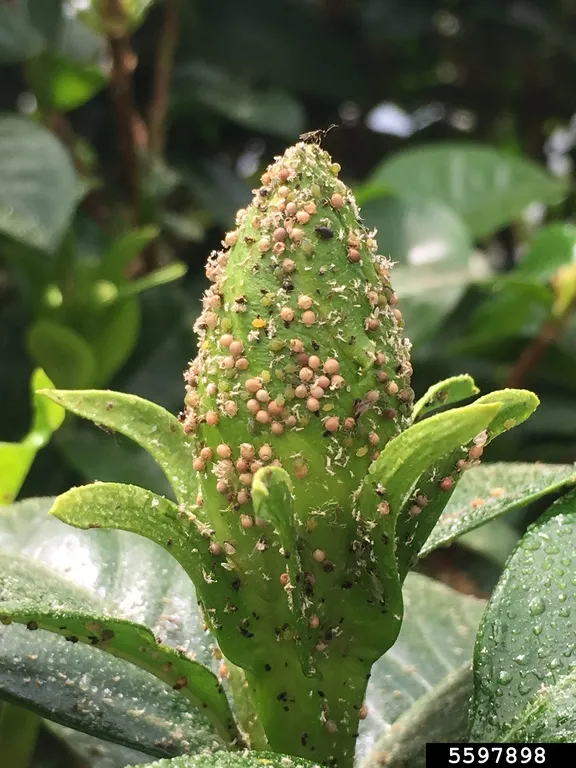
🐝 Parasitoid wasps (tiny, often unseen) lay eggs inside pests (aphids, caterpillars, whiteflies). Parasitoid lives in close association with the host, eventually killing it. They need a host for their lifecycle. They tend to be highly specialized and very important for pest control. Minimize pesticide use since wasps are quite susceptible to effects of pesticides. Generally, parasitoids are more impactful than predators. For instance, the tiny wasp Tamarixia radiata is used for biological control of the Asian Citrus Psyllid.
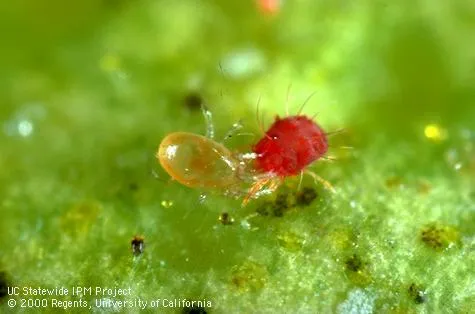
🕷️ Predatory Mites have longer legs and are more active than are the plant-feeding mites. They are very small and fast; they are important predators of mites, including spider mites. Create a good environment by avoiding dusty conditions and pesticide sprays.
🕷️ Spiders and general predators are generalist feeders (catching whatever is available). They are often more resilient to timing shifts, but are still affected by extreme heat and habitat loss. They might not be able to keep up with rapid pest cycles. Maintain habitat with mulch and plant diversity. Ground beetles are generalists, preying on larger pests like beetles, snails, caterpillars. Soldier beetles are generalists, feeding on aphids and insect eggs, and they are found mostly on flowers.
Here is a good introductory youtube video: Natural Enemies and Beneficial Insects: what are they?
2. Don’t Kill the Beneficials
Avoid or minimize the use of nonselective (broad-spectrum), persistent (residual) insecticides. When insecticides are needed, limit the number of their applications. These products that kill pests often kill beneficials just as effectively. Insecticides, fungicides and herbicides all can negatively impact beneficials including natural enemies. Use targeted pesticides where possible, such as Sluggo for snails or Bt (Bacillus thuringiensis) for caterpillars, but realize that Bt can kill both caterpillar pests like the hornworm and the caterpillar of beneficial butterflies.
Also, organic options can also be harmful to beneficials; for instance, spinosad is organic but it also kills syrphids, a pollinator and one of the more effective predators of aphids, psyllids, and other soft-bodied insects. If pesticides are needed, focus on microbials, botanicals, or oils/soaps, which are boxed in green in the following table "Relative toxicity of insecticides to natural enemies". The table below gives names of insecticides and their relative toxicity to natural enemies. Here are two helpful UC IPM sites: Best Management Practices to Protect Bees From Pesticides and less-toxic pesticides.
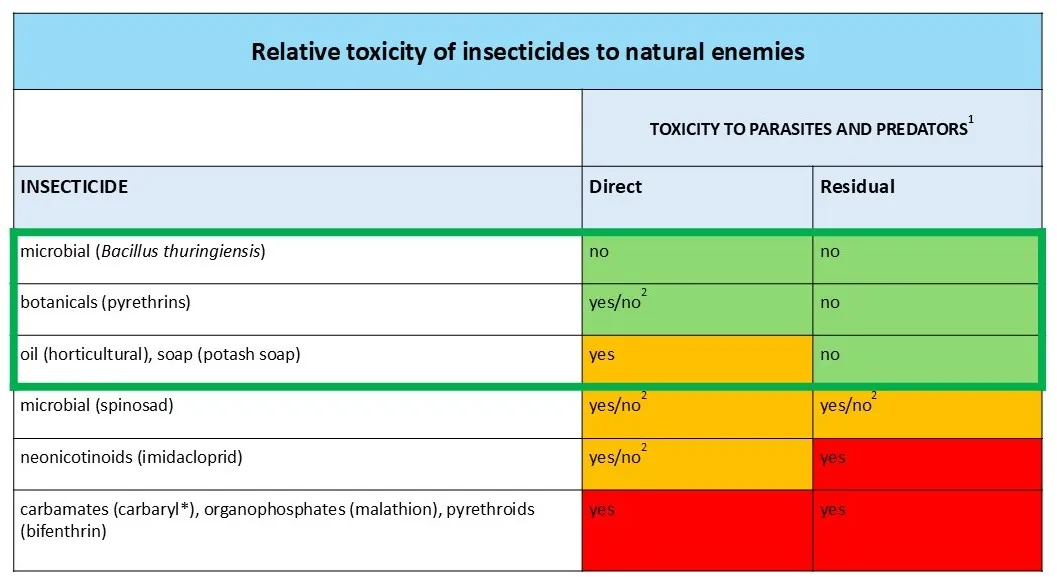
If you choose to use pesticides, follow the directions on the package carefully. Use pesticides only after the correct identification of the pest to ensure that whatever treatment is appropriate and effective for managing the particular pest. Knowing the specific pest identification and when it is vulnerable in its lifecycle allows selection of the right pesticide for the situation, and that knowledge helps to determine whether the gardening issue will be remedied by pesticides. Treat specific plants, not the whole garden. Spray in the early morning/evening when pollinators are less active. Watch out that pesticide spray does not drift onto nearby blooming plants.
3. Provide Food and Shelter for the Beneficials
🌸 Continuous Blooms Because of the timing mismatches of biological events, beneficials need gardens that have continuous blooms, providing nectar and pollen from later winter to fall, softening the impact of the uncertainties caused by climate change. Many beneficial insects—especially adult Green lacewing and tiny parasitoid wasps—need nectar and pollen, not just prey. They need shelter, overwintering sits and protection from heat.
🌿Diversity of Plants Flowers provide many resources to natural enemies: pollen, nectar, habitat, alternative prey. Traits of effective floral plantings include a mix of perennials and annuals, leaning more toward perennials, and many different species (10-15). Put native flowers in the mix. Diversity of height, physical structure, size of flowers (especially small flowers), time of flowering all give a variety of food and habitats, supporting different beneficials. Many beneficial insects are more sensitive to extreme heat than pests, and planting more densely and leaving things more wild gives beneficials more supportive habitat. Diverse systems are more stable under shifting conditions. Xerces Society (PDF) has a good resource for habitat planning for beneficials.
4. Walk Your Garden, Observe, and Tolerate a low-level of pests in the garden
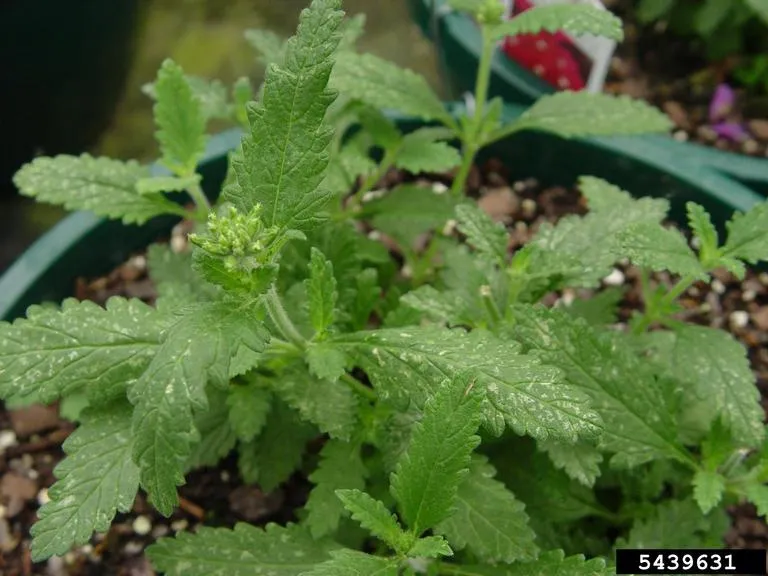
🕰️ Pests and Beneficials Walk your garden frequently to monitor what is going on with your plants. If you notice some pests, such as aphids or thrips, consider tolerating their presence and accepting some level of plant damage to give food to the beneficial predators. Natural enemies of the pests often arrive after the pests to ensure a food source is available. It is tempting to intervene when you first see the pests, but delay when you can and look for evidence of arrival of beneficials – lady beetle larvae, lacewing eggs, parasitized aphid “mummies”.
🌿Keeping your garden healthy As you walk your garden, check on the moisture levels in the soil, especially during extended heatwaves. Deep, infrequent watering helps to build root systems that are more able to withstand a heat spell. Mulch your plants to help regulate soil temperature. Avoid fertilization too much since excess nitrogen creates pest-attracting growth. Healthy plants support more stable insect communities and make gardeners happier. As you add plants to your garden, select plants such as California natives that can tolerate more drought and heat. Be more mindful of your garden, inspect your plants and be proactive when weather events such as heatwaves are predicted for your area. For more information, check out the first blog in this series on climate change and the home gardener: How Climate Change is Affecting Bay Area Gardens-and Practical Tips for Gardeners
You can mitigate the impact of climate change in your garden.
Supporting beneficials and focusing on frequent checking of plants for pests and beneficials help the home gardener know what is going on in the garden, in spite of the significant changes in climate that make the typical garden calendar often quite inaccurate and late-to-the-party. Instead of dates, the home gardener will have to be more in tune with plant growth and the associated appearance of pests and beneficials, in perhaps a jumbled order, adapting to the management of the pests accordingly. By minimizing the use of pesticides and providing blooms and habitat, gardeners are helping beneficials survive and do their part in controlling pests and keeping the ecosystem balanced.
References/Resources:
Adapting to climate extremes: Implications for insect populations and sustainable solutions
Best Management Practices to Protect Bees From Pesticides
Biological Control and Natural Enemies of Invertebrates UC IPM
Climate change affects plant interactions with pollinators, pathogens, and pests Colorado State ARS plant germplasm
Climate change and managing insect pests and beneficials in agricultural systems
Climate change impacts on insect pests for high value specialty crops in California
Climate change impacts on pest and beneficial insects: Challenges
Climate change to drive surge in insects that attack almonds, peaches, walnuts UCANR Green Blog
Climate-Smart Urban Habitat Xerces.org
Codling moths: Thinking about Enviro-weather model and hot and cold temperatures
Early pest development and loss of biological control are associated with urban warming
Impact of climate change on insect pests PPT 3/6/24 Daniel Hasegawa Agricultural Research Service, Salinas –specific details on pests
IPM programs may need to change as the climate changes
Natural Enemies and Beneficial Insects: what are they? UCANR
Protecting Natural Enemies and Pollinators / UC Statewide IPM Program (UC IPM) UCANR
Predators by drone: Biological control research | Salinas Valley Agriculture UCANR
Western pine beetle voltinism in a changing California climate
What Native California Plants Are Best for Attracting Pollinators? | Bug Squad
Xerces Society (PDF) Habitat Planning for Beneficials
Want to learn more?
This blog post is brought to you by the Help Desk of the UC Master Gardeners of Alameda County. Subscribe to our blog!
Have a Gardening Question? We'll Help.
Visit our Help Desk page to submit your question and see additional ways you can reach us.