
What comes to mind when you think of creepy creatures and pests? Perhaps it’s bats and spiders but if you want to learn about some truly creepy creatures, keep reading!
Many people are familiar with insect predators, like lady beetles (ladybugs), that eat other insects. But not many know about the other type of good bug or natural enemy—parasitoids. These creepy insects can help reduce pest populations by parasitizing them.
What is a parasitoid?
Parasites such as fleas and ticks live on their host without killing it. Parasitoids are organisms that live and feed in or on a host while completing their life cycle, eventually leading to the host’s death. Most parasitoids are tiny wasps or flies. But don’t worry—they won’t harm you!
Some common insect parasitoids
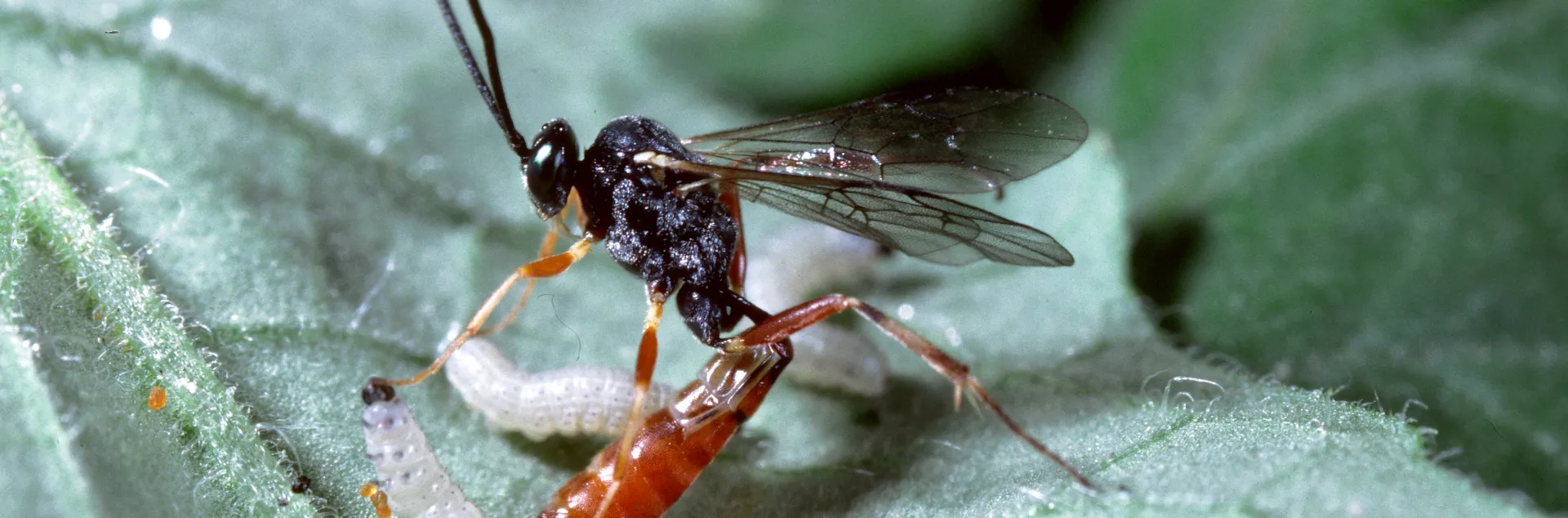
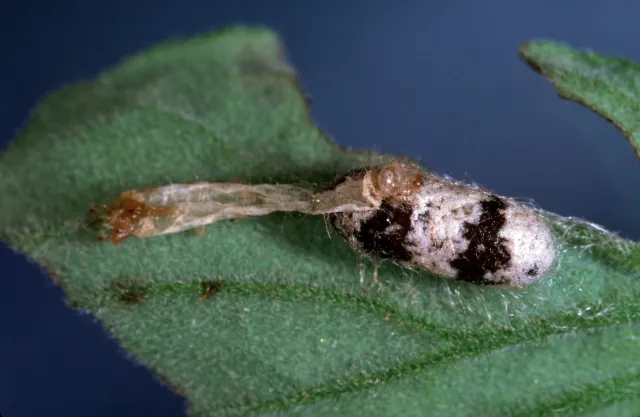
Hyposoter exiguae wasps feed on caterpillars of numerous moth species. Females prefer to lay their egg in first and second instar caterpillars. After hatching, the wasp larva feeds inside on the caterpillar’s hemolymph (blood) and tissues, eventually causing the host caterpillar to shrink, and its skin to become hard and brittle. Following all this, the Hyposoter exiguae emerges from the host skin and spins a silken black and white pupal cocoon that can be found attached to the dead caterpillar’s skin.
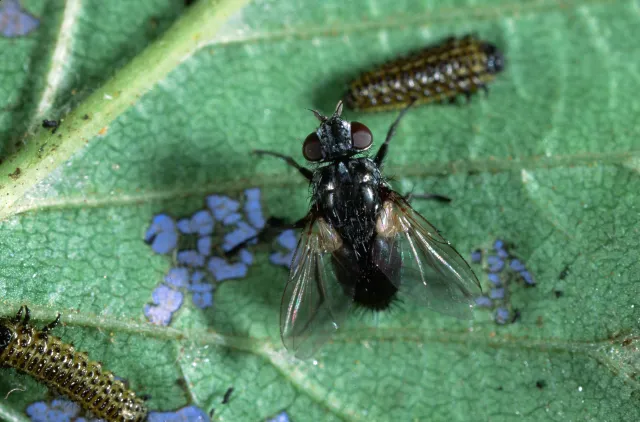
Tachinidae flies feed on beetles, caterpillars, grasshoppers, and true bugs. Some female flies insert an egg into the host or glue eggs on the host's body. Others lay eggs on plants or in the soil where plant-feeding or soil-dwelling insects will consume them. Their larvae are maggots that feed inside the host.
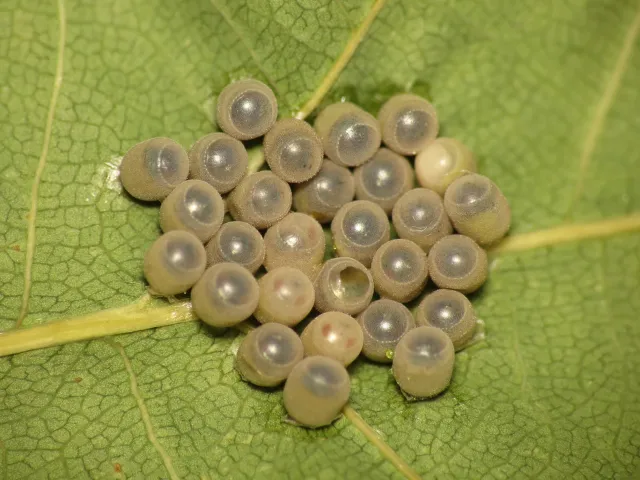
Trissolcus wasps feed on the eggs of consperse stink bugs, and certain other stink bugs. Each adult female lays on average about 200 eggs during her lifetime. Once parasitized, the egg shells darken. When an adult parasitoid emerges, it chews an irregular, rough-edged hole in the egg shell.
Want to learn more about creepy parasitoids and other natural enemies? Visit the resources below: