
Grace Mahannah.
Have you ever wondered whether the weeds in your landscape are native plants or introduced species from somewhere else?
With approximately 6,500 species, subspecies and varieties of native plants, California is the most biodiverse state in the nation, according to the California Department of Fish and Wildlife (CDFW). The state also has about 1,100 non-native plant species, sub-species and varieties, 183 of which are classified as noxious, detrimental weeds by the California Department of Food and Agriculture (Title 3, CCR Section 4500).
According to the California Native Plant Society, the definition of a native plant is a species that grew here before the first Europeans arrived, co-evolving over a very long period of time with animals, fungi and microbes to form a complex network of relationships. These plants are the foundation of our native ecosystems, and they are the plants which the indigenous people knew and depended on for their livelihood.
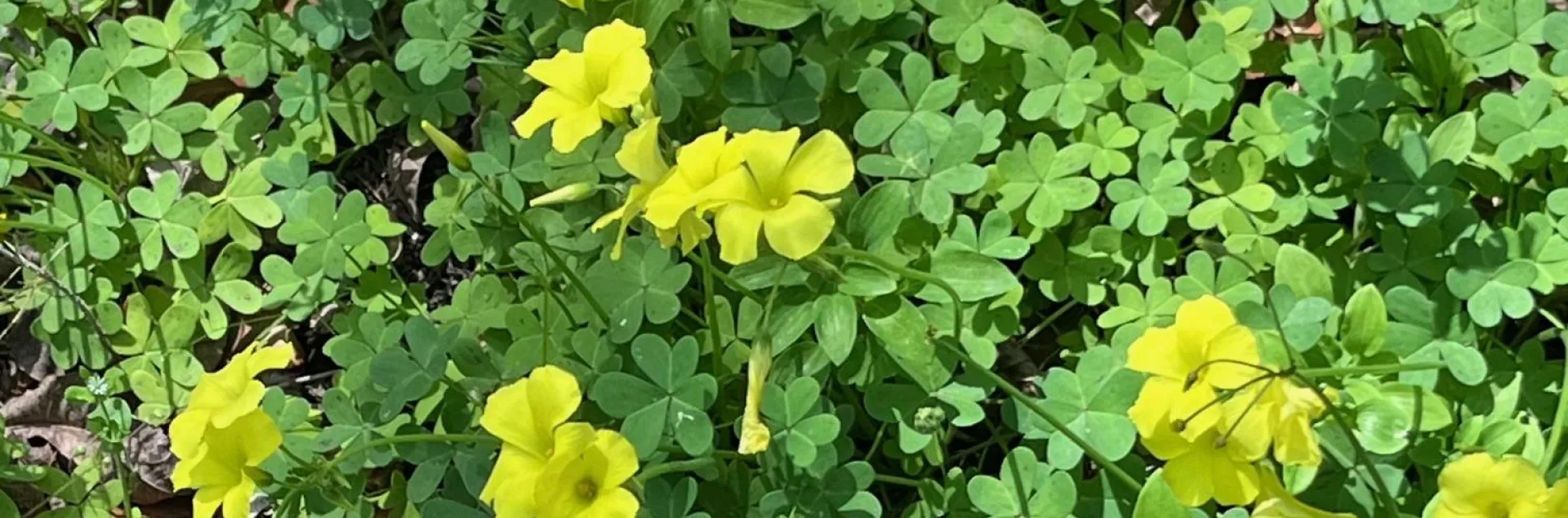
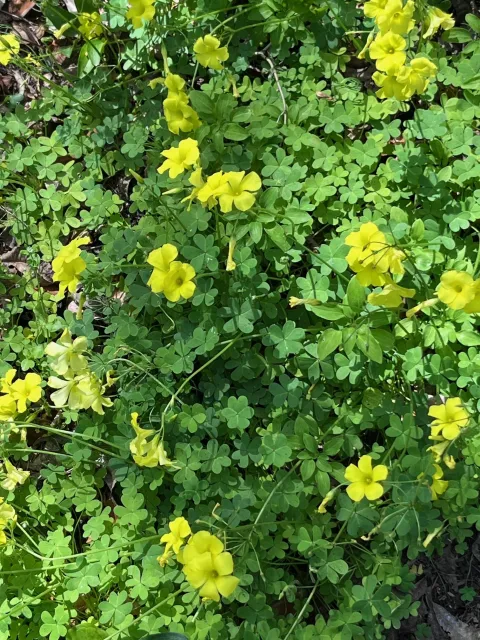
A weed, on the other hand, is any plant growing where it is not wanted, according to the Bureau of Land Management, a definition so broad as to potentially include every single plant! Obviously, the context helps us define a plant as “weed” or “not weed,” as do its persistence, competitiveness and perniciousness. For example, bright yellow oxalis (Oxalis pes-capra, an introduced species from South Africa) blooms beautifully in early spring, but beware! This plant will quickly fill your garden beds and leave behind masses of persistent bulbs.
Not surprisingly, some native plants can behave like weeds in the sense that they spread and proliferate rapidly, especially in disturbed environments. This can be positive for erosion control or negative if they end up taking over your whole garden! Matching the right native plant with the right situation will help ensure a positive outcome: if you have lots of room for the plant to ramble and spread, a weedier option might be just what you’re looking for.
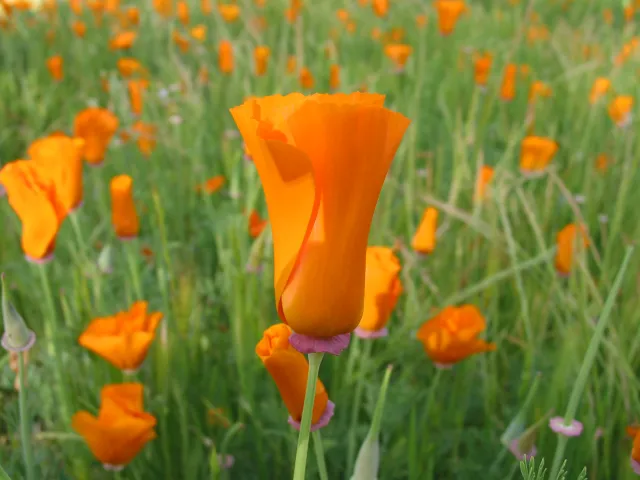
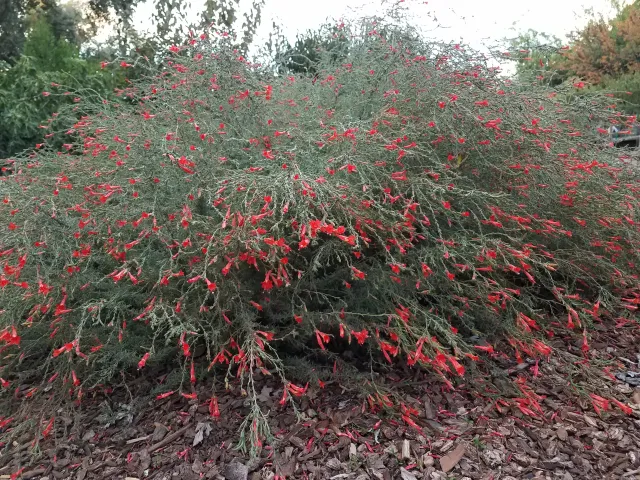
Some examples of natives with weedy inclinations (because of how they spread or their persistence) include California poppy (Eschscholzia californica), Mugwort (Artemisia douglasiana), California fuchsia (Epilobium canum, formerly Zauschneria), Miner’s lettuce (Claytonia perfoliata), Yarrow (Achillea millefolium), California buckwheat (Eriogonum fasciculatum), Hummingbird sage (Salvia spathacea), Blueblossom (Ceanothus thyrsiflorus), Great Valley gumweed (Grindelia camporum), California tree poppy (Romneya coulteri), Narrowleaf milkweed (Asclepias fascicularis), and Coyote bush (Baccharis pilularis).
To define more clearly which plants qualify as weeds, some specific categories of plants include (1) invasive: non-native plants introduced into an ecosystem that persist and spread widely without natural predators, crowding out native plants; and (2) noxious: any plant designated by a Federal, State or county government as injurious to public health, agriculture, recreation, wildlife or property. Although by definition invasive plants are all non-natives, some native plants may properly belong in the weed category; examples might include horseweed (Conyza canadensis) and catchweed bedstraw (Galium aparine).
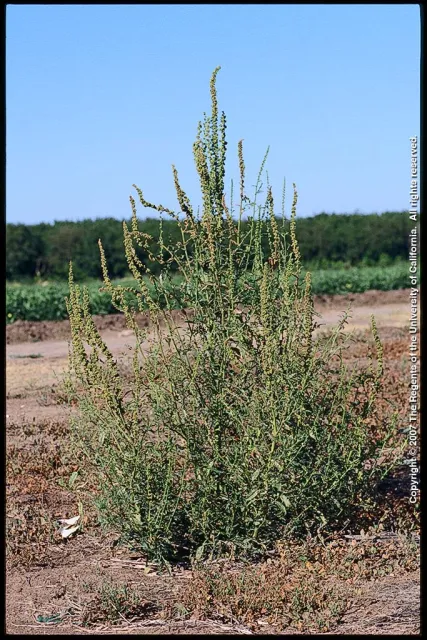
And a few native plants cross over into the category of noxious weeds. One example is Palmer amaranth (amaranthus palmeri), a California native plant in the pigweed family. Outside of its native desert range area, Palmer amaranth behaves like a noxious weed, growing 2 to 3 inches per day and aggressively competing with agricultural crops for resources, thereby reducing crop yields. Palmer amaranth also has developed herbicide resistance.
Another native that sits on the California noxious plant list is dodder (genus Cuscuta spp.). Both the native and introduced species of this parasitic plant attach to agricultural or ornamental plant hosts by inserting root-like appendages called haustoria into the host’s stem to extract water, carbohydrates and nutrients. The native dodder (Cuscuta californica) generally feeds on other wild plants, but it can also damage agricultural crops that are adjacent to its natural habitat.
Even before the first farmers, undesirable plant seeds from Europe had arrived on the ships of Spanish explorers (likely in livestock feed and manure). Amazingly, adobe bricks from the oldest portions of the earliest Spanish missions (c. 1769-1824) were found to contain European weed seeds: redstem filaree (Erodium cicutarium), curly dock (Rumex crispus) and spiny sowthistle (Sonchus asper), as well as other introduced species, according to a research paper by Larry W. Mitich and Deborah R. Orcutt, A History of Weeds in California, University of California Agriculture and Natural Resources.
Still, the vast majority of weeds in California are species from other parts of the world. They were also introduced early on by settlers moving west across the nation. As soon as new arrivals started to cultivate the land, weed seeds (mixed with crop seed from abroad) were germinating in California soil.
According to the CDFW, “Few areas have had their vegetation so completely altered as California’s Central Valley,” a process that was accelerated by the discovery of gold in 1848. “By 1880, the Central Valley was almost completely transformed into a non-native annual grassland,” due to the impacts of livestock, cultivation, competition with invasive plants, drought and flooding. As a result, botanists are uncertain what the full complement of native plants and perennial grasses may have been prior to that time. (CDFW, Mack 1989)
That weed in your garden might be a native plant, but most likely it isn’t! For use in identifying the weeds in your area, UC IPM (Integrated Pest Management) maintains an extensive Weed Photo Gallery with many, but not all, weeds commonly found in California landscapes.
The Master Gardeners Fall 2026 Workshop Series has begun! September Workshops include Composting (September 19) and Vegetable Gardening (September 26). For more information, visit our workshop webpage.
UC Master Gardeners of Butte County are part of the University of California Cooperative Extension (UCCE) system. To learn more about us and our upcoming events, and for help with gardening in our area visit the UC Master Gardener website. If you have a gardening question or problem, email the Hotline at mgbutte@ucanr.edu or leave a phone message on our Hotline at 530-552-5812. To speak to a Master Gardener about a gardening issue, or to drop by the MG office during Hotline hours, see the most current information on our Ask Us section of our website.