
UC Cooperative Extension has developed a bulk density and soil carbon calculator. This tool can be used to estimate soil bulk density based on soil organic matter and saturation percentage. The calculator can then be used to calculate total soil carbon in pounds per acre using soil bulk density, percent total carbon, and sampling depth. The tool can be found at https://californiabulkdensitycalculator.com.
What is bulk density, why does it matter, and how is it measured?
Bulk density is the relationship between the weight of soil in a known volume. Soil is comprised of minerals (sand, silt, clay), organic matter, and open pore space that is filled with air and water. Bulk density depends on soil texture and soil organic matter content. It increases with soil compaction and reduces as soil structure improves due to increased aggregate stability and improved soil structure.
Bulk density is also important for understanding changes to soil chemical properties. Lab analyses often provide results as a percent or as parts per million (ppm). However, to interpret those results for a known soil depth, a measure of volume is needed. For example, if a soil is 1.06% carbon and has a bulk density of 1.4 g/cm3, then there are 40,360 pounds of carbon per acre in the top foot. In soil with the same percent carbon (1.06%) and a bulk density of 1.3 g/cm3, there are 37,470 pounds of carbon in the top foot, while a soil with a bulk density of 1.5 g/cm3 would have 43,240 pounds of carbon in the top foot.
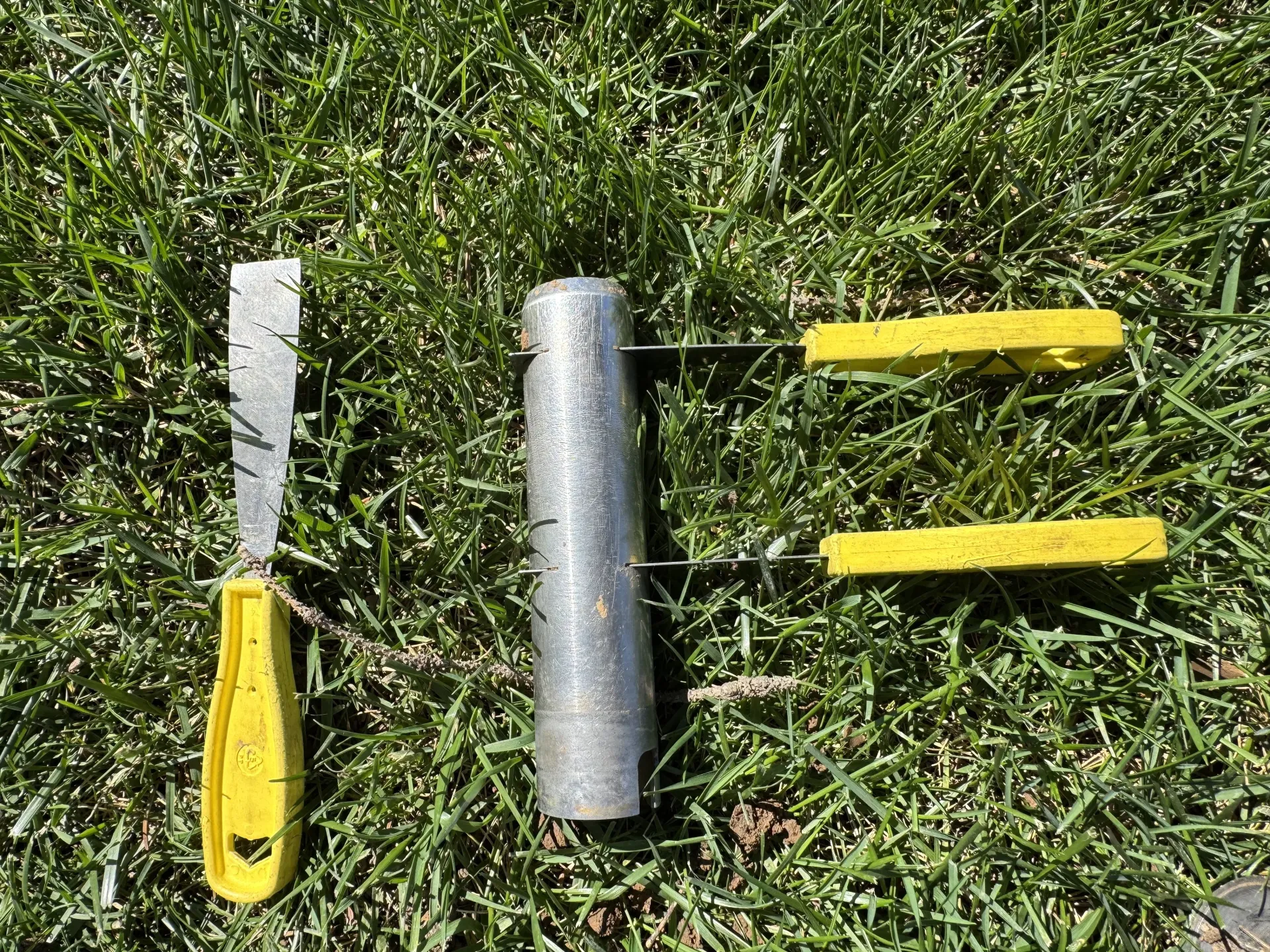
Bulk density is measured by collecting intact soil cores of a known volume. Samples are collected in the field, dried in a drying oven, and weighed. Bulk density is commonly expressed in grams of soil per cubic centimeter. One challenge with bulk density measurements is that they require specialized equipment.
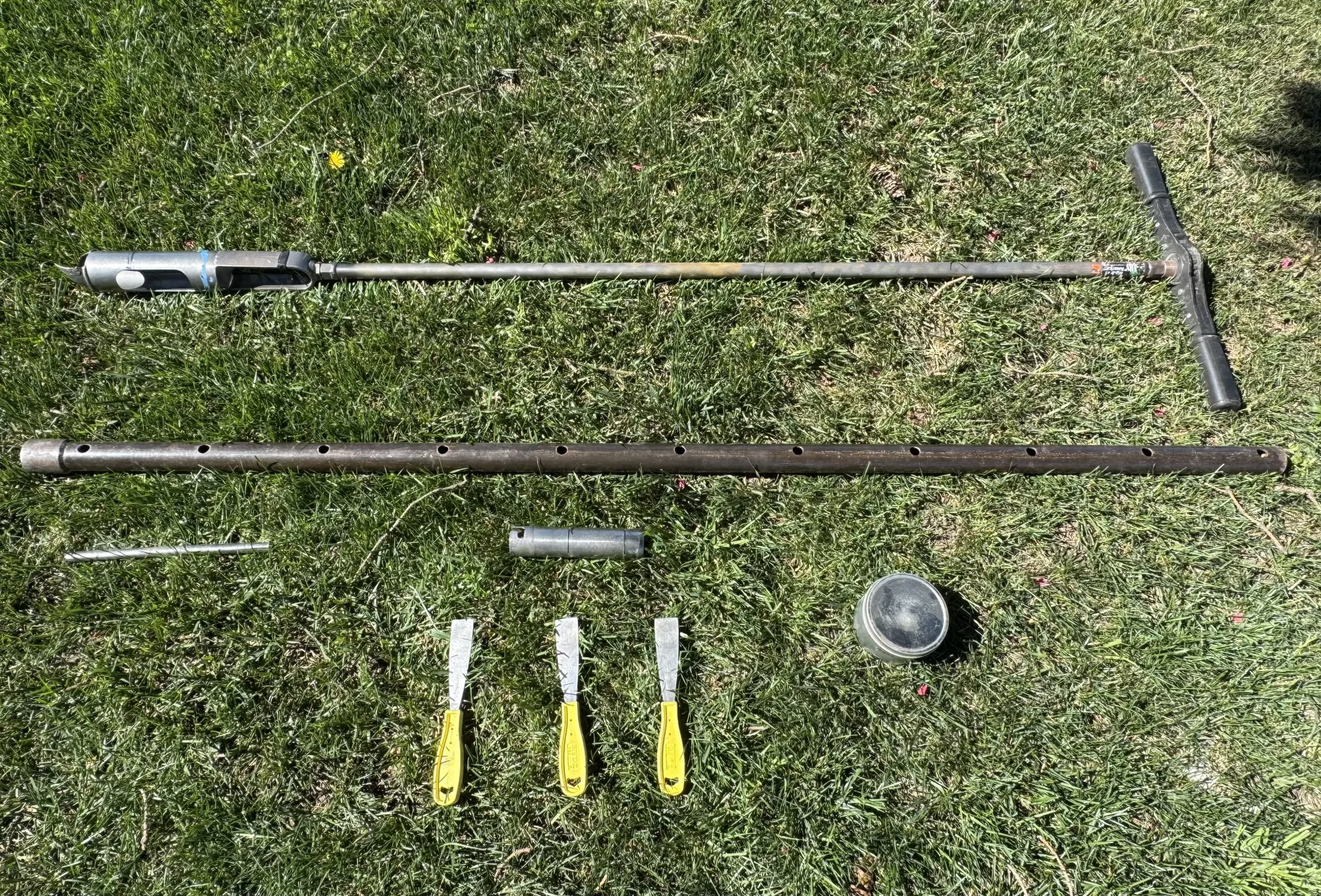
A second challenge is that sample collection is tedious, and it is important to be very precise to get an accurate measurement. It is challenging to remove an intact soil core.
Web soil survey (https://websoilsurvey.nrcs.usda.gov/app/WebSoilSurvey.aspx) is USDA Natural Resources Conservation Service soil database that maps soils in the United States. This valuable resource has information about soil properties and is a good way to get baseline information about a field. Web soil survey has bulk density values for soils. However, field management can change bulk density over time and database values do not always correspond to present field conditions.
Can bulk density be estimated?
UC Cooperative Extension research evaluated a way to estimate bulk density based on field measurements. Fields were sampled for bulk density and other soil measurements including soil texture, saturation percentage, soil organic carbon, and soil organic matter. These field soil measurements were then included in 14 different models. The models were compared using statistical methods that assess the strength of different models. The final step was to check the model’s accuracy by running a subset of our own field data into the model to see how the bulk density estimates compared to the actual bulk density measurements. One model emerged as the best for predicting bulk density. This model uses percent organic matter and saturation percentage to estimate bulk density based on current field conditions.
When organic matter is consumed by soil microbes different compounds are released into the soil, some of which are sticky and hold soil particles together into clumps of soil. These clumps are called soil aggregates.
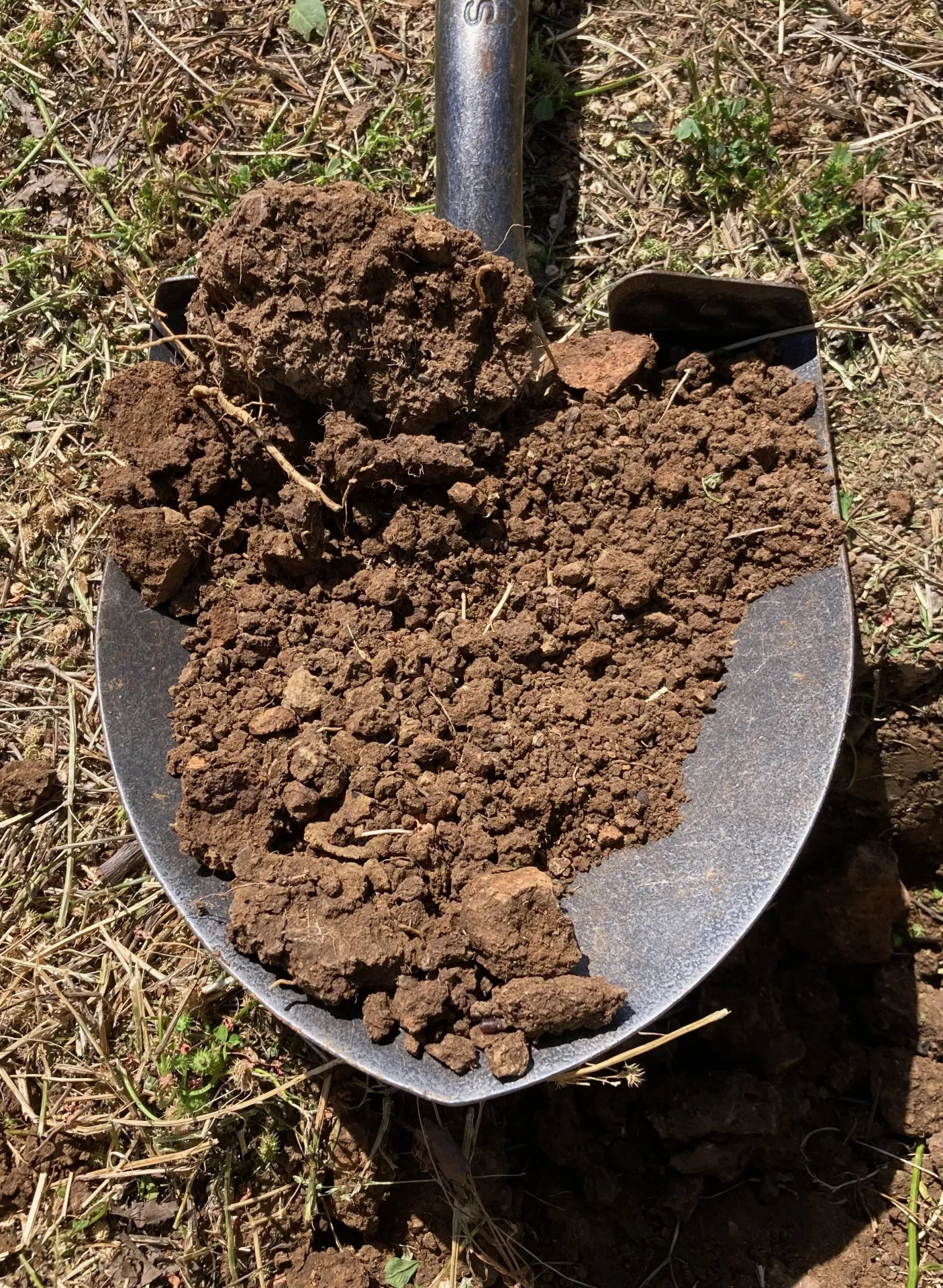
Aggregates are related to macropores, or larger pores in soil and aggregate production and stability is closely tied to organic matter. Saturation percentage measures soil water content of a saturated soil. Saturation percentage is measured on air-dried pulverized soil that has been sieved. Since the soil is pulverized, saturation percentage is related to micropores, or smaller pores in soil. Both organic matter and saturation percentage can be quantified at some commercial soil laboratories.
The University of California Bulk Density and Soil Carbon Calculator (californiabulkdensitycalculator.com ) is an online calculator based on the research model. It can be used to estimate soil bulk density using only soil organic matter and saturation percentage as inputs. The calculator can then be used to calculate total soil carbon in pounds per acre using soil bulk density, percent total carbon, and sampling depth. If the user wants to calculate soil carbon in pounds per acre, they will need lab values for percent soil carbon which can be measured at some commercial labs.
Questions about this tool can be sent to Sarah Light, Agronomy Advisor, selight@ucanr.edu.